forgottennewsmakers

Posts Tagged ‘Trivia’

MARY KINGSLEY (1862-1900) African Explorer

In adventure, Africa, Biography, Explorers, Feminists, fish, History, People, People from England, Trivia, Uncategorized, women on April 6, 2010 at 10:11 AM

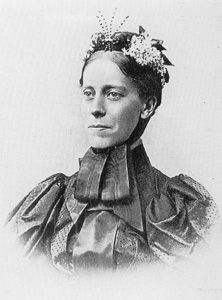
Mary Kingsley

Mary Kingsley was conceived out of wedlock, her parents marrying only four days before her birth.  She kept this fact a secret, but perhaps it, and a lack of religious education, imbued in her the impulse to defy the expectations of a Victorian woman.  

During her childhood in England, Kingsley was mostly left to her own devices.  Her mother was sickly, and her father was a doctor who spent most of his time traveling abroad.  True to the double standard of the time, younger brother Charley was educated at Cambridge, and Kingsley was not given any opportunity to go to school except for some lessons in German to help her father translate scientific texts. She took it upon herself to read volumes of books in her father’s library, especially those about science and foreign lands.  The tales from her father’s adventures piqued her curiosity and gave her a window to a life she would dream about. 

Kingsley played the role of dutiful daughter for 30 years.  As her mother’s health declined, Kingsley’s household duties included nurse.  Dr. Kingsley contracted rheumatic fever on a trip and also became bedridden. 

In early 1892 both parents died within three months.  There are no indications that she had any suitors, so Kingsley was resigned to live with her brother, a total flake.

In 1982, Kingsley took a brief trip to the Canary Islands, and it left her wanting more.  She was searching for a purpose and decided to travel to West Africa to follow up on some of her father’s projects.  When Charley went to Asia in 1983, Kingsley seized the opportunity.

She sought the counsel of friends and experts before leaving, all of whom cautioned her not to go. Ignoring their advice, in August 1893, Kingsley arrived in Angola. Despite the hot climate, she wore the skirts, blouses, high buttoned shoes and hats she wore at home, feeling that even in Africa she couldn’t justify dressing in an undignified manner.  As a white spinster, Kingsley was an anomaly in Africa.  The only other western women there were wives of missionaries.

She did have a mission.  Some doctors and scientists who advised her to stay home suggested that if she were to go anyway, she could help them by collecting specimens of fish and plants, which she did.

In December 1893 Kingsley returned to England and began preparing for her next African expedition.  One year later she again found herself in the villages and jungles of West Africa.  Kingsley fearlessly explored areas that no white person had ever been to before.  She rowed a canoe up the Ogowe River in Gabon and was the first woman to climb Mount Cameroon, with a summit of 13,700 feet.

Her encounters with animals were often hair-raising, and she had a healthy respect for their natural abilities. “Whenever I have come across an awful animal in the forest and I know it has seen me I take Jerome’s advice, and instead of relying on the power of the human eye rely upon that of the human leg, and effect a masterly retreat in the face of the enemy.”  She declared the leopard, “the most lovely animal I have ever seen.”1

In dealing with the native people, the explorer had a very non-judgmental approach.  She knew that travelers, especially female, were oddities to the Africans, so she became a textile trader selling cloth for rubber and ivory.  Integrating into the societies instead of just observing and documenting endeared her to the natives more readily.  She described her interactions with the Fang (Fan), a cannibalistic tribe, saying, “A certain sort of friendship soon arose between the Fan and me. We each recognized that we belonged to that same section of the human race with whom it is better to drink than to fight.”1  

She had a very high regard for the indigenous life of the natives.  It surprised Kingsley that she became fond of them.  She wrote, “I confess I like the African on the whole, a thing I never expected to do… I went to the Coast with the idea that he was a degraded, savage, cruel brute; but that is a trifling error you soon get rid of when you know him.”1

When Kingsley returned to England in November 1895, she told her stories to curious journalists and captivated audiences, but not everyone agreed with her acceptance of the native lifestyle.  She understood how tribal life functioned, and her support of that way of life contradicted the aims of the Church of England and British colonization.  She upset the Church by defending the practices of the aboriginal Africans and criticizing the missionaries’ efforts to change them. 

Kingsley settled into her brother’s home and wrote Travels in West Africa, a detailed, candid account of her experiences.  The book was a best seller and led to a very busy schedule on the lecture circuit.  Always trying to enlighten as well as entertain, one lecture she gave to the staff and students at a London medical school was called “African Therapeutics from a Witch Doctor’s Point of View.”  Her stories were so popular that she wrote another book, West African Studies, in quick succession that included all the anecdotes she left out of the first one.

Kingsley’s legacy was not only sociological.  Of all the plants and fish specimens she brought back, three fish species were previously unknown and named after her.  In 1899, the intrepid adventurer went back to Africa, this time looking to collect fresh-water fish from the Orange River in South Africa.  When she arrived in Cape Town, the Boer War was going strong.  The best way for Kingsley to become involved was to nurse Boer prisoners at a camp in Simon’s Town.  Typhoid infiltrated the camp, and Kingsley became infected.  On June 3, 1900, she succumbed to typhoid and, at her insistence, was buried at sea.

QUESTION:  Where would you like to explore, and what do you think it would be like? 

                                ©2010 Debbie Foulkes All Rights Reserved

   Sources:

 1Kingsley, Mary, Travels in West Africahttp://ebooks.adelaide.edu.au/k/kingsley/mary/west/west.html

 http://www.royalafricansociety.org/index.php?option=com_content&task=view&id=169&Itemid=165

 http://www.billgreenwell.com/lost_lives/index.php?key_id=583

 http://en.wikipedia.org/wiki/Mary_Kingsley

 http://africanhistory.about.com/library/weekly/aa011002a.htm http://africanhistory.about.com/library/weekly/aa011002a.htm

CHRISTOPHER EVANS (1847-1917) & JOHN SONTAG (1862-1893) Train Robbers

In adventure, American History, Biography, California History, History, Horses, outlaws, People, Train Robberies, trains, Trivia, Tulare County California on March 30, 2010 at 9:15 AM

Chris Evans asserted until he died that he never robbed a train and that he only killed in self defense.  His exploits with John Sontag divided people in Tulare County: those who believed the evidence to the contrary and those, who despite evidence, were united in friendship and revenge.    

 The Southern Pacific Railroad made inroads in transportation in California, but it also made enemies. In the name of the greater good, the railroad company put progress over people, and displaced many from their property, including Evans.

 Chris Evans had an adventuresome spirit.  He worked at many different jobs as a laborer and lived in a house with a barn in Visalia. His marriage to Molly Byrd yielded seven children. 

 John and George Sontag were brothers.  John worked for Southern Pacific Railroad and was injured in an accident.  He had several broken ribs which put pressure on his lungs and a broken leg which caused a permanent limp.  He was no longer fit to work for the railroad company, so they canned him.  He lived with Evans for a while working odd jobs.  Younger brother George was also on the scene, but not as much is known about him.

 On August 3, 1892, men dressed as tramps hopped on a train bound for Fresno.  They each wore masks, had a double barrel shotgun and a revolver.  In response to an invitation to get off the train, the men opened fire.  Then they blew up the express car and absconded with over $10,000 dollars in gold and silver coins.  Accomplices who were hiding behind the nearby school house helped the robbers escape. 

 Coincidentally, the following day Evans was seen in Visalia after a long absence, and John Sontag suddenly appeared claiming to have been in the East.  The sheriffs were suspicious. They knew that George Sontag was a passenger on that train, so they assumed he was a collaborator, took him to the station for questioning, and then locked him up. 

 Trying to play it cool and not make a scene, Detective Smith and Deputy Sheriff Witty decided to arrest John next and then go back for Evans the following day.  When they arrived at Evans’ house, the law men were greeted with a spray of bullets.  Not being able to react fast enough, Smith and Witty were wounded, chased off the property and forced to leave their horse and rig behind.  

 Evans and Sontag headed for the hills.  They returned the next morning and hid with the horse and buggy in the barn.  The sheriffs came back for their transportation and set up a stake out. When they knew the outlaws were back, they started shooting into the barn.  The robbers returned fire and killed one man.  The sheriff’s bullet did hit a target, and the groans of someone dying were heard.  When they entered the barn to make an arrest, the sheriff’s horse was dying, and Evans and Sontag had escaped on foot.

 Evans and John Sontag had been the presumed perpetrators of previous train robberies, including one in Minnesota, but there was never enough proof to pin it on them.  For this so called Collis Robbery, however, they were wanted, and Southern Pacific Railroad put up a $5000 reward for each, dead or alive. 

 Thus began a ten month man hunt.  Since sentiment against the Southern Pacific was so strong and the Evans had lots of friends, the runaways got help at every turn.  Several posses followed numerous leads and often got close.  In one incident, Evans’ oldest daughter, Eva, overheard talk that a posse knew where to find her dad and his accomplice.  Eva and Evans were very close, and she wanted to do something to help.  She hopped on her horse and bravely followed the posse into the woods to warn the fugitives.  She fired a warning shot into the air that alerted the bandits.  Her plan was successful. Evans and Sontag eluded capture, and Eva returned home unscathed. 

 After being on the lam for ten months, Evans and John Sontag were exhausted, and Sontag’s railroad injuries made it extremely difficult for him to stay on the move.  They devised a plan to escape to South Africa, but they needed money. Evans got word to his wife to wire Sontag’s dad and ask for $100. 

 On June 11, 1893, the sheriffs got wind the outlaws were going to sneak back to the Evans’ Visalia home to pick up the dough.  The sheriffs were waiting and picked off the men as they approached.  During the thirty minute gun battle, both Sontag and Evans were wounded.  Sontag’s injuries were nearly fatal, and he begged Evans to finish the job.  Evans couldn’t bring himself to do it, so Sontag tried to do it himself.  He held his gun to his head, but he was too weak to pull the trigger.  He lay unconscious in a bed of straw until the sheriffs came back the next morning and carted him off to jail. He died there on July 3.

 Evans was debilitated but managed to run away.  He ended up at widow Perkins’ house and because they were friendly, she invited him in. Her son saw immediate benefit in having Evans around.  He rode to Visalia and offered to tell the sheriffs Evans’ whereabouts for the reward.  When the posse showed up at the Perkins’ home, boy Perkins carefully removed the gun from under the sleeping Evans’ pillow and invited the posse in.  Evans surrendered and was taken to jail without incident. 

 The exploits of Evans and Sontag quickly became the stuff of legend.  After one week of rehearsal, on September 19, 1893, a play opened in San Francisco reenacting their saga. “Evans and Sontag or The Visalia Bandits” played to cheering, standing room only crowds.  Audiences went wild when the real Molly and Eva Evans walked on stage to play themselves. Understudies played the roles so the women could attend Evans’ trial, but they resumed performing when the play went on tour.

 Evans was convicted of murder and sentenced to life imprisonment.  His life in the Fresno jail was comfortable, and he had dinner with his wife almost every night.  On December 28, a guy named Morrell brought the Evanses their dinner tray and hid two pistols under it.  Evans had a kid paid off to spread a rumor that another train robbery was about to happen, and this preoccupied the sheriffs.  Having a gun pointed at him convinced the guard to let the men walk, and after killing one man on their way out, Evans and Morrell were free.  Molly Evans had no previous knowledge of the plan and was not arrested as an accomplice.

 For a couple of months Evans and Morrell managed to stay ahead of the sheriffs. On February 13, 1894, a posse snuck up on their camp and fired three shots.  The bullets missed, and Evans and Morrell high tailed it out of there leaving everything behind.  They eluded the sheriffs for another month or so.

 The outlaws ended up at Grandma Byrd’s home in Visalia, and Evans was reunited with his family.  When the lawmen learned where the criminals were hiding, they again formed a posse and surrounded the house.  News of a possible capture spread quickly, and a crowd gathered eager to watch the events unfold first hand.  Evans exchanged notes with Sheriff Kay via Evans’ son.  His only demand was to get rid of the crowd and for Kay and one other man to come up to the house. Evans and Morrell walked out onto the porch unarmed.  Evans kissed his children goodbye and both men surrendered. 

 Evans served the rest of his time at Folsom prison.  As an inmate, he worked in the hospital and library.  He wrote a book called Eurasia about a country with a socialist government. Evans was released on parole in 1911 and joined his wife who had moved to Portland, where he died six years later.

 George Sontag was convicted for his part in the train robbery, and Morrell was convicted for his efforts in helping Evans escape from jail. Both men ended up at Folsom.  George made one unsuccessful escape attempt.  Both were eventually released. 

 QUESTION:  Would you be able to help a friend die if they asked you to? 

                                     © 2010 Debbie Foulkes All Rights Reserved

 Sources:

Maxwell, Hu,  Evans & Sontag. Fresno, CA: Panorama West Books, 1981.

 Menefee, Eugene L. and Dodge, Fred A.,  “History of Tulare and Kings Counties, California,” Historic Record Company, Los Angeles, California, 1013.

 Smith, Wallace, Prodigal Sons. Boston: The Christopher Publishing House, 1951.

MADAME C.J. WALKER (1867-1919) First Self-Made American Woman Millionaire

In African-American women, American History, Biography, Entrepreneurs, Feminists, Guiness Book of Records, Hair, History, Millionaires, People, Uncategorized, women on March 22, 2010 at 8:12 PM

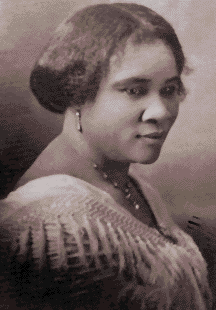
Madame C .J. Walker

Madame C. J. Walker turned a bad hair day into a fortune and a Guinness World Record.  She followed her dream, literally, turning her life into a true “rags to riches” story. 

Sarah Breedlove was the fifth of six children born to former slaves in Louisiana. Both of her parents died when she was seven years old, but being an orphan wasn’t a life sentence to poverty.   She moved in with her older sister and brother-in-law and survived by working in the cotton fields of Louisiana and Mississippi.  This turned out to be a bad situation, so at age 14 she married Moses McWilliams to escape her brother-in-law’s abuse.  

Four years after her marriage, Breedlove had a baby girl.  Two years later her husband died and she was again forced to find her own way.  She moved to St. Louis where her four brothers had become successful barbers.  She earned $1.50 a day working as a washer woman and eventually saved enough money to send her daughter to school.  

Breedlove’s own education was spotty.  When she reached school age, there were no funds allocated by the white legislators in Louisiana to educate black children.  Then she was pressed into working full time to contribute to the household of her sister and brother-in-law.  In St. Louis, she managed to improve her reading and writing with the help of the women at the St. Paul AME church.  These women also became her social network and eventually an inspiration for growing her business. 

Loss and abandonment followed Breedlove to St. Louis.  All her brothers died and she married and divorced John Davis.  In addition, an ailment that caused her to lose almost all her hair plagued her. She desperately tried various homemade remedies and store bought products.  One potion she used was created by Anne Malone, and in 1905 Breedlove moved to Denver as a sales rep for Malone.  

Life took a turn for the better in Denver.  Not one to depend on another, Breedlove wanted to develop her own hair products.  The formula for a solution to her problem was revealed to her in a dream.  “…One night I had a dream…a black man appeared to me and told me what to mix up in my hair. Some of the remedy was grown in Africa, but I sent for it, mixed it, put it on my scalp, and in a few weeks my hair was coming in faster than it had ever fallen out. I tried it on my friends; it helped them. I made up my mind to begin to sell it.”1 She worked with a pharmacist to develop her own line that rivaled Malone’s. 

Her love life was looking up, too.  She married newspaperman Charles Joseph Walker.  Breedlove changed her name to Madam C.J. Walker, and it proved to have the sophisticated sound that instilled confidence in shoppers.  Madam Walker’s Wonderful Hair Grower scalp conditioner was her ticket to success. As for her marriage, unfortunately the third time was not a charm, and they divorced after six years.  

Madam Walker remembered the relationships she developed with the women at the church in St. Louis.  She saw a large potential market in such fellowships and gave product demonstrations at churches and lodges. She also implemented a door to door, grass roots selling strategy that led to hiring individual sales agents. Walker acknowledged that her level of education was insufficient to run a profitable business, so she hired a former teacher to tutor her privately.  

The Madam C.J. Walker Manufacturing Company was founded with five original products.  Expansion was inevitable, and for a year and a half she moved to Pittsburgh and opened the Lelia College of Beauty Culture, named after her daughter.  In 1910 Walker moved her entire operation to Indianapolis where she built a factory, training school, and hair and nail salon.  

Walker’s success was three-fold.  First, she accrued an enormous personal wealth.  Second, she provided economic opportunity for black women which gave them an alternative to domestic labor. Her sales agents could potentially earn between $5 and $15 dollars a day when unskilled white laborers were only earning about $11 a week.2 The sales force was organized into local and state clubs with opportunities for management on every level, a model that is used in many companies today.  In 1917 the Madam C. J. Walker Hair Culturists Union of America was big enough to hold a convention in Philadelphia.  

Third, Walker believed that with wealth comes responsibility, and she became a role model for using her riches to support political and philanthropic causes.  She gave generously to African-American organizations and instilled this virtue in her sales force.  At the 1917 convention, Walker gave out awards to her agents not just for their business achievements but also for their political activism.  

The headquarters for the Madam C. J. Walker Manufacturing Company remained in Indianapolis, but in 1916 Walker and her daughter moved to Irvington-on-Hudson, New York, and Walker supervised the business from there.  Their new home was a 30-room mansion designed for them by black architect Vertner Tandy, and Walker spared no expense on the furnishings.  The estate was named Villa Lewaro after the first two letters of her daughter’s name: Lelia Walker Robinson, and is in the National Register of Historical Places. 

During the last year of Walker’s life, total sales of her company exceeded $500,000 and she had trained some 40,000 sales agents serving customers the U.S., Central America and the Caribbean.3 Her legacy includes The Guinness Book record as the first self-made American woman millionaire, and in 1998 the U.S. Postal Service put her image on a stamp. 

QUESTION:  What would you do if someone gave you one million dollars today? 

                                 © 2010 Debbie Foulkes All Rights Reserved 

Sources: 

1http://www.brilliantdreams.com/product/famous-dreams.htm 

2Henry Louis Gates Jr., “Madam’s Crusade”, Time magazine, December 7, 1998, Canadian edition. 

3http://hbswk.hbs.edu/item/5662.html 

http://madamcjwalker.com/bio_madam_cj_walker.aspx 

http://en.wikipedia.org/wiki/Madam_C._J._Walker 

http://hbswk.hbs.edu/item/5662.html 

http://www.pbs.org/wgbh/theymadeamerica/whomade/walker_hi.html 

http://www.brilliantdreams.com/product/famous-dreams.htm 

http://www.irvingtonhistoricalsociety.org/nrhp/nrhp04.html