forgottennewsmakers

Posts Tagged ‘Biography’

JACK PARSONS (1914 – 1952) Rocket Scientist & Occultist

In American History, Biography, California History, Millionaires, Occult, People, Rocket Science, Trivia, Uncategorized on May 10, 2010 at 9:39 PM

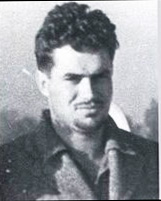
Jack Parsons


Marvel Whiteside Parsons did not like the name he was given, but it did describe his life: it was quite a marvel.  He changed his first name to be more common, but nothing about him was conventional. 

Parsons was born into a wealthy family living on “Millionaire’s Mile” in Pasadena, California.  After graduating from a small, private high school, he shunned the upper class society of his parents. His mother divorced his father after finding out about an affair, and she turned Parsons against his dad.  

When he was 14 years old, Parsons started experimenting with fuel that could be used to propel rockets. He didn’t graduate from college but opted to work for Hercules Powder and then Halifax Explosives which was in the Mojave Desert. Professionally he went by the name “John.”   

Helen Northrup, a local girl, was the one thing that could distract Parsons from his scientific endeavors, and they married in 1935.  In his personal life, Parsons preferred to be called “Jack.”  Eventually that was the name that stuck. 

Parsons and his best friend Edward S. Forman got their kicks from experimenting with potential rocket motors in the Devil’s Gate Dam area of the Arroyo Seco in Pasadena.  They made connections at the Guggenheim Aeronautical Laboratory, California Institute of Technology (GALCIT), and in 1937 they exploited those friendships to get lab space at Caltech for their experiments.  As it turns out, scientists using explosive materials don’t make good neighbors.  After an explosion that damaged some of their equipment, they became known on campus as The Suicide Squad.  After the second explosion, they were sent back to the Arroyo.  Their outdoor laboratory is where Jet Propulsion Laboratory (JPL) was founded, and the current campus is virtually on the same spot.  

Since Parsons and his colleague from Caltech, Frank Malina, lived so close to Hollywood, they channeled their experiences into a screenplay.  Their story was about some guys trying to develop rockets in California, and they didn’t try very hard to disguise the similarities between themselves and the characters.  At the end of the screenplay, Parsons’ character meets an untimely death by accidentally blowing himself up while trying to stop an experiment. Nothing came of this venture, however. 

In 1939, Parsons was introduced to the works of Aleister Crowley, an occultist writer, practitioner of black magic and founder of the religion of Thelema. Crowley’s writings resonated with Parsons, and he joined the Ordo Templi Orientis (OTO), an international secret society led by Crowley.  Parsons joined the OTO’s local group called the Agape Lodge, which was based in Pasadena and led by Wilfred Smith.  Parsons assumed yet another name, “Frater 210,” but he only used it in the context of his occult practices.     

Parsons pursued both his scientific and spiritual interests with equal zeal.  In 1942 he, Forman, Malina and Theodore von Karman founded Aerojet Corporation whose first product was the Jet Assist Take Off (JATO) rocket motors.  Their immediate application was to give extra boosting power for military planes during World War II. 

With the money he was getting from Aerojet, Parsons could support his spiritual activities. He got a huge house on South Orange Grove Blvd. in Pasadena and relocated the Agape Lodge to the downstairs.  He and Helen lived in the largest room upstairs and turned it into a temple. The other rooms were used by Smith and many unconventional renters.  

Again, the neighbors didn’t appreciate Parsons’ activities. There was once a rumor that a naked lady was jumping through fire in the back yard, but whenever the police came to investigate such allegations, Parsons intercepted them at the door. His good looks, charming personality, sense of humor and claims of being a respected scientist at Caltech convinced them there was nothing to be concerned about.  

Drugs and illicit sex were routine.  With so many people living in such close quarters, it didn’t take long for Smith and Helen to have an affair and a son.  Parsons divorced Helen and immediately took up with her younger sister, Sara Elizabeth Northrup, known as Betty.   He convinced Betty, 11 years his junior, to drop out of USC and live with him, but they never got married.  They followed the OTO belief that jealousy was an emotion not felt by enlightened people, and even though they were committed to each other, they each had many lovers. 

In 1944, GALCIT became the Jet Propulsion Laboratory, and Parsons is credited with being one of the founders.  After World War II, Aerojet was bought out by General Tire.  Parsons didn’t see much of a future in rocket fuel without a war, and money wasn’t a big priority for him, so he sold his stock.  For two years he worked for Vulcan Powder Company in Pasadena. 

About that time a man named L. Ron Hubbard came on the scene.  He received a medical discharge from the Navy after having been at the Pasadena Area Station Hospital.  Hubbard and Parsons met through a common interest in science fiction and became friends.  Hubbard was looking for a place to land and moved into the house despite having a wife and two kids in Washington State.  It didn’t take Hubbard long to integrate himself into the life and practices of the group, including poaching Parsons’ girlfriend, Betty.  Parsons found it very difficult to keep his jealous feelings at bay, but that didn’t seem to jeopardize his friendship with Hubbard.  

Parsons engaged in an 11-day, multi-stage, ceremonial ritual called Babalon Working to manifest the “Scarlet Woman,” fulfilling a prophecy of Aleister Crowley.  Hubbard joined Parsons in the rituals primarily acting as the scribe and recording his visions.  When a red haired woman named Elizabeth Cameron showed up at the house one day, Parsons was convinced he had successfully conjured her. 

Parsons needed income, so he and Hubbard and Betty started a new business venture called Allied Enterprises.  They were planning to buy sail boats on the East Coast and bring them to California for resale.  Hubbard contributed about $1,100 to the company against Parsons nearly $21,000.  In April 1946, Hubbard and Betty left town with the majority of Allied’s money and were found living on a boat in Miami with no intention of returning to California.  Parsons high tailed it to Florida and discovered that Hubbard had actually bought three boats.  Parsons sued Hubbard who was ordered to give Parsons two of the boats and repay the money he absconded with, which he never did.  

This was a turning point for both men.  Hubbard married Betty, although he hadn’t divorced his first wife, and when Parsons returned to California, he married Cameron.  Parsons was ready for something different spiritually, too. He separated from OTO and sold the house. 

Parsons found work at North American Aviation Company and later Hughes Aircraft. While at Hughes Aircraft, Parsons was working with Israel to design and build a plant to develop explosives and armaments.  He used his clearance to take home confidential documents.  He claimed they were old ones he was using to add to his resume, but the FBI started investigating him for spying.  This got him fired from Hughes. 

He and Cameron left Pasadena for a while but returned to live in the carriage house on the Orange Grove property he once owned.  Parsons worked as a consultant for the movies and at a gas station, and he continued to experiment with explosives at home.  

On June 17, 1952 there was an explosion which the neighbors a mile away heard.  Parsons’ arm was blown off, and he died shortly after arriving at the hospital.  He died the same way his character in the screenplay did, foreshadowed almost 15 years earlier. He was only 37 years old. His mother lived nearby, and they had always maintained a very close relationship.  She was distraught about the death of her son, and she immediately overdosed on sleeping pills and died in her chair. 

Parsons legacy included many patents for liquid and solid fuel for rockets.  A specimen of one of his solid fuel motors is on display at the Smithsonian Air and Space Museum.  In 1972 he was honored by having a crater on the moon name after him.  It seems appropriate that the crater is on the dark side. 

QUESTION:   What role does religion play in your life? 

©2010 Debbie Foulkes All Rights Reserved 

Sources: 

Canter, John, Sex and Rockets, The Occult World of Jack Parsons.  Los Angeles: Feral House, 1999. 

http://en.wikipedia.org/wiki/John_Whiteside_Parsons 

http://www.bibliotecapleyades.net/bb/babalon004.htm 

http://reason.com/archives/2005/05/01/the-magical-father-of-american 

http://www.aerojet.com/about/history.php

LI XIAQING (1912-1998) Aviatrix & Actress

In adventure, Biography, Chinese history, Feminists, Movies, People, People from China, Pilots, Trivia, Uncategorized, women on May 3, 2010 at 9:02 PM

Li XiaQing


Li was born in the Canton province of China to a wealthy, patriotic family. She was given the nickname “Dandan,” a homophone for the Chinese word for “bomb,” because her family used her baby carriage to stealthily transport explosives.  

At age 14, she wandered onto a movie set, and the director was smitten with her stunning looks.  He offered her the opportunity to act in a silent film, and she thought it would be fun.  Despite her lack of experience, Li, using the stage name Li Dandan, quickly won the admiration of audiences, which she capitalized on for six more films.   

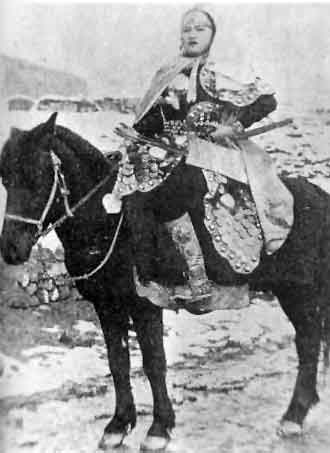
Her most famous role was the title character in Hua Mulan Joins the Army in 1928.  Hua Mulan was the young girl who dressed as a boy to go to war, the basis for the Disney animated movie Mulan.  In order to play the role convincingly, Li learned martial arts, archery, boxing, fencing and horseback riding.  

Li XiaQing as Mulan


These new skills gave her an edge off the set as well and made her a hero to the production company.   One night while they were on location, robbers snuck into the camp and stole the production money.  Li jumped on a horse, prevented the thieves from crossing a bridge, and after fighting with them for a while, tossed them over the bridge into the river.  

Li’s father wanted her to continue her education, so he sent her to Europe.  He was also ready to pass off responsibility for her to a husband.  He changed her name back to Li Xiaqing and hired a matchmaker.  She picked Zheng Baifeng who was educated at the Sorbonne in Paris and worked for China’s Foreign Service. This seemed like a match made in heaven, and the couple was married in 1929 and made their first home in Geneva.  Li was 17 years old and Zheng was almost 30.  

By 1932, Li had become a mother to a son and a daughter.  This new responsibility did not, however, interfere with her love of travel.  In 1933, Li attended the Paris Air Show and was enamored by flying.  Immediately upon returning to Geneva, she enrolled in flying lessons. One year later, Li made her first solo flight and was the first woman to receive a private pilot’s license in Geneva.  

Li’s reason for learning to fly was patriotic: to help her country advance through aviation.  In order to accomplish that, she needed to become a more proficient pilot and mechanic.  She enrolled at the Boeing School of Aeronautics in Oakland, California for advanced training.  By the time she graduated she could dismantle and reassemble an airplane engine and was versed in aerodynamics, meteorology, aircraft design and radiotelephony.  

The biggest thrill in flight for Li was aerobatics.  On May 15, 1935 she went up with instructor LeRoy B. Gregg over San Francisco Bay.  At about 2,200 feet Gregg started a barrel roll and turned the plane upside down.  When he looked back, he saw Li falling out of her seat trying to hang on.  Then, in shock, he watched her fall.  After a free fall of about 900 feet, Li remembered to pull the rip cord and activate the parachute she was wearing.  This eased her splash down into the icy cold bay.   

Li was an experienced swimmer, but her water-logged leather suit and the freezing water made it difficult for her to move.  Gregg dropped life preservers, but Li couldn’t get to them.  Luckily, airmen at the U.S. Naval Reserve Base in Alameda saw her fall and were on their way to rescue her in a Loening amphibious plane.  Unfortunately, the pontoons were stuck on this aircraft, and Li had to continue to tread water until a second one could arrive.  Li was in the water for 20 minutes until she climbed aboard the rescue aircraft.  A credit to her gender, Li only had two complaints: she was cold, and she lost a shoe.  In order to “get back on the horse,” Li went up over the Bay in the same stunt plane the following day.  Apparently, the cause of Li’s involuntary ejection was a broken seat belt, although she admitted to a reporter many years later that it was possible she had forgotten to fasten it.  

This harrowing experience earned Li membership in the Caterpillar Club, an exclusive organization of about 100,000 people with only one requirement to join.  You must have saved your own life through an emergency parachute exit from an airplane.   

On November 5, 1935, Li was the first woman to graduate from the prestigious Boeing School of aeronautics.  With a diploma, private pilot’s license and impressive experience, she returned to China.  

In 1934, General Chaing Kai-shek authorized private flying in China for the first time. After passing a demanding test, Li was the first woman to be issued a government pilot’s license, handed to her by General Chaing himself.  With this honor came responsibility.  She was given the use of a government plane and charged with inspecting all the airfields throughout China.   

Li didn’t really have time for family, and didn’t live with her husband and children. This independence had consequences.  In 1935 she divorced Zheng under the new constitutional laws which made Zheng lose face.  As a result, Li had to forfeit seeing her children until they were adults.   

Li wasn’t at a loss for romance, however.  She had met Peter Doo when she was in Europe and they corresponded while she was lived Oakland.  With Li finally a free woman, Doo went to work for her father to encourage a commitment from her.  The most she was willing to commit to was a long distance romance for eight years.  

In Shanghai, Li primarily taught flying and continued to be an example for women. For Chaing Kai-shek’s fiftieth birthday celebration she performed the first aerobatic flight by a woman.  For the finale, she dove straight at the podium full of dignitaries and pulled up at last minute, just a few feet above their heads.  Her popularity skyrocketed.  

In 1937 Japan invaded China.  Li saw this as the ultimate opportunity to use her skills to serve her country.  She was crushed when she was told she would no longer be allowed to fly because she was a woman, not even on courier missions. But she found another way to serve, by founding the First Citizens’ Emergency Auxiliary and using her own money to convert a hotel into the Red Cross Emergency Hospital.  She was driven, doing everything from administration work to assisting with surgery to organizing a refugee camp and orphanage to running the radio station that broadcast propaganda.   

The Japanese were not so appreciative of Li’s contributions and they put her on their black list, forcing her to leave Shanghai. She ended up back in San Francisco where she started working on her idea to fly around the United States raising money to support China.  She sold $7,000 worth of jewelry to buy an airplane and finance her excursions.   

Everywhere she went, Li was given a grand reception.  Audiences were surprised and captivated by her beauty and style.  The Idaho Statesman in Boise described her outfit of sharkskin slacks, no hose, leather sandals, finger and toenails polished to match the lipstick and a carnation behind her ear.  This flower became her trademark.   

Hollywood noticed her, too.  She revived her acting career as a Chinese aviatrix in the movie Disputed Passage starring Dorothy Lamour.  She took time out of her flight schedule for the three-day job, and she did her own stunts, donating her earnings to the war refugee fund.  

By 1939 Li had flown 10,000 miles and raised $10,000 for Chinese refugees.  She extended her efforts to two fundraising tours of South America, returning to Shanghai in May 1946.   

Back in Asia Li only flew for pleasure.  She met international businessman Li GeorgeYixiang (no relation).  Together they shared a love of travel, golf and horseback riding.  They settled in Oakland near where Li had studied at Boeing.  By this time, Li’s American pilot’s license had expired, and the Federal Aviation Administration would not recognize her license from Hong Kong.  So, in 1966, at 54 years old, Li began flight instruction to become recertified.   

Li never lost the thrill of flying.  One day while she was out driving, she saw a crop duster in a field.  She stopped and asked the farmer if she could take it for a spin.  She did tricks and aerobatic maneuvers, pushing the plane to its limits.  When she landed, she thanked the flabbergasted owner and walked away.  

Li was 86 years old when she died in Oakland. For her final resting place she wanted to feel the same expanse she felt while flying.  She had bought four adjacent plots in the Mountain View Cemetery and insisted that she be buried right in the center with lots of space around her.  

QUESTION: What nickname do people call you?  What significance does it have?  How has it influenced your relationship with them?  

                         ©2010 Debbie Foulkes All Rights Reserved  

Sources:  

Gully, Patti.  Sisters of Heaven.  San Francisco: Long River Press, 2008.  

http://www.airspacemag.com/history-of-flight/Chinas_First_Lady_of_Flight.html  

http://160.111.252.58/research/arch/findaids/pdf/Lee_Ya-Ching_Papers_Finding_Aid.pdf  

http://www.chinesemirror.com/index/2009/10/in-search-of-li-dandan-aviatrix.html  

http://softfilm.blogspot.com/2009/01/lee-ya-ching-flying-for-victory.html  

http://en.wikipedia.org/wiki/Caterpillar_Club  

http://www.caterpillarclub.org/irvin/irvin.htm  

HORACE RIDLER (1892–1969) Tattooed Sideshow Performer

In Biography, History, People, Sideshow Performers, Tattoos, Trivia, Uncategorized on April 26, 2010 at 6:26 PM

Horace Ridler as The Great Omi

Horace Ridler was dealt a life of privilege, but he didn’t want to play that hand.  Instead, he created a persona that was the total antithesis of his background. 

Ridler was born in Surrey, England to a wealthy family.  Growing up, he enjoyed all the privileges of education and travel such a life affords.  At the outbreak of World War I, he heeded the bugle call and served in the British Army, attaining the rank of major. 

In 1922, Ridler left military service and needed a job. This is where his life parted ways with the conventional.  After being a member of the rank and file, he wanted something that would let him stand out a little bit. The most promising prospect for him was the business of show.  He started getting pictorial tattoos and displayed his body art at small sideshows. Unfortunately, this didn’t turn out to be as profitable as he had hoped. 

Ridler decided that in order to earn more, he’d have to give the audience more.  In 1927 he started working with famed tattoo artist George Burchett who helped Ridler design a custom, whole-body look.  After 150 hours under the needle, Ridler was sporting full-body, zebra-like stripes that even covered his other tattoos.  

Through the physical transformation, Ridler created a character: The Great Omi.  He toured England and France but felt that the tattoos alone weren’t interesting enough to sustain audiences.  He amped up his look by piercing and stretching his ears with large-gauge jewelry, piercing his septum, and filing his teeth to a sharp point. 

To add entertainment value, Ridler created an elaborate explanation for his tattoos saying he was captured and tortured by natives in New Guinea.  His wife Gladys, who changed her name to Omette, got in on the act by describing Omi’s African ordeal as she introduced him. 

Ridler’s fame as Omi crossed the pond, and in 1939 The Great Omi appeared in the sideshow at the World’s Fair in Queens, New York.  When the fair closed, Robert Ripley hired him as the headliner in the Ripley’s Odditorium Theater.  During Ridler’s six month run, he appeared over 1,600 times, often doing ten shows a day.  

The Ringling Brothers and Barnum and Bailey Circus hired Ridler as Omi the Zebra Man for one season.  Success led to a solo act, and in 1941 and 1942 he toured Australia and New Zealand, worked the “World Fair Freaks” show in Vancouver, Canada, and appeared with some other traveling shows before heading back to England.  To keep things interesting, Omi and Omette wore increasingly outrageous costumes. Omi added nail polish and lipstick to complete his look, and he started giving autographs as the “Barbaric Beauty.” 

World War II brought out the patriotic in Ridler, and he tried to re-enlist in the British Army.  He was rejected, however, because his appearance was considered inappropriate for a soldier.  Back in England he served his country by giving free performances to soldiers and charity organizations and using his fame to sell war bonds.  

Ridler and his wife ultimately retired in Sussex, England, and he died in 1969.  Despite his appearance, he told a reporter he always believed that, “underneath it all, I’m just an ordinary man.” 

QUESTION:  Do you do anything to change your appearance (makeup, hair color, etc.)?  If you were to get a tattoo, what design would you choose? 

                                  ©2010 Debbie Foulkes All Rights Reserved 

Sources: 

http://en.wikipedia.org/wiki/Horace_Ridler 

http://thehumanmarvels.com/?p=17 

http://www.missioncreep.com/mundie/gallery/gallery22.htm 

http://www.google.com/imgres?imgurl=http://c3.ac-images.myspacecdn.com/images02/105/m_7c8c46c2225c4ff188adfa1730d1edc6.jpg&imgrefurl=http://www.myspace.com/thegreatomi&usg=__hXhK28uPSjbzz2B7e3F0E5BmEds=&h=211&w=170&sz=9&hl=en&start=13&um=1&itbs=1&tbnid=XrHiITrEsvQ1oM:&tbnh=106&tbnw=85&prev=/images%3Fq%3Dphotos%2BThe%2BGreat%2BOmi%26um%3D1%26hl%3Den%26sa%3DX%26rlz%3D1G1GGLQ_ENUS311%26tbs%3Disch:1