forgottennewsmakers

WILLIAM ROBINSON (1861 – 1918) Magician

In Chinese history, Magic, People from China, Vaudeville Acts on April 4, 2011 at 4:09 PM

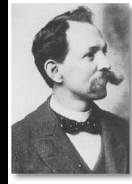
William Robinson

For a magician, deception and misdirection are the respected skills of a master.  For William Robinson, the layers of deception in his personal life were as confusing as his tricks, making audiences and friends question what was real and what was illusion.

Robinson was born in a trunk, as they say, in New York.  His father, James Campbell Robinson, was a versatile performer touring with minstrel shows.  He performed as Jim Campbell, and he specialized in ventriloquism, magic and singing in several dialects.  He also worked as a stage manager at the Houston Street Concert Saloon, filling in on stage when necessary.

Young Billy Robinson, as his family called him, wanted to follow in his father’s footsteps.  He was tall and handsome with alluring eyes like his dad, but he lacked vocal talent and charisma.  Singing was out for him, so he set his sights on becoming a magician.  The young man used his father’s props to practice illusions in front of a mirror.

Robinson started out performing at private parties and school assemblies.  His first assistant was his younger brother, Edward.  He opened with a short introductory speech and then he proceeded to mystify the audience with card and coin tricks and other sleight of hand.

BEHIND EVERY GREAT MAN IS A WOMAN        When Robinson was 21 years old he met 16 year old Bessie Smith, and they married in February 1883 after only a couple months’ courtship.  Theirs was not exactly a mutual relationship.  Smith was love struck and happy to be married.  Robinson was happy to find a new assistant.  In December a girl, Annie, was born, but the new Mrs. Robinson was not the mother.  Robinson took custody of the girl, and his parents raised their first grandchild, perhaps as a way to save face for the family.

Robinson created a larger-than-life stage persona in the tradition of the great magicians and toured around New York with his devoted assistant.  They were billed as “Robinson, the Man of Mystery, The World’s Marvelous Enchanter, Assisted by Mlle. Bessie.”  He tried to look the part with a handle bar moustache and black knickers and tails, and he started signing his correspondence “Mystically thine, W. E. Robinson.”  When he added ventriloquism and mind reading to the act he promoted himself as “Robinson, The Man of Many Voices” and “The Famous Spiritualist.”  For all his effort, reviews of the act were just tepid.

Bessie gave birth to a baby boy, Elmore, in early 1885.  Being a magician’s assistant required more than just handing props and hiding in boxes.  It involved hours of intense rehearsal to perfect the illusions and a demanding schedule.  Now, with an infant to care for, she needed to stay home, and Robinson needed to find a new assistant.

A slim, diminutive showgirl with a young face struck Robinson’s fancy during one of the variety shows he performed in.  She was the perfect size to hide in a box and had experience with the rigorous life of a touring performer.  Her name was Augusta Pfaff, but she performed as Olive Path, and Robinson affectionately called her Dot because she was so small.  She was just what Robinson was looking for as an assistant and a lover. 

WHAT’S YOURS IS MINE        During a European tour Robinson was introduced to a new style of magic, Black Art, where black fabric and lighting were used to conceal objects.  When he returned to America he immediately incorporated this new technique into his act.  He copied the idea of adopting the persona of an Egyptian mystic from the originator of Black Art.  Hiding behind an elaborate costume and the assumption that he didn’t speak English, Robinson found a new comfort level on stage.

The magician and his assistant spent all their time together building, rehearsing and perfecting each illusion, and Robinson willfully ignored his family.  Since he was Catholic, divorce wasn’t an option, so he and Bessie just pretended that they weren’t married.  Robinson and Path started going by Mr. and Mrs. Robinson, and no one questioned them.

Two of the most renowned magicians in America were Alexander Herrmann and Harry Kellar.  As bitter rivals they competed for the most dramatic illusions and best talent to join their shows.  Keller wanted Robinson to join his act to perform his Black Art illusions.  Robinson accepted the offer for sixty dollars a week which included Path as the assistant and Robinson working backstage to set up the illusions.  Keller changed Robinson’s character to Nana Sahib, the “East Indian Necromancer in Oriental Occultism.”  During his tenure with Keller, Robinson developed a levitation illusion using a special harness and derrick he developed with machinist Benjamin Keyes.

The troupe rode the wave of popularity for two seasons until Robinson got a better offer from Herrmann.  He took his special harness and his assistant and joined Herrmann’s company.  Both Robinson and Path played supporting characters in Herrmann’s illusions and also performed some of Robinson’s Black Art tricks.  Herrmann did not approve of Robinson’s previous character name, so he became Abdul Khan. 

During the summer while Herrmann vacationed in Europe, Robinson and Path developed their own show, performing in the Catskill Mountains and in Boston.  He revived the persona of great magician in tails, but he still didn’t feel comfortable as himself on stage.  He had to admit that his best role was as an assistant.

After two years with Herrmann, Robinson heard from Keller again.  Keller had just returned from London with many new tricks, and he used the sketches for new illusions to entice Robinson to come back.  He was hopeful that Robinson would take the bait and bring with him Herrmann’s best illusions.  Robinson couldn’t resist.  For the Black Art act, Robinson’s character went back to Keller’s name: Nana Sahib.

In 1894 Herrmann, who usually preferred his older tried and true tricks, incorporated some new ones into his act.  Two of them were virtually identical to ones that Robinson had developed with Keller.  Now there was no doubt that part of Robinson’s value was because he stole secrets. 

He had plenty of secrets in his private life, too, that he wasn’t so eager to share.  He and Path still maintained that they were married, but they weren’t.  Robinson didn’t care about a family, so the legality of relationships was incidental.  Bessie had “remarried” without a legal divorce from Robinson.  Their son, Elmore, didn’t really fit into either family, so he was placed in an orphanage.  Robinson’s life, like his illusions, was not all that it appeared to be.

REINVENTING HIMSELF         One of Herrmann’s new tricks was the Marvelous Bullet Catching Feat.  He caught six marked bullets fired from rifles in the audience on a plate in front of his chest.  Because of the risk and high dramatic value, he only performed it seven times for charity shows.  Robinson was an indispensible assistant on this illusion as the person who ensured that the bullets in the gun were actually blanks.

In 1896, Herrmann died, and Robinson decided it was time to have his own show.  He tried to resurrect his vaudeville act, but he couldn’t overcome his bad teeth and shy voice.  For a while, he and Path worked for Mrs. Herrmann who tried to continue her husband’s act to pay off the debt he left her.  Robinson also wrote journal articles giving advice and leaking secrets to magicians.

After two years of struggling, Robinson attended the Trans Mississippi Exposition in Nebraska and came face to face with his future.  At the fair, Chinese magician Ching Ling Foo performed illusions he brought from China.  He didn’t know English, so he performed in silence, using pacing and broad gestures to connect with the audience.  Later, when Foo was the headliner in New York, Robinson spent countless nights studying every detail of Foo’s act from the back of the theater. 

In 1899 Robinson left Mrs. Herrmann’s company, and, with another stolen idea, set out on his own again.  He reinvented himself as Hop Sing Loo, a Chinese speaking magician.  He shaved his moustache and his hairline and donned a wig with a long braid in back.  He used greasepaint to change his skin tone and purchased a costume from Chinatown.  Path added to the deception by become a Chinese princess, and Robinson hired a real Chinese juggler, Fee Lung, to round out the performance.

Robinson got an invitation from a manager, Ike Rose, in France to bring Hop Sing Loo and the troupe to Europe.  Robinson sold his levitation illusion and collection of books to finance the trip.  In March 1900, Hop Sing Loo appeared on stage for the first time, and the show was a disaster.  Loo’s magic was slow and deliberate, and a trick involving a large bowl of water went awry, sending a cascade into the orchestra pit and drenching the musicians.  Despite the opening night mishap, Rose managed to convince the theater owner to keep Hop Sing Loo on the bill for the contracted week, deducting the damages to the theater from his salary.  Robinson settled into the role and refined the illusions, and he felt more confident as Hop Sing Loo than he ever had as himself.

The next stop on the tour was London, and Rose made only one major change in Robinson’s act.  He hated the name Hop Sing Loo and insisted Robinson change it.  Ching Ling Foo was gaining in popularity in America, and since Robinson had already appropriated Foo’s character and a couple of his tricks, why not go all the way and imitate his name?  Robinson became Chung Ling Soo, and Path became Suee Seen.

There was virtually nothing in Soo’s act that was authentically Chinese.  Since Soo (as he was known in the press) didn’t speak English, even talking to the press was another gimmick.  A reporter would ask Fee Lung a question which he would repeat to Soo in actual Chinese.  Soo would respond in Chinese-sounding gibberish which Fee Lung would translate back into English.
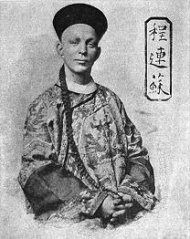
Chung Ling Soo

Even though fellow magicians and other performers knew that Robinson was Chung Ling Soo, the public embraced his talent and accepted the guise along with it.  Soo became such a crowd-pleaser that he was earning about $5,000 a week with bookings two years in advance.  The troupe grew to 14 people, including a new juggler/stage manager, Frank Kametaro, who was Japanese.  Kametaro spoke Japanese and English but not Chinese.  During interviews, he would translate the questions to Soo in his own version of gibberish Chinese, often sounding quite different from the fake Chinese his boss was speaking.  None of the reporters seemed to notice as nothing was ever written about it.

WILL THE REAL CHINESE MAGICIAN PLEASE STAND UP        In 1904 Ching Ling Foo began a European tour in London.  He was getting limited bookings because of Soo’s act.  Foo challenged Soo to a duel of magic to prove who the real Chinese illusionist was.  Foo set the terms.  He would win if Soo failed to do ten out of twenty of Foo’s tricks, or if he failed at any one of Soo’s illusions.  Robinson accepted the challenge.

Robinson knew that losing could cost him his career.  He solicited help from an old friend for an ace-in-the-hole trick.  Magician Harry Houdini agreed to teach Robinson one of his best illusions.

On the day of the event, Soo and his entourage arrived in pompous splendor.  The small audience consisted of theater managers, who were the judges, reporters and Houdini.  After waiting half an hour for his competitor to show up, Soo entertained the crowd with ten successive tricks, and he was pronounced the winner.  Robinson changed his publicity from “The Wonderful Chinese Conjurer” to “The Original Chinese Conjurer.”

FOR LOVE OR MONEY        After 20 years of being together, Robinson and Path, both in their 40s, decided to do the right thing, so to speak, getting married in a brief civil ceremony in March 1906 in England.  The truth was so nebulous by this time, however, that to legalize their relationship only added to the complication.  Robinson was technically still married to Bessie, although he claimed to be divorced, and his many affairs made his devotion to Path dubious.  One of the objects of his affection, Louise Mary Blatchford, was barely 21 years old, and a year after Robinson was married matters got more complicated when Blatchford revealed she was pregnant.  Path was furious because Blatchford insisted that Robinson acknowledge his baby and act like a father, and Robinson, now ready for a family, agreed.  He set Blatchford up in a home in west London, and in early 1908 a son was born.

Mr. and Mrs. Robinson stayed married for the good of the act and created a business partnership.  Path started receiving a weekly salary for being Suee Seen and all of her responsibilities behind the scenes.  The members of their troupe referred to them as Mr. and Mrs. Soo, and when Blatchford came for a visit, they called her Mrs. Robinson.  When the company wasn’t touring out of the country, Robinson would visit his family on Sunday while Path and Kametaro were responsible for moving the show to the next location and setting up.  Robinson built a workshop behind his house where he could build and test illusions.  After two more children were born, Robinson spent more time in the workshop than he did with his family.

A KILLER TRICK        Chung Ling Soo had incorporated Herrmann’s Bullet Catching Trick into his own act, although he performed it rarely.  In 1918, he added it to the repertoire for a week of shows near London.  On Saturday night he had a guest in his dressing room while he was preparing the guns, and he mentioned that he didn’t feel well.  While he stepped out for a moment, Suee Seen got the weapons and put them on the prop table backstage, and then the stage manager called, “Places!”

The audience was thrilled that they would be seeing Soo perform “Defying the Bullets.”  Toward the end of the show, about 10:45, two volunteers from the audience marked the bullets to be used, and Soo and his assistants got into position.  Immediately after the command to fire, Soo staggered backwards and blood started pouring out of his chest.  The audience wasn’t sure if this was part of the act until Soo said in perfect English, “Oh my God.  Something’s happened.  Lower the curtain!”  The curtain was dropped and they played a newsreel.

Suee Seen rushed on stage, and Soo impelled her to call for a doctor.  One stage hand ripped off part of the curtain to keep Soo warm.  It took about 45 minutes for doctors to arrive, and by then they could barely find a pulse.  A bullet had grazed the heart and fractured the fifth rib upon entering Soo’s body and then exited through the back.  It wasn’t until 2:30am that Soo was taken to a hospital, and he died about two hours later.

At the coroner’s inquest Path had to reveal the secret of the trick so the jury could understand what happened.  She also had to explain the triangle of her, her husband and the woman he was living with.  After testimony by Robinson’s other assistants, the coroner and a gun expert, the jury ruled Soo’s death an accident, calling it “death by misadventure.”

QUESTION:  Have you ever promised to keep a secret and then shared it with someone?  What happened?

©2011 Debbie Foulkes All Rights Reserved

Sources:

Steinmeyer, Jim, The Glorious Deception: The Double Life of William Robinson, aka Chunk Ling Soo, the “Marvelous Chinese Conjurer.” New York: Carroll & Graf Publishers, 2005.
http://www.hat-archive.com/chunglingsoo.htm

PANCHO BARNES (1901 – 1975) Pilot, Proprietor, Partier

In American History, Ballooning, California History, Feminists, Hollywood, Pilots, women on March 16, 2011 at 9:17 AM

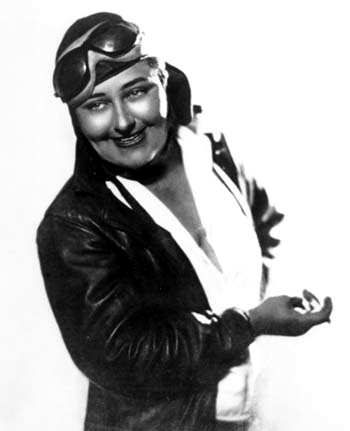
Pancho Barnes

Pancho Barnes was a force of nature, and she didn’t do anything in a predictable way.  She was born into wealth, but couldn’t stand the obligations living in high society demanded.  Her first marriage was arranged, but subsequent ones were based on passion.  Her friends, mostly men, included movie stars, test pilots and anyone who could keep up with her adventuresome spirit.  There wasn’t anything she wouldn’t do except for one: conform to what other people expected of her.

Barnes’ grandfather, Thaddeus Sobieski Constantine Lowe, was an inventor and pioneer balloonist.  He was the first person to take photographs from a balloon and helped the Union Army with reconnaissance during the Civil War.  When he moved his family from Pennsylvania to Pasadena, California in 1888 they settled in a 24,000 square foot mansion on Millionaire’s Row.  Among other business ventures, he created the Mount Lowe Railway in the local San Gabriel Mountains which ended up costing him his entire fortune, and he died poor.

Barnes’ father was Thad Junior, the seventh child of ten.  He worked in his father’s businesses, but he preferred to spend his time outdoors and was an excellent horseman.  He married Florence Mae Dobbins, a staunch Episcopalian from another moneyed family who also had moved west from Pennsylvania.  The bride’s parents gave the couple a house in neighboring San Marino and eight years later upgraded it to a 35 room estate with servants, a pool, tennis courts and stables.  Barnes’ older brother, William Emmert, was constantly sick and died when Barnes was 12 years old.  While her mother cared for her brother, the rambunctious tomboy was spoiled by her father.

Barnes inherited her passions from her grandfather and father, and they treated her like the boy they wanted.  When she was three, her father gave her a pony.  For her fifth birthday, she got a Thoroughbred, and she won her first equestrian trophy that year.  When she was nine, her grandfather took her to the first American aviation exhibition near Long Beach.  From her mother, she inherited her name and, unfortunately, her masculine looks.

GIRLS JUST WANNA HAVE FUN       After a few years of home schooling, Barnes was enrolled in the Pasadena Elementary School, the only girl in a class of 23 boys.  She could run faster, spit, curse and fight better than most of her classmates.  Her behavior became an issue, but her parents didn’t know what to do about it, so they moved her to a prestigious prep school, Westridge School for Girls.  Barnes proved that she just wanted to have fun and didn’t care much about rules, so her parents moved her to a nearby Catholic boarding school, Ramona Convent.  During her second year there she ran away on horseback to Tijuana.  Now her parents were desperate, but the only option they could think of was to move their daughter away to the Bishop School in La Jolla, an Episcopalian boarding school.  Somehow Barnes managed to survive the two years until graduation.

After she graduated, Barnes announced that she wanted to be a veterinarian.  That was such an appalling idea to her mother that she promptly enrolled the teenager in Stickney School of Art for a more ladylike course of study.  This did not offer any real long term prospects, however, so Barnes’ maternal grandmother arranged for her to marry the rector of the local Episcopal church.  It seemed like a win-win situation, if not a perfect match.  The groom would be appeasing a major contributor to the church and get a new bell tower.  The bride would be able to stop living with her parents and have a shot at independence.

THAT’S NOT A LADY, IT’S MY WIFE          Barnes and Reverend C. Rankin Barnes were married in January 1921.  The first time the couple kissed was at the wedding, and the only time they were intimate was on the honeymoon.  Nine months later a baby boy, William Emmert Barnes (“Billy”), was born.

As was to be expected, Barnes was totally bored being a poor pastor’s wife, but she tried to fill the role for a while.  She taught Sunday school and bribed the kids in catechism class with jackknives to entice them to behave.  She had no maternal instinct, and nurturing a baby was asking too much of her.

Relief came from the burgeoning film industry in Hollywood.  Barnes started riding her horses in movies and was so adept she could carry a camera on her shoulder while riding.  She was earning at least $100 a day, and as soon as she could she hired a cook, housekeeper and full time nanny.  She was so successful Aimee Semple McPherson hired Barnes as her stunt double in shows.

When Barnes was 22 years old, her mother died.  Her father’s way of coping with the loss was to marry a woman only three years older than his daughter and move to Lake Arrowhead.  Barnes coped by running away, traveling across the country by herself for several months.  When she returned she took up with a college student and discovered how much fun physical intimacy could be.  Their affair lasted several months, and it was followed by another.  Barnes’ occasional attempts to act like a pastor’s wife didn’t overshadow her indiscretions, and she became an embarrassment to her upstanding family.  She left again, under pressure, on a cruise to South America.

A LONG WALK HOME          When she returned, she moved into her parents’ house, but she didn’t stay put for long.  When some friends got the idea to get hired on as crew on a banana boat bound for South America, Barnes, the only woman, didn’t hesitate to join them.  She dressed as a man and signed on as “Jacob Crane.”  As soon as the boat left the dock, the adventurers discovered they were running guns and ammunition to revolutionaries in Mexico.  When they arrived in San Blas, the ship was boarded by armed guards who used the vehicle to shelter the town’s money from the rebels.  The crew was held hostage for six weeks.  Barnes and the helmsman, Roger Chute, were the only two courageous enough to escape.

The pair stole a horse and burro and set out through the Mexican countryside.  Barnes quipped that her partner looked like Don Quixote, and he said that made her “Pancho.”  She corrected his reference, saying the character’s name was “Sancho Panza,” but Chute liked “Pancho” better.  Barnes liked the sound of Pancho Barnes, and the name stuck.

The journey continued on foot, and Barnes and Chute walked over 250 miles from Mexico City to Vera Cruz where they became stowaways on a boat.  With help from a connection at the American Embassy, they eventually got on another boat to New Orleans.  From there they walked, hoboed and hitchhiked to California.  For all of the challenges of the trip, Barnes saw it as a total adventure, and finally she knew who she was and what she was capable of.

TAKING FLIGHT         It didn’t take Barnes long to need another adventure, and she turned her attention skyward.  In spring of 1928 she started taking pilot’s lessons.  Her instructor was a World War I pilot, and the airplane had one instrument in it: an oil gauge.  A key chain hung from the control board to determine if they were flying straight, and they looked over the side to judge altitude.  To know how much gas they had, they dipped a string in the tank and estimated how far they could go.  Barnes was immediately hooked, and she bought herself a Travel Air biplane for $5,500.  She was more captivated by the thrill of the early days of flying than deterred by the dangers.  In 1928 on a trip to San Francisco her engine quit, and she had to make eight emergency landings.

The enterprising woman found various ways to earn income as a pilot: test pilot for airplane manufacturers, making promotional flights for Union Oil, and stunt pilot and technical director for the movies.  Barnes helped Howard Hughes capture authentic audio of planes for Hell’s Angels by flying past tethered balloons with sound equipment attached to them.

Her interests took a political bent when she founded the Association of Motion Picture Pilots (AMPP) in 1932 so the pilots could get fair wages for their often death defying work.  That year she also tried to parlay her popularity into a bid for Supervisor for the Third District in Los Angeles.  Even with an endorsement from fellow pilot Amelia Earhart, Barnes wasn’t able to convert her generosity and clout into political office.

Barnes worked constantly, but she was better at spending money than saving it.  Her home was party central, constantly full of flying and movie industry friends.  She had an open door, open bar policy, and she never expected her guests to help foot the bill.  In addition to spending lavishly, she used her house and other properties as collateral to buy more real estate investments without any regard as to how she would make payments.

STARTING OVER  By 1935 Barnes was broke.  Conceding that she would never become famous because she didn’t have the requisite good looks or personal backers, she decided it was time to reinvent herself.  She rented out the San Marino estate until she was ready to sell it, and she traded an apartment building in Los Angeles for a four-room house and hay barn on an 80-acre alfalfa ranch in the Antelope Valley near Muroc Dry Lake.  She moved her horses and airplane to the middle of nowhere.  The nearest town was 20 miles away from her Rancho Oro Verde, but there was an encampment for an Army Air Corps squadron to conduct exercises and bombing practice.

Barnes was by no means isolated in this desert wasteland.  She created an air strip out of the hard earth and built guest quarters so her friends could fly in for a visit.  By 1941 she had 360 acres with a farmhouse, stables and swimming pool.  She knew nothing about alfalfa farming, so she expanded her venture with dairy cows and pigs.  Billy had been living with his dad, but the teenager joined his mom to help out and enjoy new freedom, and Barnes tried to act more like a mother to him.  Barnes opened her home and heart to the local fly boys, and even Colonel Clarence Shoop, the commanding officer of the Flight Test Center, used Barnes’ facilities to host parties for visiting dignitaries.

In 1939 the Civilian Pilot Training Program was established to train pilots, and Barnes got a government contract to supply planes and instructors for the local school.  One of the students distinguished himself from the others.  Barnes had had many lovers, but she met Robert Hudson Nichols, Jr. (“Nicky”), about the time her husband asked for a divorce, freeing her and Nicky to get married.  The pilot training program lasted two years.  The marriage lasted two weeks.

After the bombing of Pearl Harbor, the government discontinued the civilian training program and the Muroc Army Air Base became Edwards Air Force Base.  With the influx of Air Force test pilots, there were even more guys who joined Barnes’ Hollywood friends to hang out, get a good meal and be entertained.  She could match them with flying stories, jokes, drinking, smoking and swearing, and they loved her.  Barnes was totally unaware of how much it cost her to host her friends.  She often ran out of money to feed the horses or pay bills, and she accrued several liens on her property.  But, if all you need is love, Barnes was happy.  In 1944 she met Don Shalita, a very handsome show dancer six years her junior.  His career was winding down so he moved to the ranch, and a year later they were married.  This time Barnes broke a longevity record for actually living with a husband: four months.

HAPPY BOTTOM RIDING CLUB            Barnes received an inheritance from her uncle, and after World War II she used it to improve her property, calling it Pancho’s Fly-Inn.  On 300 acres she opened her own airfield with two runways.  Anyone could tie down their plane for free, but they had to buy gas and oil from Barnes.  There was a hanger, repair shop and flight school.  She added rooms with air conditioning and private baths to her guest house.  Barnes built a racetrack, and there was even a fishpond in the shape of the Air Force emblem.  She advertised in the Los Angeles newspapers for families to enjoy her “modern flying dude ranch” for $49 a week, per person, meals included.

In the late 1940s and 1950s, the likes of General Al Boyd, Commander of Edwards AFB, and Chuck Yeager were regulars at Barnes’ place, but it had become so popular that she felt she was missing the spirit of the old days.  She converted the bar and grill into a private club for her Edwards AFB and Hollywood friends and called it the Happy Bottom Riding Club.

One of the newer Happy Bottom guests was pilot Eugene McKendry (“Mac”), who ended up at the ranch after returning from a tour of duty overseas.  His wife was divorcing him and giving him custody of their son, and Mac needed some encouragement and a place to live.  He found both with Barnes, and he was there for her when she needed support.

When Barnes was 45 years old, she suffered from hypertension and had a retinal hemorrhage.  She ignored the symptoms until she collapsed and a ranch hand called the doctor.  Barnes consented to experimental surgery called sympathectomy which destroys nerves in the sympathetic nervous system to increase blood flow.  It required two operations with 18-inch incisions on both sides of the spine and partial removal of four ribs.  Mac was by her side during her lengthy recovery from the operation and a bout of pneumonia.

Life at the Club continued to be one big party, and liquor was flown in illegally from Mexico.  Barnes sponsored air shows, rodeos and aerial treasure hunts with other airports.  She hired hostesses to wait tables and dance with the men.  Barnes denied that she was running a brothel, but the wives of the pilots resented that they spent their free time there, regardless of what they were doing.

In addition to the usual carousing, in June 1952 Barnes was involved in planning another bash, her fourth wedding, to Mac.  The bride was 51 years old, and the groom was 32.  Commander Al Boyd gave the bride away, and Chuck Yeager stood up as her attendant.  The 58 second ceremony was presided over by Judge J. G. Sherrill and witnessed by 650 guests.  Then the couple exchanged vows again in a Native American ceremony officiated by Chief Lucky and Little Snow White of the Blackfoot tribe.  The wedding banquet included four whole roasted pigs, 80 pounds of potato salad, 16 gallons of Jell-O and a 50 pound wedding cake.  One of the entertainers at the reception was Lassie.

DEALING WITH CHANGE    That same year the leadership of Edwards changed, and Brigadier General J. Stanley Holtoner took command.  He was all business and didn’t enjoy Barnes’ hospitality as his predecessors had.  In addition, the government was buying up all the property adjoining the air base.  This seriously jeopardized what took Barnes almost 20 years to build.  The FBI investigated Barnes for possible illegal activity, but the worst they could accuse her of was bad credit.  There were enough law suits and counter suits to keep both sides busy for a long time, and Barnes always acted as her own attorney.  The government finally got legal title to Barnes’ land and gave her $185,000.

A few months later, Barnes was driving home from shopping when she saw smoke coming from her property.  She lost everything in the house, barn and dance hall to the fire.  Conspiracy theories circulating around implicated the government, Barnes and even a drifter who was hanging around.

The disastrous fire was the beginning of the end for Barnes.  She tried to start over a few miles north in the Mojave Desert and took out mortgages on over 1,000 acres with a little café and gas station.  She treated herself to horses, a Stinson airplane and catamaran, but she lived in an abandoned rock building with a dirt floor and broken windows.  She had big plans for Gypsy Springs, but she still hadn’t learned to manage her money, and Edwards Air Force Base had grown into a self sufficient community and no longer needed her hospitality.

To compound her problems, Barnes had health issues and relationship issues.  She was diagnosed with breast cancer and had a double mastectomy.  Mac moved to Gypsy Springs and was there for her during the two surgeries, but their relationship was rapidly deteriorating beyond reconciliation.  In 1962, Barnes sued her husband for divorce.

In her late 60s, Barnes found herself alone.  An old friend offered to let her live rent free in a 20 by 25 square foot house.  She started breeding Yorkshire terriers, but they just contributed to the increased squalor that she lived in.  Her best asset was storytelling, and she was invited to speak at local clubs and banquets, regaling audiences with the spellbinding tales of her life.  In the summer of 1971 some of her old friends at Edwards, including Buzz Aldrin, threw a party for her 70th birthday on the base.

Barnes could not create a future for herself, and she ended up living off memories and dreams.  In the spring of 1975, she never showed up for a speaking engagement and was found dead in her home surrounded by putrid filth.  Two friends got permission to fly over the old Rancho Oro Verde and scatter her remains.  As the ashes started to drift toward the ground, a crosswind came up and redirected them back into the cockpit of the Cessna.  Even in death Barnes still loved a good joy ride.

QUESTION:  How are you different than what you think other people expect you to be?

© 2011 Debbie Foulkes All Rights Reserved

Sources:

Kessler, Lauren, The Happy Bottom Riding Club: The Life and Times of Pancho Barnes.  New York: Random House, 2000.

Tate, Grover Ted, The Lady Who Tamed Pegasus.  Maverick Publications, 1984.

Schultz, Barbara Hunter, Pancho, The Biography of Florence Lowe Barnes.  Lancaster, California: Little Buttes Publishing Co., 1996.

http://www.panchobarnes.com/index.html

http://www.centennialofflight.gov/essay/Explorers_Record_Setters_and_Daredevils/Barnes/EX17.htm

http://happybottomridingclub.com/#/home/

http://www.surgeryencyclopedia.com/St-Wr/Sympathectomy.html

STEPHEN HOPKINS (1581 – 1644) Jamestown Colonist and Pilgrim on the Mayflower

In adventure, American History, Explorers, People from England, Sailing on February 24, 2011 at 11:00 AM

When the opportunity for freedom and independence brought settlers to the Jamestown colony, Stephen Hopkins, a merchant from Hampshire, England, missed the first two chances to go.  But, when the Virginia Company was looking for recruits a third time, Hopkins was ready.  At 28 years old, he left his pregnant wife, Mary, and three children to join the Third Supply expedition to the New World.  When a hurricane hit them and the colonists were forced to make a detour, Hopkins’ rebel spirit almost cost him his life.

When they set sail in May 1609, Hopkins was aboard the Sea Venture, the flagship vessel of seven ships. They were commissioned to bring desperately needed supplies and more settlers to the Jamestown colony.  He signed on as a servant

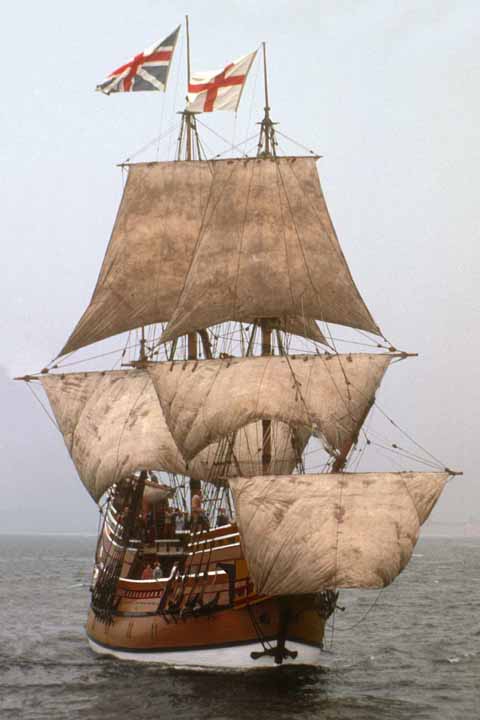
The Mayflower

who would receive free passage to the colony, lodging, food and ten shillings every three weeks to send back to his family in England.  After living in the New World for three years he would be free of his obligations to the investors and receive 30 acres in the colony.  Such an arrangement seemed like a small price to pay for someone as independent minded as Hopkins.

Onboard the ship, Hopkins was characterized as a loud mouth who quoted the Bible a lot.  Even though he was not especially religious, he was very knowledgeable of the Scriptures and became the clerk to the chaplain.  It was his duty to read the Bible verses during the Sunday church services.

A DISASTER AT SEA           On Monday, July 24, two months after leaving England, the expedition was only about a week away from their destination when a hurricane out of the south proved to be more than they could handle.  The seven ships were scattered like autumn leaves, and they lost track of each other.  The planks of the Sea Venture were held together by oakum, fibers from ropes wedged between the boards and covered with tar.  The seal did not hold, and through the leaks, the ship took on water.

For four days Hopkins and the other male passengers were pumping and bailing water.  It was estimated that they dumped 6, 400 gallons of water every hour, but that was not enough to keep them from sinking.  They also had to throw overboard half of their guns and a lot of their luggage, food and supplies.

Determination and hope were barely outlasting exhaustion and hunger, and most of the passengers were sinking into the resignation that they would die very soon at sea.  On Friday, July 28, their efforts were rewarded, however, and land was sighted.  Energy was renewed, and the ship was able to precariously run aground at Bermuda.  Miraculously, no one was killed or seriously injured in the storm.

SO CLOSE AND YET SO FAR            Landing at Bermuda turned out to be a happy accident.  There was plenty of food and since it was an uninhabited island, the castaways didn’t have to defend themselves against natives.  The worst that happened to most was getting sick from eating too many berries or drinking too much “bibby” made from the fermented fruit of the palmetto tree.

Despite the positive experience the castaways were having, the goal was still to get to Virginia.  The Sea Venture was destroyed in the storm, so they used whatever wood they could salvage and supplemented it with local cedar to build two boats to carry everyone on to Jamestown.

Hopkins, however, knew a good thing when he saw it.  He wanted to take advantage of the riches Bermuda offered and to colonize it.  He theorized that since they hadn’t made it to Jamestown they were no longer obligated to the Virginia Company.  Hopkins had to secretly try to enlist supporters because Sir Thomas Gates, who represented the Virginia Company as the incoming governor in Virginia, had already reminded the group that dissent would not be tolerated and that, traditionally, going against the commander’s orders was punishable by death.

Two men who entertained Hopkins’ proposal but then feared being associated with him reported the rebel to Gates.  Hopkins was tried on January 24, 1610 for mutiny.  After hearing condemning testimony against him, Hopkins had only one strategy to save himself.  He cried and begged that his life be spared for the sake of his family back in England.  He made such a dramatic plea that several men became sympathetic enough to hound Gates until he pardoned Hopkins.

YOU CAN GET THERE FROM HERE                On May 10, 1610, after nine months of relatively comfortable island living, Hopkins and the castaways set sail on two ships, Deliverance and Patience, for their original destination.  Both ships made it safely to Virginia, and they were greeted with good news: the other six ships in the original expedition had gone directly there, although the passengers were in very bad shape.

The bad news was that on their arrival at Jamestown on May 23, the newcomers found that the population of settlers had been decimated by a devastating drought, famine and harsh winter, and they had been forced to resort to cannibalism for survival.  The food and supplies the Third Supply expedition was to bring were lost in the hurricane.

Gates acknowledged that the only chance they had for survival was to go back to England.  Just as they were abandoning Jamestown, help arrived.  Lord Delaware and his convoy of three ships brought enough food for a year.  Delaware became governor and rebuilt the settlement into a successful community.

Hopkins’ wife died in 1613, and he made his way back to his homeland some time after that to be greeted by the news and to learn that his children were orphans in the custody of the Church.  He reclaimed his family and moved to London where he worked as a tanner.  In February, 1618 Hopkins married Elizabeth Fisher and had a daughter at the end of the year.

HEADED BACK TO THE NEW WORLD             Once again an irresistible opportunity came knocking.  A group of Separatists were going to the New World to establish a community free of religious ties to the Church of England.  They were interested in settling near a more tolerant Dutch colony near the mouth of the Hudson River.  In order to increase their numbers, they recruited some whose ambition was more for the economic opportunities than for religious reasons.  Hopkins was the perfect candidate, especially with his previous experience in Jamestown, and he signed on as a “Stranger.”  This time he packed up his family to make the voyage with him on the Mayflower, leaving on September 6, 1620.

Hopkins’ party included his pregnant wife, three children and two servants.  Somewhere in the Atlantic the baby was born, and they named him Oceanus.

The journey was not as dangerous as the previous one, but it wasn’t a pleasure cruise either.  Elizabeth and children stayed in the dark gun deck in makeshift compartments.  Hopkins slept in a hammock wherever he could find a place to hang it.  They did encounter a couple of severe storms that drenched the passengers and their belongings and cracked a main beam of the ship.  Fortunately, some clever passengers were able to fix that and stop the leaking.

After 66 days at sea, on November 11 the Mayflower stopped in Provincetown, Massachusetts, north of their Hudson River destination.  There was a lot of discussion about whether they should continue on to find the Hudson or stay put.  Hopkins, despite almost being killed for his independent ideas in Bermuda, politicked for staying where they were so they would have less governing oversight and more freedom to do what they wanted.  He argued, again, that since they hadn’t reached their original destination they were exempt from obligation to their original agreement.

After much deliberation, Captain Jones made the safe decision, considering it was winter, to weigh anchor there.  Jones assembled Hopkins and the other male passengers into his cabin to determine how to proceed.  During that meeting it was decided that a set of laws was needed to unify the group and create a “civil body politic” for the good of the whole colony.  Hopkins was one of the 41 present to sign the document called the Mayflower Compact.

Because of his previous experience in the New World, Captain Miles Standish chose Hopkins and a few other men to explore the territory.  They were scouting for weeks to find a suitable location to establish their colony.  One morning they were attacked by Indians, and later they got caught in a storm that damaged their boat.  On December 11, 1620 they found “Thievish Harbor” where there was fresh water and no natives.  Five days later, the Mayflower landed there, and two weeks later they began construction on the common house, the first building of the Plymouth Plantation.  The settlers lived on the Mayflower until they could build houses for themselves.

Hopkins had one of the largest houses in the settlement.  It had the typical fenced garden, a barn, dairy, cowshed, and apple orchard.  There was enough space to accommodate the five children who were born after 1622.  He built the first wharf in Plymouth, a tavern, and a small store where Indians could trade beaver skins for English goods.

Having Hopkins in the community was a great asset.  He was adept at fishing and hunting, and because of his previous experience as a colonist, he acted as a liaison to the local Indians, often welcoming them into his own home to dine and even spend the night.  One native, Squanto, lived with the Hopkins family.  He had learned English when he was kidnapped by previous English explorers and taken to England for a while, and he was the sole survivor of his tribe which had been wiped out by disease brought to the New World by the foreigners.

Squanto’s association with the colonists was mutually beneficial.  He made possible a visit by Woosamequin ‘Yellow Feather,’ the chief of the Wampanoag tribe.  Both the Wampanoag and the settlers feared another tribe, the Narragansetts, and needed allies.  With Hopkins acting as host, Governor Carver and the chief negotiated a peace treaty that guaranteed support in the case of attack, a compact that lasted for 50 years.

LAW MAKER AND BREAKER           Although loyal to King Charles I, the citizens of Plymouth created their own laws and local government.  Hopkins was elected as one of seven Council Assistants who served as advisors to the governor and ruled in judicial matters.  Being one to help create the laws did not make Hopkins a model citizen, however.  In June, 1636 he was found guilty of beating John Tisdale and fined £5.  As the owner of a tavern, he was responsible for the behavior of his patrons.  Several times he was fined for serving drink on Sunday, for permitting servants to drink and play shuffle board at his place, and for allowing his friends to get drunk.  He was also guilty of price gouging.  He had to pay £5 for selling wine, beer and liquor for exorbitant prices, and he tried to sell a mirror for 16 pence that could be bought somewhere else for nine pence.

One incident landed Hopkins in jail.  His indentured servant, Dorothy Temple, was pregnant by a man who had been hung for murder.  She was whipped for having a bastard child, but then she had nowhere to live.  The court ordered Hopkins, as her owner, to be responsible for her support for the duration of her contract.  Hopkins wanted to resolve the matter on his own terms without a court order, and he was found to be in contempt.  He spent four days in jail until John Holmes agreed to take Temple and her son to live with him for the payment of £3, relieving Hopkins of his obligation.

Hopkins again outlived his wife when Elizabeth died in 1640.  Four years later he prepared for his own passing.  He wrote his will on June 6, 1644 and died sometime shortly thereafter, although the exact date is not known.  He was 63 years old.  He was considered wealthy by local standards and bequeathed to his children his house, many animals and “moveable goods” such as books, rugs, flannel sheet, a frying pan, fire shovel, butter churn, two wheels, a cheese rack, scale and weights and four skins.

QUESTION:  Do you think it’s more important to stand up for what you believe at all cost or to find a way to compromise to fit into a group?

©2011 Debbie Foulkes all Rights Reserved

Sources:

photo credit: http://ed101.bu.edu/StudentDoc/current/ED101fa10/reillys/content1.html

Woodward, Hobson, A Brave Vessel, The True Tale of The Castaways Who Rescued Jamestown and Inspired Shakespeare’s The Tempest. New York: Viking, 2009.

Philbrick, Nathaniel, Mayflower, A Story of Courage, Community, and War. New York: Viking, 2006.

http://www.mccarterfamily.com/mccarterpage/stories/stephen_hopkins/intro.htm

http://www.mayflowerhistory.com/Passengers/StephenHopkins.php

http://pilgrimhopkins.com/site1/Newsletters/AC_su07.pdf

http://www.usconstitution.net/mayflower.html

http://www.mayflowerhistory.com/PrimarySources/MayflowerCompact.php

http://www.histarch.uiuc.edu/plymouth/ccflaw.html#Ic

http://www.mayflowerhistory.com/PrimarySources/WillsAndProbates/StephenHopkins.php