forgottennewsmakers

Archive for the ‘History’ Category

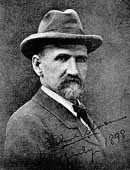
JOSHUA SLOCUM (February 20, 1844 – November 1909?) First Person to Sail Around the World Solo

In adventure, Biography, Explorers, History, Sailing, Sailors, Trivia, Uncategorized on May 24, 2010 at 9:19 PM

Joshua Slocum

Joshua Slocum grew up by the sea. His grandfather was lighthouse keeper on Brier Island at the mouth of the Bay of Fundy, Canada, and his father made shoes for the local fishermen. But being close to the water wasn’t good enough.  He needed to conquer it, until it conquered him.

Slocum was one of eleven children, and his father was very strict. He couldn’t wait to find his place in the world with open space and less competition.  The obvious place to head was out on the ocean.  He tried to run away from home several times, and when he was 14 years old got hired as a cabin boy and cook on a fishing schooner.  That didn’t last long, however, and he ended up back at home.  Two years later, in 1860, his mother died in childbirth and Slocum couldn’t bear to stick around.  He and a buddy headed out for Dublin, Ireland as merchant seamen.

Slocum had found his passion and traveled the world.  He earned his certificate as a Second Mate and ultimately became a Chief Mate of British ships.  In 1865, San Francisco became his home base, and he became an American citizen. 

Slocum did not have to sail through life alone. He found his perfect first mate, Virginia Albertina Walker.  For one month in 1870, his ship was in Sydney harbor, and he met and married Walker, who happened to be an American.  She joined Slocum on his trips, and they had seven children, all born at sea or in foreign ports.

Slocum commanded several ships across the Pacific.  His hidden desire to be a writer was fulfilled as a correspondent for the San Francisco Bee

In 1884, the Slocum family was headed for South America when Virginia became ill and died.  Not able to care for the children on his own, Slocum left the youngest ones with his sister in Massachusetts.  His oldest son, Victor, became his new first mate. 

Two years later, when he was 40, Slocum married his 24 year old cousin, Henrietta Elliott.  She was not as enamored by life at sea as Virginia had been, perhaps because during the first year they sailed through a hurricane and the crew contracted cholera which required being quarantined.  In addition, sometime later they were stricken with smallpox, which killed three crew members, and finally, in 1887, they were shipwrecked in Brazil.

Not wanting to spend the rest of their lives in Brazil, Slocum and two sons built a boat to sail back to the U.S.  The family left on May 13, 1888 and arrived in Cape Roman, South Carolina after 55 days at sea.  They reached their final destination of Boston in 1889.  Slocum turned the stories of this trip into a book called Voyage of the Liberdade.

Now, Slocum decided, it was time for a little adventure in his life, and he set out to circumnavigate the globe alone.  He rebuilt an oyster boat named Spray and left Boston harbor April 24, 1895. He was 51 years old with 35 years of sailing experience to rely on.  He visited his family in Nova Scotia and then set out on July 3, 1895.  

His route took him across the Atlantic to Gibraltar, south along the coast of Brazil and Argentina and through the Strait of Magellan, across the Pacific to Cooktown, Australia, around the Cape of Good Hope, and back up the coast of South America to Fairhaven, Massachusetts. 

Slocum’s sailing experience gave him the confidence to use dead reckoning instead of a chronometer to calculate longitude.  His source of food was often the ocean itself.  Flying fish would soar right onto the deck and make a tasty meal.  In the Pacific, where he had his longest stretch of solitude at sea, he subsisted on food he picked up in port: mostly potatoes, salt cod, biscuits, coffee and tea.

His quest took him through every type of weather, attacks by pirates and some close calls with other boats.  In November 1895, Slocum ran aground in Uruguay and had to take a lifeboat to shore in very turbulent water. Ironically, Slocum didn’t know how to swim.  He was tossed overboard and made three unsuccessful, flailing attempts to right the dinghy.  As his life flashed before him, he said an exhausted final prayer and tried once more.  It worked, and he was able to climb on the lifeboat and row to shore.

At 1:00am on June 27, 1898, after over three years of seafaring, solitude, and struggle, Slocum sailed into Newport, Rhode Island to complete his 46,000 mile journey.  He arrived one pound heavier than he left and was told by friends that he looked much younger. 

Slocum’s adventure made for compelling reading when he published Sailing Alone Around the World a year after his return.  The profits from his book and lectures allowed him to set down roots and buy a farm on Martha’s Vineyard.  Being rooted felt so contrary to his nature, however, that he couldn’t stay put.  He sailed up and down the Atlantic during the summer and spent the winters in the West Indies, earning money from lectures and book sales. 

Slocum’s mental stability took a downward turn as he got older.  He was convicted of indecent exposure to a 12 year old girl in New Jersey.  He spent 42 days in jail awaiting trial, and after his family begged for a leniency, the judge sentenced him to time already served.  

Income was now sparse, so in 1909, at 65 years old, he tried to reinvigorate his life by planning a new adventure in South America.  He started out on his annual trip to the West Indies in November, but he was never heard from again.  Henrietta informed the press in July 1910 that she assumed he had been lost at sea.  It was never determined what happened to him, but since he never learned to swim, he wouldn’t have been able to save himself if the boat had capsized.  He was legally declared dead in 1924. 

 QUESTION:  What’s something you love to do so much that you might write a book about your experiences?  What would it be called?

                          © 2010 Debbie Foulkes All Rights Reserved

 Sources:

http://www.gutenberg.org/dirs/etext04/slgln10.txt  (Sailing Alone Around the World)

http://en.wikipedia.org/wiki/Joshua_Slocum

http://www.joshuaslocumsocietyintl.org/jshistory.htm

http://www.joshuaslocumsocietyintl.org/images/voyagemap.htm  (Map of his journey)
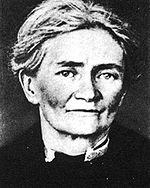
VIOLET GIBSON (1876 – 1956) Shot Mussolini

In Assassinations, Biography, Dictators, History, Italian History, Mental health, Mussolini, People, People from England, Trivia, Uncategorized, Victorian Women, women on May 17, 2010 at 9:26 PM

Violet Gibson

When Violet Gibson shot Benito Mussolini, everyone except her thought it was a crazy thing to do.  The ensuing debate was to determine whether she was certifiably crazy or not.  Death and illness were themes of her life and perhaps fertilized the psychological soil where a religious seed had been planted.   

Born the seventh of eight children as the Victorian era was starting to wind down, Gibson had an enviable life.  Her father was Lord Ashbourne, the lord chancellor of Ireland, a protestant. Her father’s title bestowed on her the title of Honorable. The Gibsons split their time between London and Dublin, participating fully in the parties, concerts and galas of the elite.  At age 18 the Honorable Violet Gibson was a debutante in the court of Queen Victoria.   

Being sick consumed a lot of her youth and as a result she was quite frail.  She had scarlet fever when she was five, peritonitis at 14, pleurisy at 16 and rubella at 20.  She displayed a violent temper early on.    

Lady Ashbourne, Gibson’s mother, became a Christian Scientist with the expectation that Mary Baker Eddy’s religion would bring her into stronger health.  Gibson tried it out, but in her early 20s, switched to Theosophy founded by Helena Blavatsky.  She was attracted to its mission to build a universal brotherhood without discrimination of any kind. Then at 26 years old, Gibson followed her brother Willie’s lead and converted to Catholicism.  Their father expressed great disappointment at this decision, and it became a wedge in their relationship.    

Gibson started receiving a private income from her father at age 21, which allowed her to be independent.  In 1905 there were several deaths in the family, and her father’s term as the lord chancellor was up.  Gibson dealt with so much loss by moving to Chelsea, an artsy section of London.  She explored a bawdier side of life and became engaged to an artist at age 32.  One year later he died suddenly and Gibson had another death to grieve.   

Six times within the next year Gibson became ill with the “fever.”  The only diagnosis the doctors could offer was influenza or a nervous disorder called “hysteria.”    

In 1913, Gibson’s father died, and she tried to cope by fleeing to Paris where she worked for pacifist organizations.  Later that year she contracted Paget’s disease, a type of cancer, and had a left mastectomy which left a nine-inch scar across her chest.  She worked hard as a peace activist until she fell sick again and went back to England.  At age 40 she had surgery for appendicitis and peritonitis.  Unfortunately, the surgery was not successful and she suffered from chronic abdominal pain for the rest of her life.   

While she was recovering, Gibson became a disciple of Jesuit scholar John O’Fallon Pope. This is when she started grappling with the notion of killing and martyrdom, perhaps inspired by experiencing so much death.  In her notebook she had a quote from Pope:  “The degree of holiness depends on the degree of mortification.  Mortification means putting to death.”   

In 1922, Gibson had to deal yet again with a death in the family: her brother Victor who was her favorite sibling.  This was more than she could bear.  One month later, at age 46, Gibson had a nervous breakdown.  She was pronounced insane and committed to a mental institution.   

Two years later, Gibson was released and went to Rome accompanied by a nurse, Mary McGrath.  They took up residence in a convent in a working class neighborhood with a high crime rate.  Her crisis of conscience was growing as she became more and more convinced that killing was the sacrifice that God was asking of her.  Somehow she got possession of a gun.   

On February 27, 1925 Gibson went to her room, read the Bible and then shot herself in the chest.  The bullet missed her heart, went through her ribcage and lodged in her shoulder. She told McGrath that she wanted to die for God.  Had she been successful, she wouldn’t have had to endure the grief of the death of her mother in March 1926, one month before the Mussolini assassination attempt.      

On Wednesday, April 7, 1926 Gibson left the convent after breakfast. In her right pocket she had a Lebel revolver wrapped in a black veil, and in her left pocket she carried a rock in case she had to break a windshield to get to Mussolini.  She also clutched the address of the Fascist Party headquarters written on a scrap of envelope.  She had read in the newspaper that Mussolini would be there in the afternoon.    

Mussolini appeared as if on cue, walking through the Palazzo del Littorio, soaking in the praise of the crowd as they shouted, “Viva Il Duce!”  He stopped about a foot from where Gibson was standing.  Just before the gun went off, Mussolini leaned his head back to acknowledge the crowd’s adoration, and the bullet grazed his nose.  Gibson shot again, but the gun misfired.  There was blood pouring down Mussolini’s face, and he staggered backwards but managed to stay standing.    

Mussolini maintained his composure and consoled the crowd saying, “Don’t be afraid. This is a mere trifle.”   Gibson was immediately captured and beaten by the crowd, and the police got control of the situation and took her off just before she succumbed to vigilante justice.    

In prison, when Gibson was undergoing interrogation, she admitted that she shot Mussolini to glorify God.  She said God’s message to her was clear, and that he had sent an angel to keep her arm steady as she took aim.    

Gibson’s family, wary of the impact that her actions could have on their reputation and afraid for her future, sent letters of apology to the Italian government and congratulated Mussolini on his escape from death.    

The fate of Violet Gibson was not clear.  Her punishment hinged on whether she would stand trial as a political criminal or be declared insane.  A violent reaction to a note given to her by another inmate that read “Viva Mussolini” did not help convince the authorities of her stability. In contrast, her conversations were rational and her correspondence was lucid and thoughtful.   

Gibson had to endure a grueling regime of tests.  In addition to a full medical exam, she was subjected to 20 days of psychiatric exams. She hoped to gain her release by convincing the doctors that she was mad.  Four months after the assassination attempt, a 61 page report declared Gibson as a “chronic paranoia” and recommended she be committed to a lunatic asylum.   

To complete Gibson’s profile, the investigating magistrate wanted to create a psychosexual portrait.  She was considered abnormal because she never expressed an inclination to start a family. It was a common belief that a woman’s mental state could be affected by repressed sexuality. A complete gynecological examination was ordered.  No abnormalities were found, but her independence, violent anger and self mutilation were enough evidence to declare her insane and not to try Gibson as a political criminal.   

Gibson was released to the custody of her sister to return to England.  She was committed to St. Andrews Hospital, a renowned mental institution.  Her behavior was generally manageable, but each year when April rolled around she exhibited her violent tendencies.  On April 2, 1930, she was found with a noose around her neck made of scrapes of cloth she had been collecting.  A nurse found her and loosened the rope.  Gibson was unconscious but still alive.   

In January 1951, Gibson suffered from a high fever.  She was down to 84 pounds.  She managed to hang on for a few more years, and finally, on May 2, 1956, Violet Gibson died.  No one attended her burial.   

QUESTION:  Do you know anyone who has been killed by another person?  How did that affect your life?   

                                  ©2010 Debbie Foulkes All Rights Reserved   

 Sources:   

 Saunders, Frances Stonor, The Woman Who Shot Mussolini. New York: Metropolitan Books, 2010.

HORACE RIDLER (1892–1969) Tattooed Sideshow Performer

In Biography, History, People, Sideshow Performers, Tattoos, Trivia, Uncategorized on April 26, 2010 at 6:26 PM

Horace Ridler as The Great Omi

Horace Ridler was dealt a life of privilege, but he didn’t want to play that hand.  Instead, he created a persona that was the total antithesis of his background. 

Ridler was born in Surrey, England to a wealthy family.  Growing up, he enjoyed all the privileges of education and travel such a life affords.  At the outbreak of World War I, he heeded the bugle call and served in the British Army, attaining the rank of major. 

In 1922, Ridler left military service and needed a job. This is where his life parted ways with the conventional.  After being a member of the rank and file, he wanted something that would let him stand out a little bit. The most promising prospect for him was the business of show.  He started getting pictorial tattoos and displayed his body art at small sideshows. Unfortunately, this didn’t turn out to be as profitable as he had hoped. 

Ridler decided that in order to earn more, he’d have to give the audience more.  In 1927 he started working with famed tattoo artist George Burchett who helped Ridler design a custom, whole-body look.  After 150 hours under the needle, Ridler was sporting full-body, zebra-like stripes that even covered his other tattoos.  

Through the physical transformation, Ridler created a character: The Great Omi.  He toured England and France but felt that the tattoos alone weren’t interesting enough to sustain audiences.  He amped up his look by piercing and stretching his ears with large-gauge jewelry, piercing his septum, and filing his teeth to a sharp point. 

To add entertainment value, Ridler created an elaborate explanation for his tattoos saying he was captured and tortured by natives in New Guinea.  His wife Gladys, who changed her name to Omette, got in on the act by describing Omi’s African ordeal as she introduced him. 

Ridler’s fame as Omi crossed the pond, and in 1939 The Great Omi appeared in the sideshow at the World’s Fair in Queens, New York.  When the fair closed, Robert Ripley hired him as the headliner in the Ripley’s Odditorium Theater.  During Ridler’s six month run, he appeared over 1,600 times, often doing ten shows a day.  

The Ringling Brothers and Barnum and Bailey Circus hired Ridler as Omi the Zebra Man for one season.  Success led to a solo act, and in 1941 and 1942 he toured Australia and New Zealand, worked the “World Fair Freaks” show in Vancouver, Canada, and appeared with some other traveling shows before heading back to England.  To keep things interesting, Omi and Omette wore increasingly outrageous costumes. Omi added nail polish and lipstick to complete his look, and he started giving autographs as the “Barbaric Beauty.” 

World War II brought out the patriotic in Ridler, and he tried to re-enlist in the British Army.  He was rejected, however, because his appearance was considered inappropriate for a soldier.  Back in England he served his country by giving free performances to soldiers and charity organizations and using his fame to sell war bonds.  

Ridler and his wife ultimately retired in Sussex, England, and he died in 1969.  Despite his appearance, he told a reporter he always believed that, “underneath it all, I’m just an ordinary man.” 

QUESTION:  Do you do anything to change your appearance (makeup, hair color, etc.)?  If you were to get a tattoo, what design would you choose? 

                                  ©2010 Debbie Foulkes All Rights Reserved 

Sources: 

http://en.wikipedia.org/wiki/Horace_Ridler 

http://thehumanmarvels.com/?p=17 

http://www.missioncreep.com/mundie/gallery/gallery22.htm 

http://www.google.com/imgres?imgurl=http://c3.ac-images.myspacecdn.com/images02/105/m_7c8c46c2225c4ff188adfa1730d1edc6.jpg&imgrefurl=http://www.myspace.com/thegreatomi&usg=__hXhK28uPSjbzz2B7e3F0E5BmEds=&h=211&w=170&sz=9&hl=en&start=13&um=1&itbs=1&tbnid=XrHiITrEsvQ1oM:&tbnh=106&tbnw=85&prev=/images%3Fq%3Dphotos%2BThe%2BGreat%2BOmi%26um%3D1%26hl%3Den%26sa%3DX%26rlz%3D1G1GGLQ_ENUS311%26tbs%3Disch:1