forgottennewsmakers

Archive for the ‘History’ Category

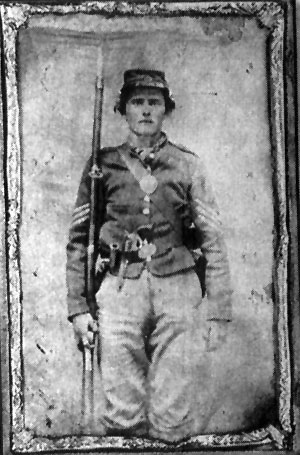
SARAH ROSETTA WAKEMAN (1843 – 1864) Female Soldier in the Civil War

In American History, Biography, Civil War, Female Soldiers, Feminists, History, People, Trivia, U.S. Army, Uncategorized, women on June 28, 2010 at 9:24 PM

Female Soldier in the Civil War

The lyrics to the Four Seasons’ song “Walk like a man. Talk like a man,” would have been good advice for Sarah Rosetta Wakeman.  Since she was a girl, she didn’t come by that naturally.  But learning how to do just that gave her a purpose and an adventure way beyond the family farm in Chenango County, New York.

By the time Wakeman was 17 years old, she had had some schooling, but  it was necessary for her to work as a domestic to help support her eight younger siblings and help her father pay off his debts.  Her future wasn’t looking too bright, so she decided that dressing like a man would increase her options.

When she was 19 she donned her disguise and worked as a coal handler on a barge on the Chenango Canal.  For four trips, she made $20.  At the end of her first trip she met some soldiers who tried to recruit her to sign up with the 153rd Regiment, New York State Volunteers.  She had three more river trips to think about it and decided that the $152 signing bonus for enlisting was too tempting. 

 PRIVATE LIVES                                                                                                            Wakeman changed her first name to Lyons and lied about her age, instantly maturing to 21 years old.  The rest of the information on her regimental descriptive roll was true: five feet tall with a fair complexion, brown hair, blue eyes and the occupation of “boatman.”  Wakeman’s gender was probably accepted at face value because of the cursory physical examination soldiers were given at the time of enlistment, often nothing more than a firm handshake.  Since there were a lot of pre-adolescent boys that edged their way into both the Confederate and Federal forces, it wasn’t unusual to have beardless recruits with higher pitched voices.

In corresponding with her family, Wakeman initially signed her letters “Rosetta,” confident her secret would not be detected.  She described army life and inquired about life back home.  She promised her father she would send money from her $13 a month salary for him to buy food and clothes for the family.  Unfortunately, she had to explain later that she had naively lent it to the first lieutenant and sergeant and received a promissory note in return for the whole amount including interest.  She sheepishly admitted that she had been taken advantage of by these officers and that she had learned her lesson. 

About three months into her military career, Wakeman got the measles and was hospitalized for seven days.  There didn’t seem to be any lasting effects of the disease, and she often expressed how much she enjoyed being a soldier, in contrast to her life on the farm. She had good clothes, enough food and no responsibilities except to handle a gun.

 AN EASY JOB                                                                                                                          In July 1863, the 153rd Regiment moved from Alexandria, Virginia to Washington, D.C.  to help protect the capital against potential riots in connection with the newly instituted draft.  Wakeman appreciated the spacious barracks, the well water for drinking and the salty river water for bathing.  She complained that Colonel Edwin Davis was so strict that the soldiers were hoping to be sent to the front lines, away from his command.

A month later, Wakeman was assigned to guard the prison that housed Rebel prisoners and officers.  With easy duty and a comfortable environment, she felt invincible.  She didn’t believe it was possible for her to die in battle, but if that was God’s will, she would submit to it.  She reminded her parents that she was “as independent as a hog on ice.”

In October, Wakeman reported that her days were filled with drilling exercises: company drill in the morning and battalion drill in the afternoon.  She enjoyed doing them and was proud that she could drill as well as any man in her regiment, and definitely better than the soldier in Company C who fell down, got a bayonet in his leg and “bled like a stuck hog.”

Home was feeling increasingly distant, and Wakeman stopped believing she would ever see her family again.  This spurred a confession that she had sinfully given in to lots of temptations in the army.  She admitted to getting into one fight, and after Stephen Wiley hit her, she gave him three or four good punches in return, putting him in his place.  God’s spirit had since worked in her, she believed, and she prayed that she wouldn’t go astray again.

FIGHTING THE ENEMY                                                                                              With the new year came new orders, and finally the 153rd was going to see some action.  They left Washington on February 18, 1864 and marched to Alexandria, Virginia.  From Alexandria they continued on to New Orleans, finally settling at Camp Franklin in Algiers, Louisiana, just across the Mississippi River. 

Wakeman’s regiment fell under the command of Major General Nathaniel P. Banks.  His mission was to establish a strong Union presence in Texas, and he planned to follow the Red River north to Shreveport, near the Texas border.  An order went out saying that no women (nurses, laundresses, officers’ wives, etc.) would be allowed to accompany the command except by written authority from Headquarters. The commanding officers still had no idea that at least one member of the rank and file was in direct defiance of that order.

Wakeman’s group marched 16 days, over 300 miles, making stops to unload supplies.  When they encountered Confederate forces lying in wait, the two-day Battle of Pleasant Hill ensued.  On the second day, Wakeman was in the front lines under fire for four hours, until the fighting was halted by darkness. She spent the entire night lying on the battle field listening to the cries of the wounded and dying. 

Wakeman’s life was spared, but the Federal troops were still in danger.  On April 21, 1864, General Banks ordered a forced march totaling over 100 miles back to Alexandria with the enemy on their tails.  Two days into the march, Wakeman’s brigade was ordered to lie along the river and wait for the opportunity to attack Confederate forces.  As the enemy came closer and surrounded them, the only way out was to fight. Wakeman’s group charged the enemy and defeated them.  The next morning, the regiment continued back to Alexandria only to get lost in the woods.  Exhausted, they finally arrived there on April 25. 

Wakeman had proven herself a worthy soldier, but her prediction about not coming home came true.  She was admitted to the hospital on May 3 with chronic diarrhea, the most deadly disease of the Civil War.  She was sent to the Marine U.S.A. General Hospital in New Orleans on May 7 but didn’t arrive until May 22.  Thanks to a Rebel attack which destroyed river transportation downstream of Alexandria, access on the Mississippi River was shut off for over a week.  Wakeman was 21 years old when she died one month later on June 19.  There is no record of any hospital staff discovering her real identity, and she was given a soldier’s burial in New Orleans.

QUESTION:  In today’s society, is it easier to be a man or a woman?  Why?

©2010 Debbie Foulkes All Rights Reserved

Sources:

Wakeman, Sarah Rosetta (Lauren Cook Burgess, ed.).  An Uncommon Soldier: The Civil War Letters of Sarah Rosetta Wakeman, alias Pvt. Lyons Wakeman, 153rd Regiment, New York State Volunteers, 1862-1864.  Pasadena, Maryland: The Minerva Center, 1994.
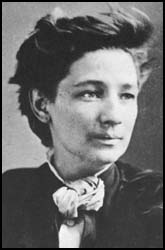
VICTORIA C. WOODHULL (1838 – 1927) First Woman to Run for U. S. President

In American History, American Presidents, Biography, Feminists, History, People, Presidential Candidates, Trivia, Victorian Women, women on June 14, 2010 at 9:21 PM

Victoria C. Woodhull

While Victoria California Woodhull’s endeavors did not all end successfully, she was very successful at laying a foundation for women to build on in business and politics.

Woodhull’s childhood was unstable.  Her family was poor, and love seemed to be a commodity her parents, Roxanna and Reuben Buckman Claflin, couldn’t afford.  The best way Claflin knew to deal with his ten children was to beat them.  Ironically, he had acquired wealth through real estate speculations, but lost everything when Victoria, the seventh child, was three.  Roxanna was born into money, the heiress of a rich Pennsylvania German family.  Being waited on hand and foot limited her motivation, and she never became literate or gained any ability to fend for herself.   

Woodhull’s formal education copied her mother’s.  She only spent a few years in school because she was pressed upon to help out so much at home, being treated almost like a slave.  Woodhull missed going to school and was an excellent student, but she acquired knowledge from other sources.

 BEING GUIDED BY THE SPIRIT                                                                              Woodhull believed in angels and lived with them as friends.  Every day she went into a trance and communicated with them, often sitting on the roof of the house for hours to escape the cruel, demanding life inside.  She had a simple faith in God, and took great comfort in relating to the angels and receiving channeled messages from them.  She credits these beings with giving her the ability to retain everything she read.

The angels were not imaginary beings but the spirits of people close to Woodhull.  When she was three, her nurse died suddenly.  Woodhull clearly remembered joining the nurse on her journey to the spirit world, being carried there by her.  Her mother recounted that her daughter’s body lay immobile, as if she were dead, for the three hours of this experience.  Woodhull also lost two sisters who died in childhood, and they became invisible playmates to her.  She also claimed to receive a prophecy from a spirit who confirmed that she would one day be a writer and publisher and leader of her people.

THIRD TIME’S A CHARM                                                                                           On the way to fulfilling her destiny, Woodhull married at age 14.  Her husband was 28, and it was not a happy union.  For two years she had become increasingly sick with the fever, and eventually Dr. Canning Woodhull was called to treat her.  When she recovered, he escorted Woodhull to a picnic and on the way home proposed marriage. This terrified her but her parents accepted the offer, and four months later they were married.  Dr. Woodhull’s fidelity lasted two days before he resumed his life as a philanderer and a drunk who lived beyond his means.

Within two years they had a baby boy, and it was born developmentally disabled.  Woodhull and the baby returned to her family and she earned her living with her clairvoyance and wisely invested her money. Then she had a healthy baby girl by another drunken philanderer.

Woodhull finally met her soul mate in Col. James H. Blood, a loving and compassionate man who was also a Spiritualist.  They were married spiritually if not legally, and Woodhull retained the name she was known by.  When Woodhull would go into a trance and channel the messages of the angels, Blood would diligently write down every word.

GOING WHERE NO WOMEN HAD GONE BEFORE                                          In 1869 Woodhull turned her attention to business and with her sister, Tennie, became the first female brokers on Wall Street when they established Woodhull, Claflin & Company.  They were supported partly by Woodhull’s investments and the respect and deep pockets of Cornelius Vanderbilt, who appreciated Woodhull’s clairvoyant abilities.  The sisters did not participate in the daily operations of the company, but they were nevertheless mocked in the press for being women in influential positions in finance.

The following year, these entrepreneurs started a journal called Woodhull & Claflin’s Weekly which became a platform for their views on politics, finance and women’s issues.  If they weren’t controversial before, they were now.  Their opinions varied widely from the mainstream, and no topic was off limits.  They advocated the elimination of the gold standard, graduated income tax, legalized prostitution, spiritualism and vegetarianism.  They promoted women’s rights including sex education and “free love.” Woodhull believed in monogamy, but also that a woman retained the right to determine with whom she had sex.  And, contrary to the social mores of the time, she strongly defended a woman’s right to leave a bad marriage.  Woodhull quickly became a leader in the women’s suffrage movement preaching equality, freedom of choice, and the right to vote.  

IT’S AN HONOR TO BE NOMINATED                                                                 In 1871 Woodhull received a message from the same spirit that had earlier predicted her future, telling her to run for President.  Her husband dismissed the notion as ridiculous, and the friends that she consulted laughed at her.  But, the idea grew on her, and she trusted her spirit’s guidance. She announced her intention to run, and in June 1872, she was officially nominated as the candidate to represent the newly created Equal Rights Party.  Frederick Douglas, a former slave, was nominated as her running mate, but he did not accept. Woodhull’s platform was to advance women’s political equality with men. She received support from trade unions, socialists and women’s rights advocates, but some of her ideas were so radical that more conservative suffragists like Susan B. Anthony would not support her.

Woodhull’s nomination was controversial not only because of her gender, but the legality of it was suspect.  Technically she was ineligible because she wouldn’t be 35 years old, as mandated by the Constitution, until six months after the inauguration.  However, since Ohio, her birth state, didn’t require birth certificates until 1867, Woodhull’s age couldn’t be confirmed.  Also, the 19th Amendment giving women the right to vote wasn’t ratified until 1920, which implied that a woman couldn’t run for President either.  And some believed that because she was a woman she was not a citizen, also a requirement for President.

Ulysses S. Grant easily won reelection, leaving Woodhull’s destiny unfulfilled.  In 1876 she divorced Colonel Blood and a few months later moved to England with her children.  She earned her living on the lecture circuit.  Wealthy banker John Biddulph Martin attended one of her talks and ended up becoming Woodhull’s third husband when she was 45 years old.  This time she assumed his name.  As Victoria Woodhull Martin, she and her daughter published a magazine called the Humanitarian until she was widowed.   She died in England on June 9, 1927.

QUESTION:  What are the best and worst things about being President of the United States?

© 2010 Debbie Foulkes All Rights Reserved

Sources:

http://www.victoria-woodhull.com/tiltonbio.htm

http://en.wikipedia.org/wiki/Victoria_Woodhull

http://en.wikipedia.org/wiki/United_States_presidential_election,_1872

http://www.spartacus.schoolnet.co.uk/USAWwoodhullV.htm

http://ocp.hul.harvard.edu/ww/people_woodhull.html

YOUNG OAK KIM (1919 – 2005) First Ethnic Minority to Command a U.S. Army Combat Battalion

In American History, Biography, History, Korean Americans, Korean War, Trivia, U.S. Army, World War II on June 7, 2010 at 9:32 PM

Young Oak Kim

Young-Oak Kim was born in 1919, the same year as Liberace, Eva Peron and Jackie Robinson.  Those gained fame by being in the public eye.  Kim’s recognition came from more sacrificial pursuits.

Kim’s parents immigrated to America, and his father owned a grocery store in Los Angeles. That was lucky since Kim had six siblings and there were a lot of mouths to feed.  Kim’s father belonged to “The Great Korean Association,” keeping ties to their homeland strong. 

After high school, Kim decided the future would be more profitable if he worked rather than continue his education.  He dropped out of junior college after one year but had trouble finding jobs because of racial discrimination.  His next option was to enlist in the military, but he was refused by the U.S. Army, again because of racial discrimination.  The outbreak of World War II changed everything, and the U.S. Congress passed a law including Asian Americans in conscription, thereby giving Kim his wish.  He was drafted into the Army in January, 1941, three months before his father died.

A TRUE PATRIOT                                   Kim started his military career as an engineer before admission to Officer Candidate School at age 24.  He was assigned to the 100th Infantry Battalion, a unit of all Japanese American soldiers. Kim believed his superiors didn’t know the difference between Koreans, Japanese and Chinese.  Since Korea was occupied by Japan at the time, when he reported for duty Kim was offered a transfer, but his national pride was greater than his ethic loyalty.  He refused the transfer saying, “There is no Japanese nor Korean here. We’re all Americans and we’re fighting for the same cause.”  His youth, ethnicity and exuberance were three strikes against him at the beginning, but eventually he won the respect of enlisted men and officers with his cool head and courageous leadership.

A REAL HERO                                            The 100th Battalion was originally sent to North Africa, but Kim and his troops wanted more action.  They were reassigned to Italy where Kim’s leadership skills were evident, especially in the Battle of Anzio.  Before they could proceed, the Allies needed to know the locations of German tanks.  First Lieutenant Kim and Private First Class Irving Akahoshi volunteered to infiltrate German territory to get the information.  The two soldiers crawled to an area near Cisterna, Italy, captured two German soldiers in broad daylight and snuck them past enemy outposts back to camp.  The information obtained from these prisoners led to the liberation of Rome and earned Kim the Distinguished Service Cross.

Not one to rest on his laurels, now Captain Kim also led his battalion in battles at Belvedere and Pisa, which helped the Allies occupy Pisa without any casualties.  In France, he helped liberate Bruyères and Biffontaine.  Kim spent six months in Los Angeles in late 1944 on leave to recover from wounds sustained in fighting at Biffontaine.  By the time he had recovered, Germany had surrendered, and Kim decided to trade the action of military for the relative calm of civilian life.

Kim opened one of the first semi-self-serve “launderettes” on Los Angeles.  Many of the skills that made him a great military leader also made him a successful businessman.  That sustained him for two years until the Korean War started.  He realized that it was action that he wanted and abandoned his business and reenlisted in the Army.

VISITING HIS HOMELAND               All Koreans or Korean speakers were assigned to the Army Security Agency. They were responsible for interpreting enemy communication.  But a desk job didn’t excite Kim as much as being on the front lines.  He denied knowing any Korean, cashed in a favor and was allowed to join the infantry.  He landed in Korea, and was undoubtedly thankful he actually did know the language.    

Then Colonel William J. McCaffrey had to figure out how to make the largely incompetent 31st Infantry of the 7th Infantry Division successful.  By McCaffrey’s special request, Major Kim joined the battalion as the Chief Intelligence Officer and a de facto operations officer.  Colonel McCaffrey’s trust in Kim was well rewarded.   The 31st Infantry subsequently won almost every battle and played a major role in pushing Chinese troops back over the 38th parallel and establishing the current border between North and South Korea.

WHAT ARE FRIENDS FOR                   This success had an unfortunate flip side.  During the operation, Kim’s unit made it farther north than seemed possible.  The 555th Field Artillery Battalion, thinking they were enemy troops, erroneously bombarded Kim’s battalion, and Kim was seriously injured by the friendly fire. Kim was saved by doctors from Johns Hopkins University who were in Tokyo, and went back to Korea two months later.

Colonel McCaffrey didn’t want to waste Kim’s talent, so he put him in command of the 1st Battalion.  This distinguished Kim as the first ethnic minority to command an Army combat battalion in U.S. history. In September 1952, Kim returned to the states after almost one year in this position. 

Kim extended his tenure in the Army for another 20 years serving in the U.S., Europe and again in South Korea.  He retired in 1965 as a Colonel.  His exemplary and sacrificial service was rewarded by two Silver Stars, three Purple Hearts, a French Croix de la Guerre and an Italian Cross of Valor.  In 2005, Kim was also given France’s highest award, the Legion of Valor and South Korea’s highest military honor, the Taeguk Order of Military Merit.

LIFE GOES ON                                             After settling again in California, Kim finally pursued his education.  He graduated with a degree in history in 1972 and worked as the CEO of Fine Particle Technology.   He was married and divorced twice.  

Kim was a humanitarian as well as a soldier.  While in Korea, his compassion persuaded his battalion to adopt an orphanage ensuring that more than 500 war orphans would receive supplies and monetary aid.  His was the only United Nations military unit serving on the frontline to adopt an orphanage during wartime. After his retirement from the military, Kim served on the boards of numerous nonprofit organizations including the Japanese American National Museum, the Korean American Coalition and the Go For Broke Educational Foundation which he co-founded.

Kim’s life was ended by cancer at the age of 86.  He’s buried in the National Memorial Cemetery of the Pacific (Punchbowl) in Honolulu, HI.

QUESTION:  How could you reach out and make peace between you and someone you don’t like?

©2010 Debbie Foulkes All Rights Reserved

Sources:

http://en.wikipedia.org/wiki/Young-Oak_Kim#cite_note-4

http://www.goldsea.com/Personalities/Inspiring/kimyo.html

http://www.homeofheroes.com/moh/nisei/index2_100th.html

http://www.southbayjacl.org/newsletters/2006/2006_NewYear06.pdf

http://www.goforbroke.org/about_us/about_us_news_press010306.asp