forgottennewsmakers

Archive for the ‘Biography’ Category

VICTORIA C. WOODHULL (1838 – 1927) First Woman to Run for U. S. President

In American History, American Presidents, Biography, Feminists, History, People, Presidential Candidates, Trivia, Victorian Women, women on June 14, 2010 at 9:21 PM

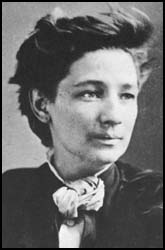
Victoria C. Woodhull

While Victoria California Woodhull’s endeavors did not all end successfully, she was very successful at laying a foundation for women to build on in business and politics.

Woodhull’s childhood was unstable.  Her family was poor, and love seemed to be a commodity her parents, Roxanna and Reuben Buckman Claflin, couldn’t afford.  The best way Claflin knew to deal with his ten children was to beat them.  Ironically, he had acquired wealth through real estate speculations, but lost everything when Victoria, the seventh child, was three.  Roxanna was born into money, the heiress of a rich Pennsylvania German family.  Being waited on hand and foot limited her motivation, and she never became literate or gained any ability to fend for herself.   

Woodhull’s formal education copied her mother’s.  She only spent a few years in school because she was pressed upon to help out so much at home, being treated almost like a slave.  Woodhull missed going to school and was an excellent student, but she acquired knowledge from other sources.

 BEING GUIDED BY THE SPIRIT                                                                              Woodhull believed in angels and lived with them as friends.  Every day she went into a trance and communicated with them, often sitting on the roof of the house for hours to escape the cruel, demanding life inside.  She had a simple faith in God, and took great comfort in relating to the angels and receiving channeled messages from them.  She credits these beings with giving her the ability to retain everything she read.

The angels were not imaginary beings but the spirits of people close to Woodhull.  When she was three, her nurse died suddenly.  Woodhull clearly remembered joining the nurse on her journey to the spirit world, being carried there by her.  Her mother recounted that her daughter’s body lay immobile, as if she were dead, for the three hours of this experience.  Woodhull also lost two sisters who died in childhood, and they became invisible playmates to her.  She also claimed to receive a prophecy from a spirit who confirmed that she would one day be a writer and publisher and leader of her people.

THIRD TIME’S A CHARM                                                                                           On the way to fulfilling her destiny, Woodhull married at age 14.  Her husband was 28, and it was not a happy union.  For two years she had become increasingly sick with the fever, and eventually Dr. Canning Woodhull was called to treat her.  When she recovered, he escorted Woodhull to a picnic and on the way home proposed marriage. This terrified her but her parents accepted the offer, and four months later they were married.  Dr. Woodhull’s fidelity lasted two days before he resumed his life as a philanderer and a drunk who lived beyond his means.

Within two years they had a baby boy, and it was born developmentally disabled.  Woodhull and the baby returned to her family and she earned her living with her clairvoyance and wisely invested her money. Then she had a healthy baby girl by another drunken philanderer.

Woodhull finally met her soul mate in Col. James H. Blood, a loving and compassionate man who was also a Spiritualist.  They were married spiritually if not legally, and Woodhull retained the name she was known by.  When Woodhull would go into a trance and channel the messages of the angels, Blood would diligently write down every word.

GOING WHERE NO WOMEN HAD GONE BEFORE                                          In 1869 Woodhull turned her attention to business and with her sister, Tennie, became the first female brokers on Wall Street when they established Woodhull, Claflin & Company.  They were supported partly by Woodhull’s investments and the respect and deep pockets of Cornelius Vanderbilt, who appreciated Woodhull’s clairvoyant abilities.  The sisters did not participate in the daily operations of the company, but they were nevertheless mocked in the press for being women in influential positions in finance.

The following year, these entrepreneurs started a journal called Woodhull & Claflin’s Weekly which became a platform for their views on politics, finance and women’s issues.  If they weren’t controversial before, they were now.  Their opinions varied widely from the mainstream, and no topic was off limits.  They advocated the elimination of the gold standard, graduated income tax, legalized prostitution, spiritualism and vegetarianism.  They promoted women’s rights including sex education and “free love.” Woodhull believed in monogamy, but also that a woman retained the right to determine with whom she had sex.  And, contrary to the social mores of the time, she strongly defended a woman’s right to leave a bad marriage.  Woodhull quickly became a leader in the women’s suffrage movement preaching equality, freedom of choice, and the right to vote.  

IT’S AN HONOR TO BE NOMINATED                                                                 In 1871 Woodhull received a message from the same spirit that had earlier predicted her future, telling her to run for President.  Her husband dismissed the notion as ridiculous, and the friends that she consulted laughed at her.  But, the idea grew on her, and she trusted her spirit’s guidance. She announced her intention to run, and in June 1872, she was officially nominated as the candidate to represent the newly created Equal Rights Party.  Frederick Douglas, a former slave, was nominated as her running mate, but he did not accept. Woodhull’s platform was to advance women’s political equality with men. She received support from trade unions, socialists and women’s rights advocates, but some of her ideas were so radical that more conservative suffragists like Susan B. Anthony would not support her.

Woodhull’s nomination was controversial not only because of her gender, but the legality of it was suspect.  Technically she was ineligible because she wouldn’t be 35 years old, as mandated by the Constitution, until six months after the inauguration.  However, since Ohio, her birth state, didn’t require birth certificates until 1867, Woodhull’s age couldn’t be confirmed.  Also, the 19th Amendment giving women the right to vote wasn’t ratified until 1920, which implied that a woman couldn’t run for President either.  And some believed that because she was a woman she was not a citizen, also a requirement for President.

Ulysses S. Grant easily won reelection, leaving Woodhull’s destiny unfulfilled.  In 1876 she divorced Colonel Blood and a few months later moved to England with her children.  She earned her living on the lecture circuit.  Wealthy banker John Biddulph Martin attended one of her talks and ended up becoming Woodhull’s third husband when she was 45 years old.  This time she assumed his name.  As Victoria Woodhull Martin, she and her daughter published a magazine called the Humanitarian until she was widowed.   She died in England on June 9, 1927.

QUESTION:  What are the best and worst things about being President of the United States?

© 2010 Debbie Foulkes All Rights Reserved

Sources:

http://www.victoria-woodhull.com/tiltonbio.htm

http://en.wikipedia.org/wiki/Victoria_Woodhull

http://en.wikipedia.org/wiki/United_States_presidential_election,_1872

http://www.spartacus.schoolnet.co.uk/USAWwoodhullV.htm

http://ocp.hul.harvard.edu/ww/people_woodhull.html

YOUNG OAK KIM (1919 – 2005) First Ethnic Minority to Command a U.S. Army Combat Battalion

In American History, Biography, History, Korean Americans, Korean War, Trivia, U.S. Army, World War II on June 7, 2010 at 9:32 PM

Young Oak Kim

Young-Oak Kim was born in 1919, the same year as Liberace, Eva Peron and Jackie Robinson.  Those gained fame by being in the public eye.  Kim’s recognition came from more sacrificial pursuits.

Kim’s parents immigrated to America, and his father owned a grocery store in Los Angeles. That was lucky since Kim had six siblings and there were a lot of mouths to feed.  Kim’s father belonged to “The Great Korean Association,” keeping ties to their homeland strong. 

After high school, Kim decided the future would be more profitable if he worked rather than continue his education.  He dropped out of junior college after one year but had trouble finding jobs because of racial discrimination.  His next option was to enlist in the military, but he was refused by the U.S. Army, again because of racial discrimination.  The outbreak of World War II changed everything, and the U.S. Congress passed a law including Asian Americans in conscription, thereby giving Kim his wish.  He was drafted into the Army in January, 1941, three months before his father died.

A TRUE PATRIOT                                   Kim started his military career as an engineer before admission to Officer Candidate School at age 24.  He was assigned to the 100th Infantry Battalion, a unit of all Japanese American soldiers. Kim believed his superiors didn’t know the difference between Koreans, Japanese and Chinese.  Since Korea was occupied by Japan at the time, when he reported for duty Kim was offered a transfer, but his national pride was greater than his ethic loyalty.  He refused the transfer saying, “There is no Japanese nor Korean here. We’re all Americans and we’re fighting for the same cause.”  His youth, ethnicity and exuberance were three strikes against him at the beginning, but eventually he won the respect of enlisted men and officers with his cool head and courageous leadership.

A REAL HERO                                            The 100th Battalion was originally sent to North Africa, but Kim and his troops wanted more action.  They were reassigned to Italy where Kim’s leadership skills were evident, especially in the Battle of Anzio.  Before they could proceed, the Allies needed to know the locations of German tanks.  First Lieutenant Kim and Private First Class Irving Akahoshi volunteered to infiltrate German territory to get the information.  The two soldiers crawled to an area near Cisterna, Italy, captured two German soldiers in broad daylight and snuck them past enemy outposts back to camp.  The information obtained from these prisoners led to the liberation of Rome and earned Kim the Distinguished Service Cross.

Not one to rest on his laurels, now Captain Kim also led his battalion in battles at Belvedere and Pisa, which helped the Allies occupy Pisa without any casualties.  In France, he helped liberate Bruyères and Biffontaine.  Kim spent six months in Los Angeles in late 1944 on leave to recover from wounds sustained in fighting at Biffontaine.  By the time he had recovered, Germany had surrendered, and Kim decided to trade the action of military for the relative calm of civilian life.

Kim opened one of the first semi-self-serve “launderettes” on Los Angeles.  Many of the skills that made him a great military leader also made him a successful businessman.  That sustained him for two years until the Korean War started.  He realized that it was action that he wanted and abandoned his business and reenlisted in the Army.

VISITING HIS HOMELAND               All Koreans or Korean speakers were assigned to the Army Security Agency. They were responsible for interpreting enemy communication.  But a desk job didn’t excite Kim as much as being on the front lines.  He denied knowing any Korean, cashed in a favor and was allowed to join the infantry.  He landed in Korea, and was undoubtedly thankful he actually did know the language.    

Then Colonel William J. McCaffrey had to figure out how to make the largely incompetent 31st Infantry of the 7th Infantry Division successful.  By McCaffrey’s special request, Major Kim joined the battalion as the Chief Intelligence Officer and a de facto operations officer.  Colonel McCaffrey’s trust in Kim was well rewarded.   The 31st Infantry subsequently won almost every battle and played a major role in pushing Chinese troops back over the 38th parallel and establishing the current border between North and South Korea.

WHAT ARE FRIENDS FOR                   This success had an unfortunate flip side.  During the operation, Kim’s unit made it farther north than seemed possible.  The 555th Field Artillery Battalion, thinking they were enemy troops, erroneously bombarded Kim’s battalion, and Kim was seriously injured by the friendly fire. Kim was saved by doctors from Johns Hopkins University who were in Tokyo, and went back to Korea two months later.

Colonel McCaffrey didn’t want to waste Kim’s talent, so he put him in command of the 1st Battalion.  This distinguished Kim as the first ethnic minority to command an Army combat battalion in U.S. history. In September 1952, Kim returned to the states after almost one year in this position. 

Kim extended his tenure in the Army for another 20 years serving in the U.S., Europe and again in South Korea.  He retired in 1965 as a Colonel.  His exemplary and sacrificial service was rewarded by two Silver Stars, three Purple Hearts, a French Croix de la Guerre and an Italian Cross of Valor.  In 2005, Kim was also given France’s highest award, the Legion of Valor and South Korea’s highest military honor, the Taeguk Order of Military Merit.

LIFE GOES ON                                             After settling again in California, Kim finally pursued his education.  He graduated with a degree in history in 1972 and worked as the CEO of Fine Particle Technology.   He was married and divorced twice.  

Kim was a humanitarian as well as a soldier.  While in Korea, his compassion persuaded his battalion to adopt an orphanage ensuring that more than 500 war orphans would receive supplies and monetary aid.  His was the only United Nations military unit serving on the frontline to adopt an orphanage during wartime. After his retirement from the military, Kim served on the boards of numerous nonprofit organizations including the Japanese American National Museum, the Korean American Coalition and the Go For Broke Educational Foundation which he co-founded.

Kim’s life was ended by cancer at the age of 86.  He’s buried in the National Memorial Cemetery of the Pacific (Punchbowl) in Honolulu, HI.

QUESTION:  How could you reach out and make peace between you and someone you don’t like?

©2010 Debbie Foulkes All Rights Reserved

Sources:

http://en.wikipedia.org/wiki/Young-Oak_Kim#cite_note-4

http://www.goldsea.com/Personalities/Inspiring/kimyo.html

http://www.homeofheroes.com/moh/nisei/index2_100th.html

http://www.southbayjacl.org/newsletters/2006/2006_NewYear06.pdf

http://www.goforbroke.org/about_us/about_us_news_press010306.asp

JOAN WESTON (1935 – 1997) Roller Derby Queen

In 1960s, Biography, Female Athletes, People, Roller Derby, Roller Skating, Sports, women on June 1, 2010 at 10:39 AM

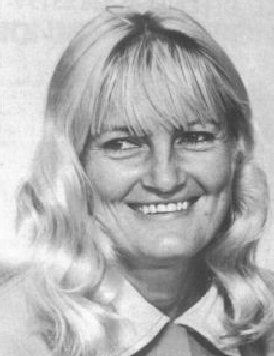
Joan Weston

In 1935 Joan Weston and Roller Derby were both born.  When they finally met, it was a match made in heaven.

Weston’s parents divorced when she was a baby, and she was raised by her maternal grandparents.  They worked six days a week at the restaurant and gas station they owned in Southern California.  Despite their preoccupation with earning a living, they created a strict but loving environment. 

Weston idolized her father who had movie star good looks, and she fondly remembers a summer spent with him before he was killed in a car accident.  Not knowing how to channel her grief, she blamed her mother for her parents’ divorce.  This compounded the emotional distance between them. 

Even though they weren’t Catholics, her grandfather insisted on a Mount St. Mary’s College education. Her grandmother was amenable to that until Weston decided she wanted to become a nun.  Weston then appeased her by directing all her energy into sports.  A natural athlete, Weston excelled in every sport she tried, but that didn’t mean her grandmother would let her try anything.  She balked when Weston wanted to take up trick horseback riding as being too dangerous.  Softball seemed like a good compromise, and Weston played school and league ball.  This proved to be a good match, and in one college game Weston hit eight home runs. 

Upon graduation, there weren’t many options for female athletes.  When Weston watched the Roller Derby she saw her future, and she couldn’t wait to take her skating from the sidewalk to the indoor banked track.  Her five feet ten inch, 150 pound frame and bleached blonde hair were the perfect body and image.  She moved to northern California to learn the sport and join a team. 

Weston’s sheltered upbringing hadn’t prepared her for the unrefined behavior and profanity of the skaters.  She felt so intimidated and out of place that she almost quit.  Knowing that her mother, a truck stop waitress, would understand that life a lot better, Weston called her for encouragement.  Her mother’s advice was that Roller Derby people were no different than anybody else. “People and sex are like franks and beans,” she said. “They go together.”1

It wasn’t the Roller Derby people or the lifestyle that attracted Weston.  She simply loved to skate, and skating at 30 miles an hour gave her a sense of freedom.  At the beginning she had to overcome some clumsiness, however.  In her first outing she tripped and fell in front of nine skaters, all of whom fell over her. 

After playing on various teams for several years, Weston gained her Roller Derby Queen reputation on the San Francisco Bay Bombers.  She started wearing the orange and black in 1963 when she was 28 years old.  Her fans called her the Blonde Bomber, Blonde Amazon and Golden Girl.  

Skating was so much her life that she skated full time (over 250 games each year) for 18 years and part time for another 24 years.  She played the Pivot position which gave her an opportunity to play defense and offense as necessary. Even though the Roller Derby was not a mainstream sport, Weston was the highest paid female athlete in the 1960s.  She earned less than her male counterparts, however, by nearly $20,000.

Derby teams toured the country to compete at local arenas, traveling by Greyhound bus or car.  One year Weston put 60,000 miles on her car.  The players stayed in Holiday Inns that dotted the trail.  Each night her best friend was waiting in the room for Weston to return.  Malia, a spotted mutt who was born in a box on a Greyhound bus, knew when Weston should be arriving and was peering out the window when her car pulled into the parking lot. 

It wasn’t easy to maintain romantic relationships while on the road.  When she was 20 she got engaged to another skater who was drop dead handsome.  The Roller Derby publicity department milked the relationship for all it was worth, but after 18 months it ended.  There were two other engagements that ended badly.  One suitor insisted Weston stop skating, but she sacrificed the relationship instead of her career.  With so much heart break, when she was 37 years old, Weston declared she would never marry.   

In 1965 the Roller Derby management promoted her to captain of the acclaimed Bay Bombers supplanting Annis (Big Red) Jensen.  On tour, Weston wore the white shirt of the home team. 

About that time a rivalry blossomed between Weston and Ann Calvello, another super star skater who wrote the red shirt of the rival teams. Weston vs. Calvello became the biggest rivalry in the history of the sport, and it was personal.  Games turned into good vs. evil slug fests, and Calvello never missed an opportunity to provoke and punish Weston’s teammates with illegal kicks and punches.  This fueled Weston to seek revenge.  Calvello’s cheap shots incensed audiences who would throw things at her and occasionally even damage her car.  Each skater played her part to perfection, but in the end, the audience demanded that good triumph over evil.  Even though Weston was the predictable victor, audiences packed the arenas the next night to see what would happen.

Injuries are a fact of life in Roller Derby, and Weston, like all players, suffered her share of debilitating ones.  In an interview she recounted knee cartilage surgery and a dislocated collar bone. Trips to the dentist were frequent as dentures replaced missing teeth.  In one game she got into such a heated argument with the referee that two of her teeth flew out of her mouth right past the ref’s ear.

Because of the violence, Weston’s mom could never accept her daughter’s career choice, or even watch a Roller Derby game.  Her grandmother had the courage to watch only one.  The star athlete found her support within the ranks of the sport.  Eventually she married skater Nick Scopas, and their relationship lasted until death parted them. 

If they weren’t proud of her job, Weston’s family could be proud of what she accomplished.  The Blond Bomber was voted Roller Derby Queen four times, received the Most Valuable Player award in 1968 and was inducted into the National Roller Derby Hall of Fame.   

In the 1970s a skaters’ strike, the gas crisis and increasing costs made managing the Roller Derby too expensive for Jerry Seltzer, son of founder Leo Seltzer. The original Roller Derby league skated their last game on December 3, 1973.  Seltzer sold everything Roller Derby to other promoters. 

Weston and Roller Derby started life and ended together.  She was 38 years old and her body didn’t bounce back from injuries as quickly, so this was the perfect time to retire.  It was not the end of skating for Weston, however.  She channeled her experience and expertise into training young skaters and staging exhibition games. 

Weston’s life wasn’t all skating all the time.  She loved Hawaii and won the 1962 outrigger championship on a canoe called Malia, the name sake for her dog.  Her love of softball exceeded her tenure skating and she played in leagues in northern California.

Weston contracted Creutzfeldt – Jakob disease, a rare degenerative brain disorder.  She died at age 62 in Hayward, California, survived by her husband.  Twenty-five years earlier she was asked if she had any regrets.  She said she did, but that there was one thing that compensated: stardom.  “Stardom is recognition, approval, power. Do you know what it’s like to be able to bring 20,000 people to their feet–to make them hate or love you? That’s where it’s at. Power!”2

QUESTION:  Who are your sports idols?  What is it about what they do that you respect?

 ©2010 Debbie Foulkes All Rights Reserved

 Video:

Weston’s last interview:   http://rollergames.ning.com/video/joan-westons-last-sit-down

Interviews with Ann Calvello & Joan Weston: http://myspace.vtap.com/video/Ann+Calvello%252C+Joan+Weston%253A+Is+Roller+Derby+Real/CL0125573612_477e96dc8_V0lLSTQ4NDI1OTZ-aW46MX5xOmJyfmJ3OldJS0k0ODQyNTk2

 Sources:

1, 2http://astroworf.tripod.com/fw1.html

http://www.nytimes.com/1997/05/18/us/joanie-weston-62-a-big-star-in-the-world-of-roller-derbies.html

http://derbymemoirs.bankedtrack.info/mem_Weston_Joan.html

http://rollergames.ning.com/video/joan-westons-last-sit-down

http://en.wikipedia.org/wiki/Joan_Weston

http://sportsillustrated.cnn.com/2010/writers/frank_deford/05/19/roller.derby.revival/index.html

http://articles.sfgate.com/2006-03-16/bay-area/17285386_1_roller-skated-san-francisco-bay-bombers/2

http://baycitybombers.com/Stories/calvello.html

http://www.ktvu.com/station/1854287/detail.html

http://www.rollerderbyhalloffame.com/id5.html

http://www.rollerderbyhalloffame.com/id3.html