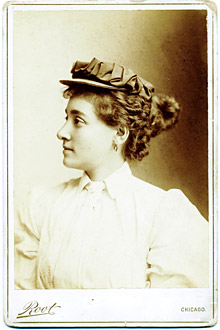
forgottennewsmakers

Archive for the ‘American History’ Category

CHRISTOPHER EVANS (1847-1917) & JOHN SONTAG (1862-1893) Train Robbers

In adventure, American History, Biography, California History, History, Horses, outlaws, People, Train Robberies, trains, Trivia, Tulare County California on March 30, 2010 at 9:15 AM

Chris Evans asserted until he died that he never robbed a train and that he only killed in self defense.  His exploits with John Sontag divided people in Tulare County: those who believed the evidence to the contrary and those, who despite evidence, were united in friendship and revenge.    

 The Southern Pacific Railroad made inroads in transportation in California, but it also made enemies. In the name of the greater good, the railroad company put progress over people, and displaced many from their property, including Evans.

 Chris Evans had an adventuresome spirit.  He worked at many different jobs as a laborer and lived in a house with a barn in Visalia. His marriage to Molly Byrd yielded seven children. 

 John and George Sontag were brothers.  John worked for Southern Pacific Railroad and was injured in an accident.  He had several broken ribs which put pressure on his lungs and a broken leg which caused a permanent limp.  He was no longer fit to work for the railroad company, so they canned him.  He lived with Evans for a while working odd jobs.  Younger brother George was also on the scene, but not as much is known about him.

 On August 3, 1892, men dressed as tramps hopped on a train bound for Fresno.  They each wore masks, had a double barrel shotgun and a revolver.  In response to an invitation to get off the train, the men opened fire.  Then they blew up the express car and absconded with over $10,000 dollars in gold and silver coins.  Accomplices who were hiding behind the nearby school house helped the robbers escape. 

 Coincidentally, the following day Evans was seen in Visalia after a long absence, and John Sontag suddenly appeared claiming to have been in the East.  The sheriffs were suspicious. They knew that George Sontag was a passenger on that train, so they assumed he was a collaborator, took him to the station for questioning, and then locked him up. 

 Trying to play it cool and not make a scene, Detective Smith and Deputy Sheriff Witty decided to arrest John next and then go back for Evans the following day.  When they arrived at Evans’ house, the law men were greeted with a spray of bullets.  Not being able to react fast enough, Smith and Witty were wounded, chased off the property and forced to leave their horse and rig behind.  

 Evans and Sontag headed for the hills.  They returned the next morning and hid with the horse and buggy in the barn.  The sheriffs came back for their transportation and set up a stake out. When they knew the outlaws were back, they started shooting into the barn.  The robbers returned fire and killed one man.  The sheriff’s bullet did hit a target, and the groans of someone dying were heard.  When they entered the barn to make an arrest, the sheriff’s horse was dying, and Evans and Sontag had escaped on foot.

 Evans and John Sontag had been the presumed perpetrators of previous train robberies, including one in Minnesota, but there was never enough proof to pin it on them.  For this so called Collis Robbery, however, they were wanted, and Southern Pacific Railroad put up a $5000 reward for each, dead or alive. 

 Thus began a ten month man hunt.  Since sentiment against the Southern Pacific was so strong and the Evans had lots of friends, the runaways got help at every turn.  Several posses followed numerous leads and often got close.  In one incident, Evans’ oldest daughter, Eva, overheard talk that a posse knew where to find her dad and his accomplice.  Eva and Evans were very close, and she wanted to do something to help.  She hopped on her horse and bravely followed the posse into the woods to warn the fugitives.  She fired a warning shot into the air that alerted the bandits.  Her plan was successful. Evans and Sontag eluded capture, and Eva returned home unscathed. 

 After being on the lam for ten months, Evans and John Sontag were exhausted, and Sontag’s railroad injuries made it extremely difficult for him to stay on the move.  They devised a plan to escape to South Africa, but they needed money. Evans got word to his wife to wire Sontag’s dad and ask for $100. 

 On June 11, 1893, the sheriffs got wind the outlaws were going to sneak back to the Evans’ Visalia home to pick up the dough.  The sheriffs were waiting and picked off the men as they approached.  During the thirty minute gun battle, both Sontag and Evans were wounded.  Sontag’s injuries were nearly fatal, and he begged Evans to finish the job.  Evans couldn’t bring himself to do it, so Sontag tried to do it himself.  He held his gun to his head, but he was too weak to pull the trigger.  He lay unconscious in a bed of straw until the sheriffs came back the next morning and carted him off to jail. He died there on July 3.

 Evans was debilitated but managed to run away.  He ended up at widow Perkins’ house and because they were friendly, she invited him in. Her son saw immediate benefit in having Evans around.  He rode to Visalia and offered to tell the sheriffs Evans’ whereabouts for the reward.  When the posse showed up at the Perkins’ home, boy Perkins carefully removed the gun from under the sleeping Evans’ pillow and invited the posse in.  Evans surrendered and was taken to jail without incident. 

 The exploits of Evans and Sontag quickly became the stuff of legend.  After one week of rehearsal, on September 19, 1893, a play opened in San Francisco reenacting their saga. “Evans and Sontag or The Visalia Bandits” played to cheering, standing room only crowds.  Audiences went wild when the real Molly and Eva Evans walked on stage to play themselves. Understudies played the roles so the women could attend Evans’ trial, but they resumed performing when the play went on tour.

 Evans was convicted of murder and sentenced to life imprisonment.  His life in the Fresno jail was comfortable, and he had dinner with his wife almost every night.  On December 28, a guy named Morrell brought the Evanses their dinner tray and hid two pistols under it.  Evans had a kid paid off to spread a rumor that another train robbery was about to happen, and this preoccupied the sheriffs.  Having a gun pointed at him convinced the guard to let the men walk, and after killing one man on their way out, Evans and Morrell were free.  Molly Evans had no previous knowledge of the plan and was not arrested as an accomplice.

 For a couple of months Evans and Morrell managed to stay ahead of the sheriffs. On February 13, 1894, a posse snuck up on their camp and fired three shots.  The bullets missed, and Evans and Morrell high tailed it out of there leaving everything behind.  They eluded the sheriffs for another month or so.

 The outlaws ended up at Grandma Byrd’s home in Visalia, and Evans was reunited with his family.  When the lawmen learned where the criminals were hiding, they again formed a posse and surrounded the house.  News of a possible capture spread quickly, and a crowd gathered eager to watch the events unfold first hand.  Evans exchanged notes with Sheriff Kay via Evans’ son.  His only demand was to get rid of the crowd and for Kay and one other man to come up to the house. Evans and Morrell walked out onto the porch unarmed.  Evans kissed his children goodbye and both men surrendered. 

 Evans served the rest of his time at Folsom prison.  As an inmate, he worked in the hospital and library.  He wrote a book called Eurasia about a country with a socialist government. Evans was released on parole in 1911 and joined his wife who had moved to Portland, where he died six years later.

 George Sontag was convicted for his part in the train robbery, and Morrell was convicted for his efforts in helping Evans escape from jail. Both men ended up at Folsom.  George made one unsuccessful escape attempt.  Both were eventually released. 

 QUESTION:  Would you be able to help a friend die if they asked you to? 

                                     © 2010 Debbie Foulkes All Rights Reserved

 Sources:

Maxwell, Hu,  Evans & Sontag. Fresno, CA: Panorama West Books, 1981.

 Menefee, Eugene L. and Dodge, Fred A.,  “History of Tulare and Kings Counties, California,” Historic Record Company, Los Angeles, California, 1013.

 Smith, Wallace, Prodigal Sons. Boston: The Christopher Publishing House, 1951.
MADAME C.J. WALKER (1867-1919) First Self-Made American Woman Millionaire

In African-American women, American History, Biography, Entrepreneurs, Feminists, Guiness Book of Records, Hair, History, Millionaires, People, Uncategorized, women on March 22, 2010 at 8:12 PM

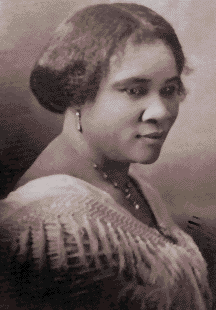
Madame C .J. Walker

Madame C. J. Walker turned a bad hair day into a fortune and a Guinness World Record.  She followed her dream, literally, turning her life into a true “rags to riches” story. 

Sarah Breedlove was the fifth of six children born to former slaves in Louisiana. Both of her parents died when she was seven years old, but being an orphan wasn’t a life sentence to poverty.   She moved in with her older sister and brother-in-law and survived by working in the cotton fields of Louisiana and Mississippi.  This turned out to be a bad situation, so at age 14 she married Moses McWilliams to escape her brother-in-law’s abuse.  

Four years after her marriage, Breedlove had a baby girl.  Two years later her husband died and she was again forced to find her own way.  She moved to St. Louis where her four brothers had become successful barbers.  She earned $1.50 a day working as a washer woman and eventually saved enough money to send her daughter to school.  

Breedlove’s own education was spotty.  When she reached school age, there were no funds allocated by the white legislators in Louisiana to educate black children.  Then she was pressed into working full time to contribute to the household of her sister and brother-in-law.  In St. Louis, she managed to improve her reading and writing with the help of the women at the St. Paul AME church.  These women also became her social network and eventually an inspiration for growing her business. 

Loss and abandonment followed Breedlove to St. Louis.  All her brothers died and she married and divorced John Davis.  In addition, an ailment that caused her to lose almost all her hair plagued her. She desperately tried various homemade remedies and store bought products.  One potion she used was created by Anne Malone, and in 1905 Breedlove moved to Denver as a sales rep for Malone.  

Life took a turn for the better in Denver.  Not one to depend on another, Breedlove wanted to develop her own hair products.  The formula for a solution to her problem was revealed to her in a dream.  “…One night I had a dream…a black man appeared to me and told me what to mix up in my hair. Some of the remedy was grown in Africa, but I sent for it, mixed it, put it on my scalp, and in a few weeks my hair was coming in faster than it had ever fallen out. I tried it on my friends; it helped them. I made up my mind to begin to sell it.”1 She worked with a pharmacist to develop her own line that rivaled Malone’s. 

Her love life was looking up, too.  She married newspaperman Charles Joseph Walker.  Breedlove changed her name to Madam C.J. Walker, and it proved to have the sophisticated sound that instilled confidence in shoppers.  Madam Walker’s Wonderful Hair Grower scalp conditioner was her ticket to success. As for her marriage, unfortunately the third time was not a charm, and they divorced after six years.  

Madam Walker remembered the relationships she developed with the women at the church in St. Louis.  She saw a large potential market in such fellowships and gave product demonstrations at churches and lodges. She also implemented a door to door, grass roots selling strategy that led to hiring individual sales agents. Walker acknowledged that her level of education was insufficient to run a profitable business, so she hired a former teacher to tutor her privately.  

The Madam C.J. Walker Manufacturing Company was founded with five original products.  Expansion was inevitable, and for a year and a half she moved to Pittsburgh and opened the Lelia College of Beauty Culture, named after her daughter.  In 1910 Walker moved her entire operation to Indianapolis where she built a factory, training school, and hair and nail salon.  

Walker’s success was three-fold.  First, she accrued an enormous personal wealth.  Second, she provided economic opportunity for black women which gave them an alternative to domestic labor. Her sales agents could potentially earn between $5 and $15 dollars a day when unskilled white laborers were only earning about $11 a week.2 The sales force was organized into local and state clubs with opportunities for management on every level, a model that is used in many companies today.  In 1917 the Madam C. J. Walker Hair Culturists Union of America was big enough to hold a convention in Philadelphia.  

Third, Walker believed that with wealth comes responsibility, and she became a role model for using her riches to support political and philanthropic causes.  She gave generously to African-American organizations and instilled this virtue in her sales force.  At the 1917 convention, Walker gave out awards to her agents not just for their business achievements but also for their political activism.  

The headquarters for the Madam C. J. Walker Manufacturing Company remained in Indianapolis, but in 1916 Walker and her daughter moved to Irvington-on-Hudson, New York, and Walker supervised the business from there.  Their new home was a 30-room mansion designed for them by black architect Vertner Tandy, and Walker spared no expense on the furnishings.  The estate was named Villa Lewaro after the first two letters of her daughter’s name: Lelia Walker Robinson, and is in the National Register of Historical Places. 

During the last year of Walker’s life, total sales of her company exceeded $500,000 and she had trained some 40,000 sales agents serving customers the U.S., Central America and the Caribbean.3 Her legacy includes The Guinness Book record as the first self-made American woman millionaire, and in 1998 the U.S. Postal Service put her image on a stamp. 

QUESTION:  What would you do if someone gave you one million dollars today? 

                                 © 2010 Debbie Foulkes All Rights Reserved 

Sources: 

1http://www.brilliantdreams.com/product/famous-dreams.htm 

2Henry Louis Gates Jr., “Madam’s Crusade”, Time magazine, December 7, 1998, Canadian edition. 

3http://hbswk.hbs.edu/item/5662.html 

http://madamcjwalker.com/bio_madam_cj_walker.aspx 

http://en.wikipedia.org/wiki/Madam_C._J._Walker 

http://hbswk.hbs.edu/item/5662.html 

http://www.pbs.org/wgbh/theymadeamerica/whomade/walker_hi.html 

http://www.brilliantdreams.com/product/famous-dreams.htm 

http://www.irvingtonhistoricalsociety.org/nrhp/nrhp04.html

ANNIE KOPCHOVSKY LONDONDERRY (1870? – 1947) Rode A Bicycle Around the World

In adventure, American History, Biography, Entrepreneurs, Feminists, History, People, Trivia, Uncategorized, Victorian Women, women on March 9, 2010 at 12:56 PM

Annie Londonderry

Annie Kopchovsky left her husband and young children to circumnavigate the globe in order to prove women were as capable as men.  Was she crazy and irresponsible or courageous and heroic?    

Although Kopchovsky was born in Latvia, she became an American as a young child, moving with her family to Boston.  At 18 she married Max Kopchovsky, a peddler, and within the next four years they had three children.    

A master at self promotion, it’s not totally clear which details of the story are true or created by Kopchovsky to enhance her ability to make money.  Nevertheless, the inspiration for this incredible journey is attributed to a bet.  Two wealthy Bostonians were sitting around their club discussing the fairer sex.  One asserted that the modern woman could do just about anything a man could, and his companion took the bait.  They shook on a wager that a woman could ride a bicycle around the world in 15 months and earn $5,000 along the way.  The precedent for this challenge was Thomas Stevens who completed a similar feat in 1887.    

It’s not clear why she felt compelled to do this since she had never ridden a bicycle before, but Kopchovsky was likely caught up in the craze of women who were using the vehicle to express new freedoms.  Susan B. Anthony was quoted in the New York World in 1896 as saying bicycling had “done more to emancipate women than anything else in the world.”   

On June 27, 1894, 24-year-old Kopchovsky hopped on her 42-pound Columbia woman’s bike wearing the long skirt, corset and high collar of the time.  Perhaps creating the first Mr. Mom, she waved goodbye to her husband and three small children and some fans from the local cycling club as she headed off for New York.  One newspaper reported her departure saying she “sailed away like a kite down Beacon Street.” She carried with her only a change of clothes, a pearl-handled pistol and a lot of chutzpa.  The Londonderry Lithia Spring Water Company offered her $100.  In return for their sponsorship, she agreed to carry their placard on her bike and adopt the name “Annie Londonderry.”   

From New York she rode to Chicago arriving on September 24th.  By then she had lost 20 pounds and realized that if she was to continue, she would have to make some major changes.  First, the bicycle was too heavy, so she switched to a 21-pound Sterling model with a man’s frame, one gear and no brakes.  Second, it was impossible to ride a man’s bike in woman’s attire, so she first donned bloomers and then eventually wore a man’s riding suit for the rest of the trip.   

Her original plan was to continue riding west, but the impending winter made it necessary for her to switch direction.  She rode back to New York and sailed to Le Havre, France, arriving there in early December.  Things did not go well at first.  Her bike was impounded by customs officials, her money was stolen, and the French press declared that she was too muscular to be a woman, thereby assigning her to the category of “neutered beings.”  Somehow she was able to turn things around, and, despite inclement weather, she made it from Paris to Marseilles in two weeks via cycling and train.  In Marseille, Londonderry (as she was now known) boarded the steamship “Sydney.”  Ports of call included Alexandria, Colombo, Singapore, Saigon, Hong Kong, Shanghai, Nagasaki and Kobe.  To prove that she had actually been there, she had to get the signature of the United States Consul in each location.      

Londonderry became a real entrepreneur.  She kept herself going with income from displaying advertising banners on her bike and her person and telling her story.  Telling the truth was less important than fundraising, and she concocted many stories about her background.  In France she intrigued people with tales of being an orphan, an accountant, a wealthy heiress, a lawyer, a Harvard medical student, the inventor of a new method of stenography, the cousin of a U.S. congressman and the niece of a U.S. senator.  In addition she sold promotional photos, silk handkerchiefs, souvenir pins and autographs.   

Londonderry returned to America via the San Francisco harbor on March 23, 1895.  From there she pedaled to Los Angeles and then through Arizona and New Mexico to El Paso. She headed north and arrived in Denver on August 12 and then continued on to Cheyenne where she jumped on a train that carried her through Nebraska.  From there she hopped back on the bike bound for Chicago, where she arrived on September 12.  It’s assumed that she rode the train home to Boston where she arrived on September 24, 15 months from when she left.   

During her trip across America, Londonderry captivated audiences with stories from exotic places and earned enough money from her lectures to supplement the other earnings and make the $5,000 as required in the challenge.  She described hunting tigers with German royalty in India and a brush with death, nearly being killed by “Asiatics” because they thought she was an evil spirit.  She became involved in the Sino-Japanese war of 1895.  On the front lines she fell through a frozen river and ended up in a Japanese prison with a bullet wound in her shoulder.  Whether true or invented, audiences loved her tales and the press ate them up.   

After returning to Boston, Londonderry was accused of traveling more “with” a bicycle than “on” one, but that didn’t dampen the enthusiasm for her achievements.  On October 20, 1895 the New York World described her trip as “the most extraordinary journey ever undertaken by a woman.”   Both the newspaper and Londonderry wanted to cash in further on her triumph, so she accepted the offer to write feature articles under the by-line “The New Woman.”  Seeing more potential from her peddling adventure than in her husband’s peddling business, she moved her family to New York for her new journalism career.  Her first article was about her round-the-world bicycle adventure.  “I am a journalist and ‘a new woman,’ ” she wrote, “if that term means that I believe I can do anything that any man can do.”   

QUESTION:  What is the most interesting, daring or challenging thing that you have known one of your parents to do?  How did it influence your life?   

                                   © 2010 Debbie Foulkes All Rights Reserved   

     Sources: 

“Champion of Her Sex,” New York Sunday World, 2 February 1896, p. 10.   

http://www.csmonitor.com/2006/0828/p20s01-algn.html   

http://www.experienceplus.com/reading_room/books/around_the_world_on_two_wheels.html   

http://www.annielondonderry.com/learn.html   

http://en.wikipedia.org/wiki/Annie_Londonderry   

http://cyclingsisters.org/node/5019   

http://en.wikipedia.org/wiki/Thomas_Stevens_(cyclist)   

http://www.ahands.org/cycling/thomas_stevens.html   

http://nicomachus.net/writing/womens-liberation-through-cycling/