forgottennewsmakers

Archive for 2011|Yearly archive page

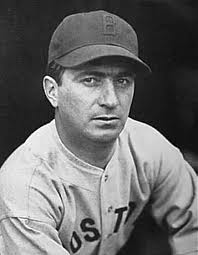
MOE BERG (1902 – 1972) Baseball Player & Spy

In Cold War, Espionage, Sports on September 15, 2011 at 12:22 PM

Moe Berg

Moe Berg became famous for what he did, but it was his charisma and storytelling that endeared him to his friends.  Below the surface he was very private, however, and the mystery that surrounded him facilitated a career change from being a public figure as a major league baseball player to the anonymity of being a spy.

Bernard Berg was lured to the land of opportunity around the turn of the 20th century.  He ran a laundry, and while he ironed shirts taught himself to read English, French and German in addition to the Yiddish, Hebrew and Russian he already knew.  He took night classes at the New York College of Pharmacy and moved his family to Newark, New Jersey to open his own pharmacy.  Bernard and Rose had three children.  Sam became a doctor, and Ethel was a lovely lady.  Morris (Moe) had his father’s intelligence and curiosity, but not his ambition.  For all his fame, his career choices made him a big disappointment to his dad.

When Moe was three and a half he insisted on going to school like his older siblings. He was an excellent student, and the only negative comment he received on an early report card said that he sang off key.  Berg’s hobby was baseball, and he played street ball with the neighbor kids until he could be on a real team in high school.

Berg was voted the “Brightest Boy” in the class at Barringer High School, a private school where he was virtually the only Jew.  He didn’t experience much anti-Semitism, but when Berg was recruited to play third base on the Roseville Methodist Episcopal Church team, he used the pseudonym Runt Wolfe and found it easy to pretend being somebody else.

After two semesters at NYU, Berg was accepted to Princeton where he played short stop.  His arm and quick agility made up for being a mediocre hitter.  He inherited his father’s facility for languages and studied Latin, Greek, French, Spanish, Italian, German and Sanskrit, graduating magna cum laude.  Off the diamond he tutored his teammates, and to confuse their opponents Berg and the second baseman yelled strategy in Latin.

TURNING A HOBBY INTO A CAREER          After graduation, Berg was offered a teaching post at Princeton but opted to play for the Brooklyn Robins (later the Dodgers).  He got a $5,000 signing bonus for joining the team.  After the first season he studied at the Sorbonne in Paris, taking history, linguistics and literature classes in French and Italian.

One reason Berg was able to accomplish so much was that he was basically a loner.  He socialized but maintained an aura of mystery by not sharing personal information with friends.  He hated accountability and disappeared frequently so that friends and colleagues rarely knew where he was.

When he returned from Paris, Berg was traded to the Minneapolis Millers, an American Association team, and then the Reading Keystones in Pennsylvania.  He had already established a double identity for himself, and after the 1925 season he started planning for his post-baseball life by enrolling in Columbia Law School.  He was traded to the Chicago White Sox and skipped spring training so he could finish classes.  That did not endear him to the coaches, but when Berg’s professor discovered that he was the Berg who played baseball at Princeton, he arranged classes so Berg’s schedule could accommodate both his job and his studies.

Good thing, because during the 1927 season Berg pulled his team out of a dire situation.  Within two weeks, the White Sox lost three catchers to injury.  Even though he hadn’t played behind the plate since the sandlot days, Berg volunteered for the position.  In his first game as the starting catcher, the White Sox beat the Yankees, and Babe Ruth was hitless.  He played catcher for the rest of his career.

A REAL SINGULAR SENSATION          In his whole academic career, Berg failed only one course, evidence.  That prevented him from graduating from law school with his class.  He was able to retake the course, and received his degree in February 1930.  He passed the New York bar that spring and headed right off to spring training.
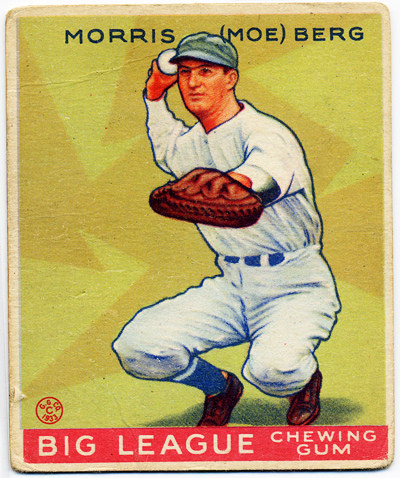
Moe Berg Baseball Card

In early April, Berg injured his knee but was back in the lineup in May, although he only played 20 games all season.  In the fall he joined the Wall Street law firm of Satterlee and Canfield, a job that justified his education and appeased his father but wasn’t as fun.  He only worked during the off season and lasted there just a few years.  In 1931 Berg was picked up the by Cleveland Indians, but bronchial pneumonia kept him in the dugout most of the season.  The Indians released him in January 1932, and he went to spring training for the Washington Senators.

Being “the brainiest guy in baseball” opened up the opportunity for him to be a guest panelist on the radio quiz show “Information Please.”  That seeming contradiction in his personality was only one of the quirks that distinguished Berg.  He was eccentric about his wardrobe and always dressed in a black suit and tie.  Every morning he took the first of three daily baths, picked up newspapers from several major cities plus some in French, Spanish and Italian, and read as many as he could during breakfast at a local diner.  He was adamant about reading every paper he bought regardless of how out of date, and piles of them covered every flat surface in his apartment or hotel room.  Until he had read it, a newspaper was “alive,” and no one else was allowed to touch it.  Once he read it, it became “dead,” and he would dispose of it.  If anyone, for any reason, touched one if the “alive” journals, Berg considered it dead and refused to read it. 

A NEW EXPERIENCE          In 1932 and 1934 Berg was a part of delegations that went to Japan to coach college teams there.  He was so captivated with the Japanese lifestyle that he slept on a tatami mat and traded his dark suit for a kimono, and he learned enough Japanese to be conversant.

During his second trip, Berg did something that opened up another career option later.  He didn’t show up for the final exhibition game, claiming afterward to have been sick.  Instead he donned his kimono, bought flowers and went to the hospital to visit the daughter of the US ambassador who had just given birth.  Speaking Japanese, he got her room number, walked past her fifth-floor room, threw the flowers in the trash and took the elevator up to the seventh floor where he climbed some stairs to the bell tower.  He reached into his kimono, pulled out a movie camera and documented military installations, shipyards, and industrial complexes around Tokyo.

While he was gone, Berg was released from Cleveland, but the Boston Red Sox added him to their roster.  He spent more time in the bullpen telling stories of his travels than behind the plate.  He spent a few more seasons in a Red Sox jersey, but his days as a player were numbered.  In 1940, the Sox put him on the coaching staff for $7,500 a year.

GOOD ENOUGH FOR GOVERNMENT WORK          Becoming a coach was essentially being put out to pasture, and Berg was ready for something more challenging.  As World War II escalated, the thrill of getting the clandestine footage in Tokyo nudged him toward more international opportunities.  In January 1942, he retired from baseball and accepted an assignment from the Office of Inter-American Affairs (OIAA) to go to Latin America and monitor the overall health and fitness in the region for $22.22 a day.

His trip was delayed, but Berg was able to keep busy.  William Donovan, head of the Office of Strategic Services (OSS), forerunner to the Central Intelligence Agency (CIA), agreed to let Berg deliver an address directly to the Japanese people via short wave radio.  Speaking in Japanese, Berg reminded them of the mutual friendship they had shared with America, especially through the common love of baseball.  He encouraged them to denounce the political leadership that was leading them into committing national suicide.

Berg also took advantage of the postponement to find an audience for the film he shot in Tokyo.  He screened it for key members of the intelligence community.  The reaction to the footage was mixed, and the radio address had no real impact on the war, but both efforts proved Berg could handle clandestine work.

When he finally went to Latin America, his primary mission became to improve life for the US servicemen stationed there, something he thought was important.  But he wanted more, so he made contacts, poked around and got some intelligence on the Nazis in Brazil.  Washington liked his effort and tapped Berg for the OSS.  While he waited for that appointment to come through, he was distracted by the first woman who was more than just arm candy.

Estella Huni was a tall brunette who played and taught piano.  Like Berg, she was a voracious reader and spoke Italian, German and French.  She introduced Berg to music, and he taught her about baseball.  They lived together in New York, something respectable people didn’t do, and Berg’s father was so disapproving that he refused to meet his son’s girlfriend.

In early 1943 Berg officially joined the OSS for $3,800 a year.  He learned all the skills a spy would need at training camp and passed his final by entering a heavily guarded American defense plant and stealing classified information.  On May 4, 1944, Berg headed for Europe with $2000 in travel allowance, a .45 pistol and his black suits.  His assignment was to find out which German and Italian scientists were working on an atomic bomb, and his primary person of interest was German scientist Werner Heisenberg, considered to be the greatest theoretical physicist in the world.

GOING UNDERCOVER          Berg went wherever he wanted to go whenever he wanted and didn’t respond to orders to keep in touch with the OSS office.  He maintained his established daily routine and translated any documents he acquired into English.  He made contacts, and Paul Scherrer, the head of the physics department at a university in Zurich, Switzerland, led Berg to Heisenberg.  Scherrer and Heisenberg were friends and colleagues before the war.  Scherrer invited Heisenberg to Switzerland to give a lecture at the university, and attending would be Berg’s riskiest assignment.

Berg had studied physics, and he was briefed on what to listen for during the lecture.  If he heard anything that indicated the Germans were on the verge of using an atomic bomb, Berg was ordered to kill Heisenberg on the spot.

Doing something like this was the reason Berg joined the OSS.  On December 18, 1944, forty-two year old Berg dressed as a university student.  In his pockets he had two things he hoped he wouldn’t have to use: a pistol to kill Heisenberg if necessary, and a potassium cyanide capsule to kill himself.  He sat in the front row, and as he scanned the room, he realized that there were Nazi soldiers posted in various locations to keep an eye on Heisenberg.  Berg took notes as Heisenberg expounded on theoretical physics, the content and language a little over Berg’s head.

Berg didn’t hear anything in the lecture that warranted him to take action.  In talking with Scherrer afterward they agreed that Heisenberg was a German who was anti-Nazi.  Berg’s approach shifted, and he wanted to bring Heisenberg to America to work.  Scherrer thought that was a good idea and invited Berg to attend a dinner in Heisenberg’s honor where the scientist inadvertently confirmed the Allies wishful thinking.  When someone baited him with the comment that he really had to admit the Germans were losing the war, Heisenberg admitted that was true.  It was through Berg that the United States became confident that the Germans were not close to being able to detonate an atomic bomb.

The Heisenberg assignment was the highlight of Berg’s espionage career.  After the war there wasn’t much for him to do.  Berg resigned from the OSS in 1945 and became bored and restless.  He was nominated for the Medal of Freedom, but he respectfully rejected the award, although he never explained why.  It was hard to find something as interesting as being paid to roam the globe on secret missions for his country.  

During the Cold War he was sent to Europe on a couple of assignments for the CIA to find out how far along the Soviet Union was to having atomic weapons.  He got through a Russian checkpoint into Czechoslovakia (now the Czech Republic) by holding up a paper with a big red star on it.  It was a piece of stationery from the Texaco oil company.  He loved being back in the field, but he refused to be accountable for his time or keep records of his expenses.  Berg hated bureaucracy, and that attitude wasn’t very compatible with government work.  In 1954 his contract expired and his security clearance was revoked.

Berg ran into financial trouble when a company he had invested in went bankrupt.  Adding in some unpaid personal taxes, the IRS claimed he owed over $12,000.  Not willing to be beholden to anyone and with no income, Berg ignored the notice, refused to make payments and even refused to declare bankruptcy.  Finally he made an offer to pay $1,500, and because Berg was a national hero, the IRS accepted.  He had to borrow the money from a friend.

LIVING LIFE ON HIS TERMS          During the latter part of his life, Berg depended completely on friends.  He never married, and technically he lived with his brother and then his sister in Newark, but he was really a vagabond staying with friends wherever he happened to land.  He carried his toothbrush and a list of phone numbers, and made friends with train conductors so he could ride for free.  People loved having him around, and he was a very entertaining raconteur.  He took advantage of their hospitality and often stayed for weeks.  He spent hours reading, and it was not unusual to see him at the ballpark watching a game.

Berg was not without his own problems.  In 1963 he started dressing very sloppily, and due to a large umbilical hernia, he no longer looked or acted like an athlete.  He refused to have it treated until four years later when he met a pediatric surgeon at a World Series game and came to trust him enough to do the surgery.  He also suffered from sundowner’s syndrome where he got disoriented when he woke up in the middle of the night and fell trying to find his way.

In May 1972 Berg was staying at his sister’s house when he fell out of bed at night and hit the night stand.  After four days he finally consented to go to the hospital and was diagnosed with an abdominal aortic aneurism.  On May 29 he asked the nurse, “How are the Mets doing today?” and then died before he could hear the answer.

QUESTION:  What contradictions do you have in your personality that make you seem like two different people?  How does that impact your life?

©2011 Debbie Foulkes All Rights Reserved

Sources:

Dawidoff, Nicholas, The Catcher Was a Spy; The Mysterious Life of Moe Berg.  New York: Pantheon Books, 1994.

Kaufman, Louis; Fitzgerald, Barbara; Sewell, Tom, Moe Berg, Athlete, Scholar, Spy.  Boston: Little, Brown and Company, 1974.

http://www.moeberg.com/

http://www.jewishvirtuallibrary.org/jsource/biography/MBerg.html
http://www.baseball-reference.com/players/b/bergmo01.shtml

CORNELIA CONNELLY (1809 – 1879) Mother & Nun Who Founded a Religious Order

In Catholic Church, Italian History, Victorian Women on July 25, 2011 at 10:44 AM

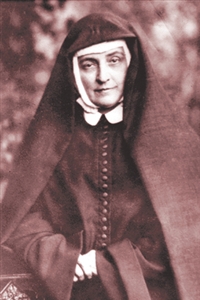
Mother Cornelia Connelly

When someone tried to tell Cornelia Connelly what to do, she responded with stubborn determination, choosing what she knew was right for her.  The primary guiding force of her life was her faith, and she was willing to obey God and sacrifice whatever He asked of her.  When she made that promise, however, she had no idea how heartbreaking that sacrifice would turn out to be.

Connelly was born into a prominent Philadelphia Episcopalian family.  Her father died when she was nine years old and her mother died five years later. The fourteen year old girl and her five siblings were not orphaned, however, as several relatives incorporated them into their families.  Connelly was adopted by a half sister, Mrs. Montgomery, and was given classes in music, painting, modern languages and the social graces.

Mrs. Montgomery took seriously her responsibility to prepare her charge for a proper suitor, but she was no match for the curate of St. James Church.  Pierce Connelly was charming if not handsome, intelligent and an ambitious, charismatic minister.  Unfortunately, Mrs. Montgomery did not think his family was of worthy social standing, and she forbade Connelly to marry him.  That wasn’t a compelling enough reason for Connelly to stop seeing him, and   she ran away to live with her sister, Adeline Duval, who was much more sympathetic to matters of the heart.

Connelly was 22 years old and Pierce was 27 when they got married in December 1831.  The groom undoubtedly promised to love his bride until death separated them, and the bride in turn promised to obey her husband.  Whether he kept his promise or not depends on a definition of love, but she obediently followed him until it conflicted with her commitment to God’s will.

As newlyweds, the couple moved to Natchez, Mississippi where Pierce became the rector of Trinity Church.  One year later a son, Mercer, was born followed by a daughter, Adeline, in early 1835.

A CONVERSION EXPERIENCE                         In August, Pierce had a crisis of faith and renounced his Anglican Orders in order to study Roman Catholicism, which in his mind necessitated selling their property and going to Rome.  Connelly believed in the sincerity and integrity of her husband’s calling and found virtue in converting to Catholicism herself.  She followed her husband’s lead, but she did it her way.  Pierce was adamant about waiting to take the sacraments in the holy city, but his wife was ready immediately.  When the voyage from New Orleans was delayed several weeks, Connelly was received into the Catholic Church and took her First Communion before leaving the States.

After 60 days at sea and a stop in southern France, the Connellys final reached Rome in February 1836.  Pierce was received into the Catholic Church on Palm Sunday.  As a married couple with two children coming all the way from America to join the Church, the Connellys were a novelty.  They quickly integrated into local society, had an audience with Pope Gregory XVI and were frequent visitors of the influential Borghese family.  A son, John Henry (“Harry”), was born while they were in Europe.

BE CAREFUL WHAT YOU PRAY FOR                        About a year later, the Connellys had to return to Louisiana to take care of a financial crisis, and Pierce got a job as an English professor, giving them a place to live on campus.  Another daughter was born, but she died after only a few weeks.  For a couple of years the family lived an idyllic life, and Connelly blissfully filled her days teaching with the nuns at the Convent of the Sacred Heart.  One day while watching the children play outside, Connelly prayed, “My God, if all this happiness is not to Thy greater Glory and the good of my soul, take it from me.  I make the sacrifice.”1  The next day while Harry was playing with the dog, he fell into scalding liquid in the sugar boiler and subsequently died in Connelly’s arms.

To further deepen his faith, Pierce went on a retreat in October 1840 and had another epiphany: he was being called into the priesthood.  He revealed his decision to his pregnant wife, and she dutifully accepted it as God’s will, although the implications for the family were drastic.  He made it clear that for them, following God’s will would require immediate celibacy, and eventually they would have to live separately.  Connelly was heartbroken but willing to make whatever sacrifices God required of her.  In January she went into retreat where she reaffirmed her commitment to her own spiritual journey, and in March her son Frank was born.

The following year Pierce had an opportunity to work in England as a tutor and to give Mercer an English education.  He and his son left in May 1842, and Connelly and the two younger children joined the Sacred Heart community, living in a very small cottage next to the convent.

Because he was married, approval for Pierce to become a priest had to come directly from Rome, and Connelly had to accompany him there to sign a petition for separation.  Before leaving Louisiana, conflicted Connelly offered her husband an opportunity to change his mind and reconcile the marriage.  He remained steadfast in his desire to join the priesthood even if it meant splitting up the family.

POVERTY, CHASTITY & OBEDIENCE                       In the fall of 1843 Connelly and her husband presented their petition to Pope Gregory XVI, and the following spring they were granted a Deed of Separation.  Pierce began his ecclesiastical studies, and Connelly, who had become a postulant in America, remained true to her calling and entered the Sacred Heart convent.  Mercer and Adeline were at boarding school, but Connelly was able to keep young Frank with her.

Pierce visited his family weekly, and when he was ordained, he said his first mass at his wife’s convent.  It was a very emotional experience for Connelly to receive Holy Communion from her husband and for Adeline to receive her First Communion from her father.

In the 1840s there was a sectarian movement whose aim it was to influence Britain toward being a united Catholic state.  It seemed logical that raising children with a Catholic education would be a good place to start.  Because of her talent for teaching and compassion for children, Connelly was handpicked to start a convent school in Derby, England.  By now she was accustomed to following God’s orders for her life, so she packed up the children and went to Derby.

“Sister Connelly” started wearing a habit in December 1846, and some months later she took her temporary vows.  Rather than join an established order, it was Connelly’s mission to found a new order which she called the Society of the Holy Child Jesus (SHCJ).  As Superior, she and the nuns that joined her opened a boarding school for girls with a full curriculum including English, foreign languages, social studies, arithmetic, music, art, and needlework.

Connelly devoted her full energy to the success of the school until Pierce became dissatisfied with his status again and swept up his wife into another drama.  Pierce had gone to England to resume his work as tutor, but that didn’t last.  Money was tight, and he wanted to be more integrated into Connelly’s life and work.  On March 4, 1847 Pierce showed up unannounced to Connelly’s convent and demanded to see her.  For the first time, she did not acquiesce to his demands and refused to see him.  Her decision was supported by the bishop, but Pierce was not amused.

TRIALS & TRIBULATIONS                                Pierce tried various ways to regain control of Connelly.  She had submitted the Rules for her new order to Rome, modeling them after St Ignatius.  Pierce went back to Rome and made an attempt to get the Vatican to support his efforts, insisting that she use St. Francis de Sales as the model.  Then, he began writing to her directly, requesting a personal visit.  When she didn’t reply, Pierce convinced himself that Bishop Wiseman was manipulating her.  He could feel his wife slipping out of his grasp and claimed he feared for the future of his children.

In October, Pierce’s next move was to demand that Connelly not take her final vows on the grounds that since they were still legally married, he would be responsible for any debts she or her order might incur.  Connelly’s religious journey stayed its course, however, and she took her final vows in December, becoming Mother Connelly.

Pierce retaliated against his wife’s defiance by assuming custody of the three children and taking them to Italy without her permission.  This left her with two choices: give up her religious life to be with her children or give up her children.  In the face of the ultimate sacrifice, Connelly prayerfully refused to submit to her husband’s ploy, writing in her diary, “I Cornelia vow to have no future intercourse with my children and their father, beyond what is for the greater glory of God, and is His manifest will through my director, and in case of doubt on his part through my extraordinary [confessor].”2 She never saw Mercer again.

This was not the decision that Pierce anticipated, and he couldn’t accept it.  He went back to Derby a few months later and demanded to see Connelly.  Again she refused.  He flew into a rage and would not leave the waiting room for six hours, trying every way he could think of to get to his wife, to no avail.

This left Pierce with only one card left to play.  In January 1849, Connelly received a subpoena to appear in English court.  Pierce was suing her for restoration of conjugal rights.  Connelly was not only concerned about the outcome of the trial, but also that Pierce would exhaust his ability to provide for the children in attorney’s fees and that he would mislead the children away from the Catholic Church.  By now he had renounced his vows and reverted to Protestantism.

Connelly vs. Connelly came before a judge in May, but the defendant did not appear.  With her life’s work at stake, her counsel cited the legal separation granted them in Rome.  The judge ruled in favor of Pierce saying that the decree of separation from Rome did not hold up legally in English court.  Connelly’s attorneys filed an appeal which went to court in 1851.  This time a Judicial Committee ruled in Connelly’s favor, and since Pierce had no further financial means to pay his legal bills, he was forced to drop the case.  Connelly was able to continue her mission, but the children stayed with their father.

Connelly was able to compartmentalize the heartbreak she felt at losing her family and focus her outward attention on her mission.  The Society of Holy Child Jesus expanded, establishing convents with schools in other English towns, France and Philadelphia.  Connelly wrote the Book of Studies in 1863 as the basis for her curriculum, which emphasized compassion, imaginative teaching, the importance of the arts, and lots of outdoors activities for developing youngsters.

STAY CALM AND CARRY ON                           It seemed that Connelly was destined to have nothing come easy for her, and getting her Rules for the SHCJ approved by the Vatican was a lesson in patience and steadfastness.  Twenty-seven years after Connelly submitted her first draft, Bishop Danell summoned representatives from each convent to convene for the purpose of debating the Rules and electing a Superior General.  Connelly was respected by most of the nuns in her order, but there was some dissension in the ranks which she was totally unaware of.  At the gathering, Reverend Mother Connelly was elected as Superior by a majority vote, but Bishop Danell appointed himself as Bishop Superior of the Institute, rendering Connelly’s authority ineffective.  In addition, he substituted some rules that he concocted for those that the sisters had been living under for almost three decades.  Connelly had no choice but to accept them.  Until Connelly’s Rules were approved, the nuns were restricted to only taking the temporary vows and were not able to fulfill their spiritual commitment with final vows.

Connelly’s health was another nagging issue over many years.  She suffered from rheumatic gout, and bronchitis.  She became bedridden and was given last rites in January 1878.  She managed to hang on another 15 months, and the reward for her endurance was that in January 1879, Bishop Danell allowed her novices to take their perpetual vows.

Three months later Connelly was given Last Rites again, and on April 18, 1879 she died, 33 years to the day after she left Rome to start her order.  She was given a Requiem mass and was buried at the convent in Mayfield, England.  Eight years after the death of their founder, in August 1887, the Society of the Holy Child Jesus was informed that the Pope had approved their Rules as Connelly had written them.  Today, Connelly’s legacy through the Society of the Holy Child Jesus has established convents and schools in the United States, Europe and Africa.

QUESTION:  What would you be willing to sacrifice to stand up for something you believe?

©2011 Debbie Foulkes All Rights Reserved

1Mother Marie Therese,p. 27

2Wadham, p. 114

Sources:

Mother Marie Therese, Cornelia Connelly, A Study in Fidelity.  Great Britain: The Newman Press, 1963.

Wadham, Juliana, The Case of Cornelia Connelly: Wife, Mother, Nun-Saint.  New York: Pantheon Books, Inc., 1957.

http://www.shcj.org/society.html

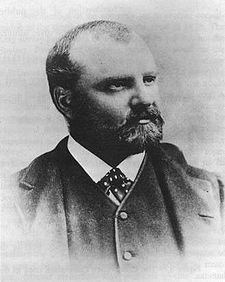
CLARENCE KING (1842 – 1901) White Geologist, Black Husband

In adventure, African-American women, American History, Civil War, Geology on June 17, 2011 at 10:15 AM

Clarence King

Clarence King’s ancestry went back to Alfred the Great, the Magna Carta, and the Massachusetts Bay Colony.  There was no doubt about King’s Anglo roots.  But people believe what they want to, and pale, blue-eyed King lived a double life as a white man and a black man, which spanned the breadth of New York society.

King’s mom was only 15 years old when she got married, and her 21 year old husband was already an established businessman.  King was born while his father was in China on business, and he was raised with the help of a colored nanny.  When King was only six his dad died in China.  The family also lost two baby girls leaving only mother and son.

A pattern of financial troubles and sickness that would follow King for the rest of his life started in 1856 in Canton, China when the family business was destroyed by mobs who hated foreign-owned businesses, and King’s mom was left almost destitute.  Three years later, 17-year-old King dropped out of high school before graduating, giving the vague reason as “illness.”  He moved to Brooklyn to work for a flour merchant.  He and his mother always remained close, but she remarried a widow and had a second family.

King might have been considered bi-polar.  He was prone to depression, a source of future illness, and yet very sociable.  His friends characterized him as smart, compassionate, well read, an excellent conversationalist and story teller, and a good writer.  Politically he was a staunch abolitionist.

THE CALL OF THE WILD             With the financial help of his step father, King went to Sheffield Scientific School which offered the best scientific training in the country.  He received a Bachelor’s degree in 1862.  After graduation, he and some buddies immediately set off for Lake Champlain to row from New York into Canada.  Not realizing that a draft had been instituted to fulfill the Union quota for soldiers, they were surprised to be stopped at the border as suspected draft dodgers.  They managed to convince the inspector that they were not avoiding the draft and finished their trip.  King was adamantly against slavery, but he was also a pacifist.  When the adventurers returned home, King headed to California to do some mountain climbing and feed his curiosity about geology, conveniently escaping his need to enroll in military service.

King, along with two friends, may have avoided the dangers of war, but he had some harrowing experiences that were equally as life threatening.  Near Fort Kearney, Nebraska King hired a guide to take him on a buffalo hunt.  After chasing a bull for almost two miles, King shot the animal, and it turned and charged King’s horse which fell on top of him.  A buffalo herd a mile and a half long rushed by him, parting just enough to avoid the horse which had King pinned to the ground, keeping him from being trampled.

King and his best friend James Gardiner found ways to earn just enough money to make their way to San Francisco, and King joined the California State Geological Survey as an unpaid assistant geologist.  King and the others on their expeditions worked in the Sierra Nevada, Yosemite and Lake Tahoe, and named Mount Tyndall, Mount Whitney, Mount Gardiner and Mount Clarence King after themselves.

NOT FOR LOVE OR MONEY             After a trip to Nicaragua in 1865, where King got malaria, he stayed at mom’s house to recover before going west again.  He returned to New York a year later when his stepfather died, leaving his mom with three children to raise, several servants to support and no money.  King borrowed money from Gardiner to help with the immediate needs.

In 1867, King was appointed U. S. Geologist-in-Charge of the U.S. Geological Exploration of the Fortieth Parallel, and he successfully lobbied for federal funds to conduct his survey.  His salary was $250 a month, and he hired Gardiner as a member of his crew.  Despite the rugged environment, King preferred to dress the part of boss by wearing linen with silk stockings and low shoes.  During their first season, King and his team surveyed 12,000 square miles and collected over 3,000 specimens of rocks, minerals and fossils.

In Virginia City, Nevada, both King and Gardiner fell in love, and in April 1868 King announced his engagement to Ellen Dean, a teacher.  But in September when Gardiner married Josie Rogers, something was wrong, and King didn’t even show up to his best friend’s wedding.  A few months later when they all convened back in Washington D.C. King was acting despondent.  He wrote in a journal that loyalty to mother and God trumps passion.

After a third season surveying along the Fortieth Parallel, King earned his reputation as a captivating storyteller.  He had essays published in the Atlantic Monthly, and in 1872 he published Mountaineering in the Sierra Nevada, tales of his adventure peppered with social commentary.  It was so popular that it went through nine printings in two years.

The book may have made King popular, but apparently it did not make him rich.  He needed money to help his family, so he testified as an expert witness for a California mining company for $5,000.  Then in late 1873, he ended up back in New York to set up the survey laboratory.  He was resigned to being city bound and would express his restless in a different way, the beginning of his double life.

AS DIFFERENT AS NIGHT AND DAY             By day King worked hard at the tasks at hand, but at night, either alone or with a friend, he went “slumming” around the neighborhoods of the poor and ethnically diverse.  He was not looking for sexual experiences or to gawk or assert his superiority.  King saw especially the African American neighborhoods as a frontier to explore, and in the cover of darkness he could experience cultures forbidden to him in his mainstream life.

King was recognized for his contributions in geology when the United States Senate confirmed his nomination as the first director of the United States Geological Survey (USGS) in April 1879, a position he held for almost two years.  In 1881 King resigned in order to oversee several mining interests.  When most of them became losing propositions, he went to Europe to find investors.  He was nominally successful, but he did amass an impressive art collection which he either lent to friends or placed in storage in New York.

When he returned to New York in 1884, he rented rooms in various elegant residential hotels and belonged to several social clubs.  This arrangement allowed him the maximum freedom to come and go for long periods of time, often without telling his friends when he was leaving.  Although he had embedded himself in New York society, he was not at all attracted to the women of that class.  He preferred more “natural” women who were not obsessed with fashion, as he put it, with whom he could have a deeper conversation.  On one trip to California he had a relationship with a Native American named Luciana who came very close to his ideal.  Back in New York, King was haunted by her memory, and his friends gave up trying to find dates for him.

TO LOVE AND TO CHERISH             Sometime in late 1887, King met a woman named Ada Copeland, probably while he was slumming around New York at night.  There is no record of their meeting or courtship.  She was an African American who had migrated from Georgia to New York as a single woman and lived with a widowed aunt doing laundry in their home until she got a job as a nanny.  She was probably in her mid to late 20s when she met King, but she didn’t have a birth certificate to confirm her age.

The couple fell in love, but since interracial marriage was still illegal in most of the country, King introduced himself as James Todd, a Pullman car porter from Baltimore.  This was the only identity she ever knew.  King’s proficiency at storytelling served him well, and Copeland never doubted his veracity.  Despite his light complexion and eyes, by choosing that profession, it was assumed that he had black blood in him, and the presence of any amount of black blood, despite appearances, was enough to be considered Negro.

Ada Copeland became Mrs. James Todd in September 1888 in a small religious ceremony at Copeland’s aunt’s home.  Since they did not get a civil marriage license, they only had a common law marriage which had legal ramifications later in life.  There were only a few guests at the ceremony, and none of the groom’s family or friends attended or even knew about it.

Being married allowed Todd to move up in status and it allowed King to have a real home somewhere.  He set her up in an apartment in Brooklyn giving her an unusual amount of independence and privacy for a black woman.  But for King, supporting his mother’s household and a wife became very expensive, and the demands on his wallet were exacerbated when he and Todd had children.  There was a boy, Leroy, who was born only a year after they married and then died when he was about two.  By 1897 the family had grown to two girls and two more boys.  All of the children were called “colored” on their birth certificates.

Children made for a happy family, but it added to his burden of debt.  King borrowed money from John Hay, one of his dearest friends he met when he worked in Washington, D.C.  When they met, Hay was the assistant secretary of state, and then became President Lincoln’s private secretary.  King appealed to Hay for a loan, something he would do many times, and within the first year and a half of his marriage, King was $43,000 in debt.

FOR RICHER OR POORER, IN SICKNESS AND HEALTH             Both King’s private and professional lives were very full.  He received an honorary doctorate from Brown University, but he was unable to attend the ceremony because he was in Europe dealing with mining projects.  He had perfect alibis for whenever he wasn’t around.  His wife believed he was traveling across the country on a train working as a porter.  While he was gone, he wrote passionate love letters to her, and there were joyful reunions upon his return.  His friends and business colleagues thought he was with his mother or had disappeared for a while because of his depression.  When he did visit his mother, he kept the truth about his indebtedness from her.  When he confided his fears and feelings about life to his friends, particularly Hay, he talked about everything except his family.  He kept that a well guarded secret.

King’s financial situation continued to worsen.  In 1886 he had organized the national Bank of El Paso and, as the main stockholder, he appointed a friend as the bank president.  In 1893, the friend’s bad management caused the bank to fail, and King lost everything.  The burden of living a double life and increased debt started taking its toll.  That fall, a disheveled, bearded King was arrested at the Central Park zoo for disorderly conduct.  He had gone into a wild rage, but he was released on bail posted by a former classmate who worked at the facility.  King was then examined by two doctors who diagnosed him as exhibiting acute symptoms resulting from a non-specific mental disturbance.  The doctors and three friends sought help in dealing with King, and a judge committed him to the Bloomingdale Asylum for the Insane.  The cost of his treatment was paid for by two friends who visited him almost every day.

In January 1894, after two months in Bloomingdale, King was declared “recovered” from “Acute Melancholia.”  He had had no contact with his wife while he was institutionalized, and then almost immediately left for a business trip to the Caribbean.  He didn’t arrive back in New York until May before heading out to California again.  To help alleviate some of his financial burden, King started selling off some of f his art collection.

Life for the “Todd” family got easier while it got worse for King.  Todd spent the money she received on the family, moving up the ladder into more middle class neighborhoods and adding a nanny, music teacher, cook, maid and laundress to the payroll.  King had a mild heart attack in 1897 while in Colorado.  Perhaps he suspected that something would happen because in his correspondence to his wife he admonished her to keep their relationship a secret and to burn his letters.

King went to Arizona next where he contracted whooping cough, and the doctor found a spot of tuberculosis on his lung.  He kept traveling, exacerbating the condition, and when he went back to New York to visit his family and his mother, there was a feeling that it might be the last visit.  King told Todd to move the family to Toronto and to buy a house with the money he had gotten from friends, which she did.

Again King went to Arizona for the climate.  He had another heart attack and ventured to Pasadena, California to find a doctor who could help him.  He had lost 40 pounds and was plagued by headaches caused by fever.  Hay continued to send money to support his friend.  King, sensing the beginning of the end, started to evaluate his life, wondering why someone as intelligent as himself was such a financial failure, a question his friends had been asking themselves for a long time.

TIL DEATH DO US PART             King went once more to Arizona in a desperate attempt to recover.  He admittedly knew that was impossible, so he finally unburdened himself and wrote a letter to Todd revealing his true identity and the deception he had kept from her for 13 years.  He suggested she write his real name in her Bible in case she forgot it.

On December 23, 1901, Todd celebrated her 41st birthday in Toronto.  On December 24, King died in Arizona, one month before his 60th birthday.  He had told his wife that he had provided for the family after his death, but the only will he had was written before he got married, making his mother the beneficiary.  Because King and Todd only had a common law marriage, she was not entitled to anything.

For all of King’s accomplishments and failures, his life choices were a living illustration of what he believed: “People are looked at in only two ways, with the brain and with the heart.  If you take the former method you initially classify and judge people by their differences with other people usually yourself.  If you see them with the heart you have your conceptions on the similarities between them and some other people usually yourself.”1

QUESTION:  What do you believe in so strongly that you would have it influence your life choices?

©2011 Debbie Foulkes All Rights Reserved

1Sandweiss, p. 173.

Sources:

Sandweiss, Martha A., Passing Strange, A Gilded Age Tale of Love and Deception Across the Color Line. New York: The Penguin Press, 2009.

http://books.nap.edu/html/biomems/cking06.pdf

http://www.summitpost.org/mount-clarence-king/150502  (A description of Mount Clarence King)