forgottennewsmakers

Archive for the ‘American History’ Category

GUTZON BORGLUM (1867-1941) Sculptor of Mount Rushmore

In American Artists, American History, American Presidents, Artists, Biography, Mt. Rushmore, People, Sculpture on August 3, 2010 at 1:11 PM

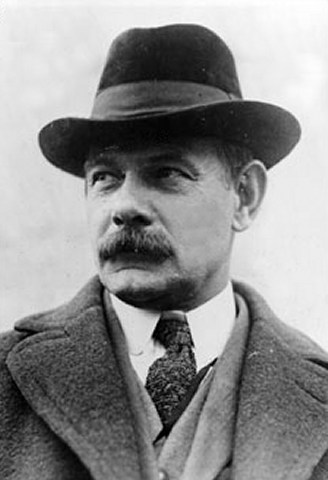
Gutzon Borglum

John Gutzon de la Mothe Borglum’s father, a Danish Mormon, was a bigamist.  He was married to Borglum’s mother and her sister.  Their life in Idaho and Utah was accommodating, but when they moved to Nebraska, Borglum’s dad decided to restructure his family to fit in better.   He divorced Borglum’s mom but stayed married to his aunt.  It’s hard to know how this influenced the young man, but as an adult he was very independent with an ego as big as a mountain.

When he was sixteen, the family moved to Los Angeles where Borglum started to express himself artistically.  He teacher was Elizabeth Jaynes Putnam, an accomplished painter who was 18 years older than her student.  Their relationship soon turned personal, and they were married in 1889 when Borglum was 22 years old. 

Borglum had great success early on, and his portrait of General John C. Fremont led to his first patron, Fremont’s wife, who introduced him to Leland Stanford and Theodore Roosevelt.

CARVING OUT A CAREER           When the Borglums went to Paris, he studied at the École des Beaux-Arts and the Académie Julian. Both he and his wife mounted successful exhibitions. The biggest artistic influence was his encounter with Auguste Rodin, and he abandoned painting for sculpture.  Since his brother Solon was a sculptor, sibling rivalry also could have been a factor in changing his medium. 

When Borglum and his wife returned to California the state was in a deep financial depression, and artists weren’t able to get commissions.  In 1896 they ventured to London where he had some of his art on display in Windsor Castle for Queen Victoria. 

As Borglum’s career started to out shine his wife’s, the marriage suffered.  He left Europe in 1901 alone to return to the United States.  Onboard the ship bound for America, Borglum met Mary Montgomery, a younger woman returning from Berlin.  She was one of the first two women to ever earn a doctorate in Berlin and had mastered six languages. He respected her intelligence and passion and the balance she brought to his life.  Finally, in 1909, Putnam granted Borglum a divorce and he and Montgomery were married.  The couple moved to Connecticut and settled on a farm they called “Borgland.”   Three years later a son, Lincoln, was born followed by a daughter, Mary Ellis.

Borglum grew increasingly famous as he developed his own style of “American” art. His sculpture Mares of Diomedes was a gold medal winner at the 1904 St. Louis Exposition, and it was the first sculpture by an American artist accepted at the Metropolitan Museum of Art.  His greatest notoriety came with a bust of Abraham Lincoln which was originally displayed in Theodore Roosevelt’s White House and is currently exhibited in the rotunda of the Capital building.

PLAYING POLITICS                       Art was not the only contribution Borglum made to American society.  He was outspoken about his political opinions and tried to wield some celebrity influence by campaigning for Roosevelt’s reelection in 1912.  During the Wilson administration Borglum, in a departure from his usual focus, investigated malpractices in aircraft manufacture and reported his findings directly to President Wilson.  Borglum and the president disagreed about how the artist became involved in such an investigation, and their dispute became public. Borglum was adamant that President Wilson specifically appointed him to the task and published letters in the New York Times defending his involvement.  The president, in letters to Borglum and the Secretary of War which the White House also released to the New York Times, tried to distance himself from Borglum appreciating his discoveries but apparently not wanting to be linked too closely to the man. 

MOVING A MOUNTAIN                It was Borglum’s bust of Lincoln that led to his first mountain carving.  He was invited by the Daughters of the Confederacy to carve a bust of Robert E. Lee in Stone Mountain, Georgia.  Upon visiting the site he declared that doing just the head of Lee would be as impressive as a postage stamp on a barn door.  Instead, he created a design of a more appropriate scale that incorporated Lee, Jefferson Davis and Stonewall Jackson on horseback in front of a row of soldiers.  He started carving the piece in 1923 with chisels and jackhammers until he learned the art of using dynamite for detail work from a Belgian engineer.   

Borglum joined the Ku Klux Klan while he was developing this project.  It’s not clear if he did it as an expression of his core beliefs or to patronize the backers. He was known to shun anyone who could not directly help him through money or influence.  Borglum’s artistic temperament clashed with the patrons and he was kicked off the job.  Another artist was hired to complete the monument, and ultimately none of Borglum’s work survived.  He did benefit from the work he did, however, by developing techniques he used on later projects.

BIGGER IS BETTER                       While Borglum was working on Stone Mountain, the state historian from South Dakota tempted him with the idea of creating a sculpture in the mountains of the Black Hills.  The sculptor saw the potential for more national recognition than the Georgia project afforded him, so he agreed to the challenge and uprooted his family, moving them to Keystone, South Dakota.  His original subjects were Washington and Lincoln.  The Louisiana Purchase by Jefferson and the acquisition Panama Canal by Roosevelt expanded the story of the monument to the Manifest Destiny of the United States, and those two profiles were added to the design.  Borglum began carving the mountain in 1927 when he was 60 years old. 

Borglum is responsible for creating the model and picking the site for the carving.  During the sculpting he was often more supervisory than hands-on.  He would climb all over the mountain to find the best angle for the features of each bust, often insisting on the accuracy of details that could not be seen from ground level.  

For long periods of time he turned the reigns over to his assistants, including his son Lincoln, while he traveled to Washington D.C. to get more funding or to Europe to work on other commissioned projects.  Whenever he returned to Mt. Rushmore, he would resume micromanaging the workers. 

BITING THE HAND THAT FED HIM      Again his artistic temperament got him into trouble.  John Boland was chairman of the Mt. Rushmore executive committee and responsible for all the finances on the project. He was both a friend and nemesis to Borglum.  When money became tight for the artist, it was Boland who guaranteed bank loans so he could keep his home.  On occasion, the businessman even kept Borglum afloat with a personal loan. 

But Borglum didn’t like being beholden to anyone.  He fired some of the best workers and frequently butted heads with Boland, always insisting on doing things his way. These clashes led to a rift in their relationship.  Eventually, however, their wives intervened and conspired to effect a successful reconciliation between the two men.

Borglum never got to see the Mt. Rushmore project completed.  He died in 1941 at the age of 74 from complications related to surgery.  His son, Lincoln, took charge, working one additional season, but the monument basically remained the way his father left it.

QUESTION:  What is your favorite kind of art?  Would you rather observe someone else’s art or make it yourself?

©2010 Debbie Foulkes All Rights Reserved

 Sources:

http://www.pbs.org/wgbh/amex/rushmore/peopleevents/p_gborglum.html

http://www.pbs.org/wgbh/amex/rushmore/peopleevents/p_mborglum.html

http://www.pbs.org/wgbh/amex/rushmore/peopleevents/p_boland.html

http://www.tfaoi.com/newsm1/n1m582.htm

http://encyclopedia.stateuniversity.com/pages/222/-John-Gutzon-de-la-Mothe-Borglum.html

http://www.nps.gov/moru/historyculture/upload/Sculptor%20Gutzon%20Borglum%20A.pdf

http://query.nytimes.com/mem/archive-free/pdf?_r=1&res=9C06E3D61F3FE433A25754C0A9639C946996D6CF

HAROLD BRIDE (1890 – 1956) Wireless Operator on the Titanic

In adventure, American History, Biography, History, People, People from England, Telegraph Operators, Titanic, Trivia on July 19, 2010 at 9:38 PM

Harold Bride at age 16

Harold Bride was one of those kids who knew what he wanted to be when he grew up: a wireless operator.  The youngest of five children, he was shy and soft spoken with an easy sense of humor.  The telegraph was the hottest wireless technology at the time, and Bride was a techno geek in the making.

It was expensive to go to telegraphy school, so he worked in the family business until age 20 to earn the money for tuition.  In 1910 he started classes, and, to the neighbors’ disgust, built an antenna in the yard so he could practice using Morse code.   He finished his training after one year and immediately started a job in London.

In March 1912, Bride received a telegram saying his next posting would be on the Titanic and was sent to Belfast, Ireland for special training. Bride and his boss, Jack Phillips, were placed onboard the ship through the Marconi International Marine Telegraph Company and given junior officer status.  The salary was adequate but the adventure quotient was very high.

Two weeks before reporting for the sea trials, Bride and Mabel Ludlow became engaged.  He had doubts that she was the one, but she nagged him until he acquiesced, giving her something to brag about while he was at sea.   

ADVENTURE AT SEA                        On April 10, 1912 the Titanic set sail. The wireless broke down on April 13, and it took Bride and Phillips seven hours to diagnose and fix the problem.  Ice warnings had been received on April 11 and 12 and delivered to Captain Smith on the bridge. The equipment was repaired in time to receive four additional warnings on the 13th, and Bride delivered the first one to the Captain.  Captain’s orders specified that the passenger’s personal messages were the priority, and the three later warnings were ignored. 

About 7:30 on the night of April 14, Phillips was manning the telegraph and Bride went to bed.  At 11:40 the Titanic struck an iceberg.  Bride slept through the collision but woke up at 11:55, entering the work room in his pajamas to check up on his boss.  As Bride was preparing to relieve Phillips, the Captain entered, informed the men of the crash and told them to prepare a call for assistance to send on his orders as soon as an inspection was finished. 

Ten minutes later the Captain returned and ordered the international call for help be sent.  Phillips tapped out CQD (Come-Quick-Distress), the call used prior to S-O-S.  The gravity of what happened had not impacted the men yet, and Bride saw some humor in the situation.  He suggested Phillips send S-O-S since it was a new call and this might be his only chance to use it.  Phillips laughed and changed his message.  After the Captain left, the men continued to joke around while they waited for a response.

They got replies from several ships, but the Carpathia was in the closest proximity to the now-sinking vessel.  Forgetting he was still in his pajamas, Bride ran to tell the Captain that help was on the way. He saw passengers swarming on the decks trying to figure out what to do.  When he returned, Phillips reminded him to get some clothes on.  He did, and he brought an overcoat to keep Phillips warm. 

The situation got worse fast.  Phillips announced that the wireless signal was getting weaker, and finally the Captain came to say that the engine rooms were taking on water.  Bride went to his bunk and found his life jacket and put on boots and another coat.  While Phillips continued to send messages, Bride secured a lifebelt around him.  Phillips dispatched Bride to the deck for a status update of what was happening.  Bride helped twelve men lift the last collapsible down to be used to escape.

The Captain walked in while Bride was updating his boss.  Captain Smith praised the men for their work and excused them.  It had reached the point of every man for himself.  Phillips kept sending messages for another ten minutes while Bride collected their personal items.  As if things weren’t bad enough, an employee who worked below decks entered the communications room and tried to steal Phillip’s life belt right off him.  Bride attacked the man and made sure he was no longer a threat. 

SURVIVAL MODE                                 The wireless operators knew it was finally time to go.  While the band played “Autumn,” Phillips headed aft, and Bride went on deck and saw people struggling to get the collapsible into the water.   He helped push and ended up in the frigid water under the capsized raft.  After vigorously swimming 150 feet to get away from the suction of the Titanic, someone pulled Bride up onto the bottom of a raft. 

The small surface area of the collapsible was so crowded with survivors that they overlapped on top of each other.  Someone suggested that they should pray, and they recited The Lord’s Prayer together.  Bride’s feet were painfully injured, but there was nothing he could do.  One man died on the raft. 

When the Carpathia arrived about 4:00 am, one by one they vacated the life boat and ascended the ladder to the ship.  It was then that Bride discovered the dead man was Phillips. 

Bride had just enough strength to climb onboard, but he couldn’t walk. One foot was crushed and the other was frostbitten.  He was taken immediately to the hospital ward, but a few hours later he was pressed into service again and wheeled into the wireless room of the Carpathia to transmit the names of survivors and personal messages.  He ignored all incoming media requests for information and even a communiqué from the president in favor of transmitting the passengers’ notices. He was so caught up in his work that he didn’t realize when they arrived in New York until Guglielmo Marconi came aboard and released him from his duties. 

LIFE AFTER NEAR DEATH            Bride was still wheelchair bound when he testified in an American inquiry into what happened on that fateful night.  He was accused of withholding information on the Carpathia for personal gain, and he had to squelch a rumor that he was taking baseball scores. Bride insisted that he was following the captain’s orders in only dispatching the relevant messages. 

Returning to England was not the relief that it could have been. Bride had to relive his Titanic nightmare for a British inquiry and deal with his fiancé.  He stalled any wedding plans until after the investigation. On September 25, 1912 he met Lucy Downie which gave him the courage to call off the wedding to Ludlow. 

Downie worked in London as a teacher.  This time it was love at first sight for Bride, and he took a job as a telegraphist in the city so they could be together.  They married in April 1920 and had a daughter one year later. 

During World War I Bride served on another ship, and then in 1922 the Brides moved to Scotland in search of a completely different life.  They had two children, and Bride worked as a salesman.  He was a confirmed geek, though, and operated his own radio as a hobby until he died in 1956.

QUESTION:  What is your biggest fear?   How do you help yourself when you feel afraid?

© 2010 Debbie Foulkes All Rights Reserved

Sources:

http://query.nytimes.com/mem/archive-free/pdf?_r=2&res=9E07E0DF153CE633A2575AC1A9629C946396D6CF

http://www.titanic-lore.info/Wireless-shack.htm

http://www.titanic-lore.info/wireless-harold-bride.htm

http://www.titanicinquiry.org/USInq/AmInq10Bride01.php

http://acronyms.thefreedictionary.com/CQD

CYNTHIA ANN PARKER (1827–1870) White Girl Raised By Comanche Indians

In American History, Biography, History, Kidnappings, Native Americans, People, People from Texas, Uncategorized, women on July 12, 2010 at 8:50 PM

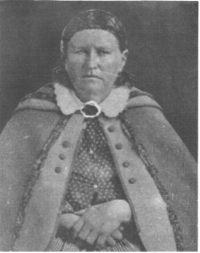
Cynthia Ann Parker After Being Returned to the Parker Family

In August of 1833, Cynthia Ann Parker’s father, Silas M. Parker, took his family on a road trip.  He loaded his wife, five children and all their belongings into the wagons and headed south from Illinois to central Texas. 

The wagon train consisted of 31 families including Parker’s grandparents, uncles and aunts.  It was a long journey and not without incident.  Parker’s brother James was killed when one wagon lost a wheel, and he was hit in the chest by a piece of wood.    

The purpose of the trip was the great American Dream: to apply for a land grant.  Each head of household was awarded a “headright league” of over 4,000 acres, and the Parkers started calling Anderson County, Texas home.   

WELCOME TO THE NEIGHBORHOOD                      The newly arrived settlers were well aware of the potential threat of the local Indians.  In 1834, Cynthia’s uncle, Daniel Parker, led the effort to build Fort Parker in Mexia, Texas, between Dallas and Houston.  Treaties were signed by the homesteaders and many neighboring chiefs leading to a peaceful coexistence, for a while.   

In 1836, when Parker was nine years old, several hundred members of the Caddo, Comanche and Kiowa tribes attacked the fort.  One Indian approached with a white flag accompanied by enough others to indicate that this was a ruse.  Parker’s uncle, Benjamin, tried to negotiate with the attackers to buy time for the women and children to escape.  Those five minutes of diplomacy allowed most of them to flee into the wilderness.  But Uncle Benjamin, Parker’s father, grandfather and two other men were killed.  Parker, her younger brother, a baby and two women were captured by Comanche.   

Within six years, all the captives had been ransomed and returned to their families except Parker, but that was her choice.  As a new Comanche, Parker’s life was difficult.  She was abused and treated like a slave until she was given to a couple who raised her as their own child. Parker was young, so she adapted quickly to her new environment, perhaps first out of survival and then out of devotion.  She adopted the Comanche name of Naduah (“She carries herself with grace”), and became totally integrated into Comanche society, eschewing her white upbringing.  

HOME IS WHERE YOUR HEART IS                             Peta Nocona, one of the war chiefs who invaded Fort Parker, started his own Comanche branch called Noconi.  Sometime around 1840, when Parker was barely a teenager, Nocona married her.  It was customary for the chief to have multiple wives, but Nocona proved his affection by not doing so.  They had three children: sons Quanah (“Fragrant”), a future chief of the tribe, and Pecos (“Pecan”), and daughter Topsanna (“Prairie Flower”).   

Parker became totally contented with and integrated into the Indian lifestyle and refused more than one offer to return to the Parker family.  One time Colonel Leonard G. Williams saw Parker when he was camped with his trading party along the Canadian River.  He offered a ransom of 12 mules and two mule loads of goods to the tribal elders to reclaim her and take her home.  He was refused, and in subsequent sightings, Parker would run away and hide to avoid being traded back.   

On November 27, 1860, Chief Nocona led a raid through Parker County, Texas, named after his wife’s family.  Parker played a supportive role in the attack, and it’s not clear if she knew the land belonged to her relatives.  The bandits attacked three ranches, stole over 300 horses and violated several women.  When they were finished, Nocona and his band hid in a bluff near the Pease River.   

Groups of local citizens tried to hunt down the raiders, but they weren’t successful.  It took three weeks for Captain Lawrence “Sul” Ross of the Texas Rangers to organize a posse of over 140 volunteers seeking revenge.  On December 18, the vigilantes tracked the natives to their hideout, surprised them and dominated them in the ensuing fight.  There were few warriors left in the camp, and Parker’s two sons escaped unharmed.  There is debate over whether Nocona died during the encounter or later.  Even if he didn’t, Parker would never see her husband again.  

Parker was trying to escape on horseback with Topsanna.  Ross chased and finally captured her.  It was a shock to discover that the woman dressed in deerskin and moccasins had blue eyes. Back at camp there was speculation that she looked familiar. Parker tried to communicate with her captors using Comanche and some English, giving credence to theories that she could be the Silas Parker’s daughter who was kidnapped.  Ross sent for Parker’s uncle, Isaac Parker, to see if he could identify her.  When Parker overheard her name being used in the discussion, she patted herself on the chest and said, “Me Cincee Ann.”   

YOU CAN’T TO HOME AGAIN                                      That admission clinched Parker’s destiny.  She and Topsanna were taken back to live with her white family.  At first Parker and her daughter lived with Uncle Isaac’s family.  Her return was celebrated and she was treated like a hero, but that meant nothing to her.  She had to be locked in her room to prevent her from escaping.  The Texas Legislature tried to help her with a pension of $100 a year for five years and a league (about seven square miles) of land, but that did not compensate for her anguish. Nothing could appease the grief she felt leaving her husband and sons behind.  She had been kidnapped and forced to live among people not of her choosing for the second time in her life.   

Parker’s brother took responsibility for his sister and niece, moving them into his house.  They stayed there until he joined the Confederate Army when they went to live with her sister.  Parker led a productive life.  She learned to weave, spin wool and sew.  Neighbors brought over hides for her to tan, and she created home remedies from the local plants and herbs.  She learned to speak English again and was beginning to become literate.  All of the activity, however, could not erase the 24 years she spent as a Comanche, and she never assimilated emotionally to her new life.  

In 1863, Parker got the news that Pecos had died of small pox.  One year later, Topsanna died of pneumonia, and Parker fell into a deep depression.  Her despondency isolated her and she often refused to eat.  She died in 1870 never knowing that her oldest son, Quanah, had become the last Comanche Chief, and ultimately a bridge between the Comanche nation and white settlers.  

QUESTION: How do you react when you’re in a situation outside your comfort zone?  What do you do to fit in?  

© 2010 Debbie Foulkes All Rights Reserved   

Sources:  


http://www.jordan-family.org/texas/  

http://www.thefreelibrary.com/Nocona’s+raid+and+Cynthia+Ann’s+recapture%3A+taken+by+Comanches+at+age…-a0229303267  

http://www.lone-star.net/mall/texasinfo/CynthiaAnnParker.htm  

http://en.wikipedia.org/wiki/Fort_Parker_massacre  

http://www.rootsweb.ancestry.com/~okmurray/stories/cynthia_ann_parker.htm  

http://en.wikipedia.org/wiki/Cynthia_Ann_Parker  

http://en.wikipedia.org/wiki/Battle_of_Pease_River